Reviewed · CAGLIARI OLD TOWN & CASTELLO WALKS
Tuvixeddu Necropolis: the cult of the dead in Punic and Roman times
Tuvixeddu is Cagliari’s hill of the dead, right in plain sight. What I liked most is how the story stays focused on the Punic cult of the dead and how burial customs evolved from Phoenicians to Carthaginians to Romans. I also really valued the guide’s ability to explain what you’re seeing in a clear, organized way, with local passion that makes ancient practice feel human instead of distant.
One thing to consider: the approach can mean some walking to reach the necropolis area. If you’re trying to keep your steps light, plan your bus stop carefully—some routes can leave you with more walking than you’d expect.
In This Review
- Key highlights to look for
- Tuvixeddu: Cagliari’s hill where funerary life continues
- Entering the Necropoli di Tuvixeddu in 90 minutes
- What I love about the guiding style from Me and Sardinia
- The Punic choice: why bury here on Tuvixeddu?
- Tombs cut into the rock: what you should pay attention to
- Phoenicians, Carthaginians, Romans: watching customs change over time
- Roman reuse: when the dead remain, but the meaning moves
- Getting there from Cagliari: walking vs. bus planning
- Mobile ticket, private group, and how that affects your day
- Weather matters more than you think
- Price and value: what $27.76 buys you here
- Who should book this Tuvixeddu necropolis tour
- Quick FAQ
- FAQ
- How long is the Tuvixeddu necropolis tour?
- What’s the price per person?
- Where does the tour start?
- Is this tour private?
- Do I need a mobile ticket?
- Is admission included?
- Is the tour near public transportation?
- Are service animals allowed?
- What happens if the weather is bad?
- Can I cancel for free?
- Should you book Tuvixeddu with Me and Sardinia?
Key highlights to look for
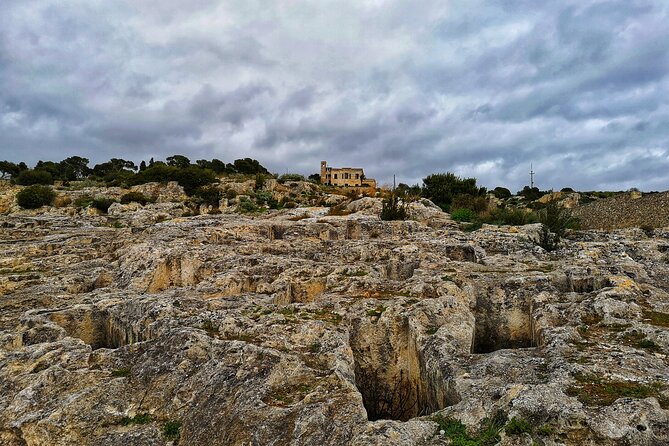
- Rock-cut tombs on a hill chosen for burial from the 6th to the 3rd centuries BC
- Largest Punic necropolis in the Mediterranean, right in Cagliari
- Punic-to-Roman reuse, so you can see how the site’s meaning shifted over time
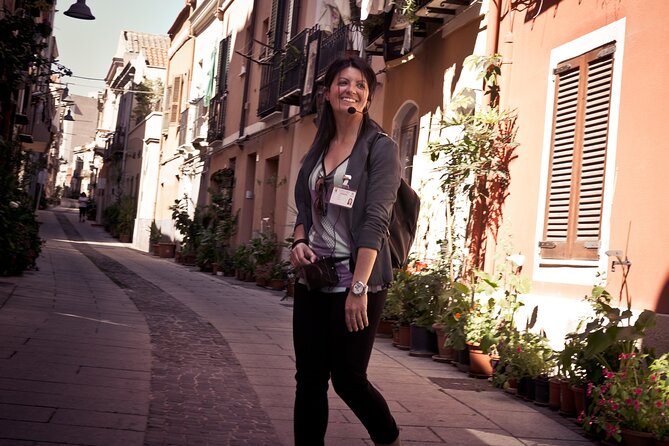
- A guide named Roberta with strong explanation skills and a lively storytelling style
- Mobile ticket and a simple, private-group format for about 90 minutes
Deeper into Cagliari, on foot
- Cagliari Segway Tour★ 5.0 · 199 reviews
- Cagliari Walking tour★ 5.0 · 82 reviews
- Cagliari, old town walking tour★ 5.0 · 41 reviews
- Cagliari Easy Tour★ 5.0 · 24 reviews
Tuvixeddu: Cagliari’s hill where funerary life continues
Standing around Tuvixeddu, the big idea is simple: this isn’t just a cemetery you pass by. It’s a place where people built long-term meaning into the landscape. The site sits on one of the seven hills of Cagliari, and it became a burial ground when Carthaginians chose this location between the 6th and 3rd centuries BC.
What makes it especially compelling is the way the story is framed. You’re not only looking at old tombs. You’re trying to understand why a community would invest in a carefully chosen hill for the dead—and how those beliefs changed when Romans took over. That’s the thread I found most satisfying: the tour connects the site to the cult of the dead and the evolution of funerary practice across cultures.
Entering the Necropoli di Tuvixeddu in 90 minutes
Your time here is about 1 hour 30 minutes, and the whole visit centers on the Necropoli di Tuvixeddu itself. That’s a practical length. You get enough time to learn what matters, without feeling like you need a full day to make the trip worthwhile.
You’ll start at Via Falzarego in Cagliari, and the experience ends back at the same meeting point. That round-trip setup helps if you want to keep your day organized. It’s also a private tour/activity, meaning you’re not sharing the guide’s attention with strangers.
The focus during the walk is interpretive: you’ll hear explanations tied to what the necropolis represents in Punic and Roman times. The experience is built to answer two very real questions: what the cult of the dead meant in the Punic era, and how customs shifted as power and culture shifted from Phoenicians to Carthaginians to Romans.
What I love about the guiding style from Me and Sardinia
The tour is operated by Me and Sardinia, and the reviews highlight a specific guide: Roberta. What you’ll feel, even from how the visit is structured, is that the guiding approach is not “read a plaque and move on.”
Roberta’s style is described as prepared and clear, and that matters because this topic can get abstract fast. When you’re talking about rituals and funerary practice, you need a guide who can connect ideas to physical space. In this case, the explanations are organized enough that you can follow the cultural transition—Phoenician influences, Punic practices, then Roman reuse—without losing the thread.
Another high point is the storytelling element. People mention anecdotes, curiosity, and legends being woven into the visit. Even if you don’t treat legends as literal history, they can still help you understand how local culture holds onto the past. That blend of facts plus story is exactly what makes a necropolis tour feel alive.
The Punic choice: why bury here on Tuvixeddu?
The Punic connection is the core of the experience. Between the 6th and 3rd centuries BC, Carthaginians selected Tuvixeddu as a burial place. The tombs were dug entirely in the rock, which is a big deal for how you should think about the site.
Rock-cut tombs are not just practical. They signal intention and investment. A community didn’t put the dead somewhere random; it built a dedicated space where memory could be held over time. When you learn that, you start looking at the setting differently. Instead of seeing “structures,” you start seeing a system of belief made visible.
And then you add the central theme: the cult of the dead. Even without getting lost in heavy terminology, the tour aims to show you that burial was tied to ritual, not just disposal. If you like archaeology that comes with meaning—how people lived, believed, and treated death—this is the part that tends to click.
More of ancient Sardinia and its nuraghi
Tombs cut into the rock: what you should pay attention to
One of the most tangible pieces of information you’re given is that the tombs are entirely in the rock. That detail shapes what you’re looking at as you walk.
I’d use this as a practical checklist for your own attention:
- Look for how the tomb spaces relate to the rock surface instead of being “added later.”
- Notice how the site reads like a designed landscape of the dead, not a scattered collection.
- Pay attention to the guide’s explanations about what makes Punic burial choices distinct in this period.
Because you’re not meant to memorize a list of features, the value is in learning how to interpret. The rock-cut element gives you a way to anchor the broader story about the cult of the dead—ritual practice made durable.
Phoenicians, Carthaginians, Romans: watching customs change over time
The big academic question the tour tackles is also the hardest to explain: what importance did the cult of the dead have in the Punic era, and how did funerary customs change across the transition from Phoenicians to Carthaginians to Romans?
What I like about how this is approached is the focus on transition rather than just “snapshot history.” The site was reused later in Roman times, which gives you a physical reason to talk about cultural change. Reuse implies not only new ownership, but also new meanings attached to old spaces.
This is where a strong guide earns their fee. Without someone translating the shift, a necropolis can feel like a museum display. With guidance, you can start asking better questions: Did rituals change? Did the reasons for reuse include respect, practicality, or both? How did identity show up through burial choices?
Even if you only take away the most basic idea—this hill served successive cultures, and their beliefs were layered—you’ll come away with more than photos. You’ll have a story to carry.
Roman reuse: when the dead remain, but the meaning moves
Roman reuse is mentioned as a key part of the timeline, and it’s worth treating as more than a footnote. When Romans reuse a site built for earlier burial practice, it suggests continuity in sacred geography, even if rituals and cultural framing change.
This part of the tour is valuable because it helps you avoid a common mistake: seeing ancient history as separated into neat boxes. In real life, cultures overlap. They borrow, adapt, and re-interpret.
So as you move around the necropolis, listen for how the guide connects the concept of reuse with the idea of shifting customs. The point isn’t to force you into one “correct” interpretation. It’s to make you aware that ancient societies didn’t wipe the slate clean when new power arrived.
Getting there from Cagliari: walking vs. bus planning
This experience is near public transportation, which is helpful. Still, one practical detail stands out from real-world experience: the approach can be complicated, with routes that leave you walking more than expected.
If you’re using local buses, plan smart:
- One route (bus number 8) was reported as requiring a lot of walking.
- Another route (bus number 1) was described as a better choice.
I’d treat that as a simple rule: don’t assume the closest stop is always the easiest one. Check where you’ll get off and how far you’ll need to walk uphill or across uneven paths.
Also, the meeting point is Via Falzarego, 09123 Cagliari CA, Italy. If you like arriving early, do it. Even a small buffer helps when you’re trying to align your transport with a short 90-minute tour window.
Mobile ticket, private group, and how that affects your day
The tour uses a mobile ticket, which is convenient. You don’t need to hunt down paper passes or figure out last-minute printing. That’s a small thing, but it reduces stress in a place where you’re also managing walking and timing.
The format is private, meaning only your group participates. For a necropolis tour, that can be a real advantage. You’re more likely to ask questions and get answers tailored to what you’re curious about—especially when the subject is cultural practice and rituals. People doing a private format often care less about rushing and more about understanding.
The experience is also listed as suitable for most travelers. Service animals are allowed too, which is an important practical note if you need that option.
Weather matters more than you think
This is one of those activities where good weather isn’t a “nice to have.” The tour requires good weather, and if it’s canceled due to poor conditions, you’ll be offered a different date or a full refund.
So check the forecast the day before and the morning of. If you’re traveling in a shoulder season where conditions can shift, build in flexibility. A necropolis walk is easier when ground conditions are stable and visibility is decent.
Price and value: what $27.76 buys you here
The listed price is $27.76 per person, for about 1 hour 30 minutes. On paper, that’s not a huge amount of time or money. But value in tours like this isn’t just the duration—it’s what you get from the guide’s interpretation.
Here’s why I think it’s good value:
- The site is significant (the largest Punic necropolis in the Mediterranean), but that alone doesn’t mean you’ll understand it.
- The tour focuses on the “why” of burial practices and how they changed from Punic to Roman reuse.
- The guidance is highlighted as prepared, clear, and enthusiastic, with local knowledge and storytelling.
Also, the activity notes admission ticket as free. Even if you’re not sure what that means in practice until you book, it signals that you’re not getting nickel-and-dimed for entry.
If you’re the kind of traveler who likes to come away with context—especially about death rituals and cultural change—this price-to-learning ratio feels fair.
Who should book this Tuvixeddu necropolis tour
This is a strong fit for you if:
- You want archaeological sites with meaning, not just stone and dates.
- You like learning how cultures overlap and transform rituals over time.
- You value a guide who explains clearly and brings the past to life through anecdotes and local legends.
It’s also a good option for people who want something structured but not exhausting. Ninety minutes is long enough to learn, short enough to stay energized.
If you’re very sensitive to walking, treat the approach seriously. One review noted that some bus options can mean lots of walking. If you’re planning from the city center, consider your transport choice carefully.
Quick FAQ
FAQ
How long is the Tuvixeddu necropolis tour?
It lasts about 1 hour 30 minutes.
What’s the price per person?
The price is $27.76 per person.
Where does the tour start?
It starts at Via Falzarego, 09123 Cagliari CA, Italy.
Is this tour private?
Yes. It’s private, with only your group participating.
Do I need a mobile ticket?
Yes. A mobile ticket is included.
Is admission included?
The activity lists admission ticket as free.
Is the tour near public transportation?
Yes, it’s near public transportation.
Are service animals allowed?
Yes, service animals are allowed.
What happens if the weather is bad?
The tour requires good weather. If it’s canceled due to poor weather, you’ll be offered a different date or a full refund.
Can I cancel for free?
Yes, you can cancel for free up to 24 hours in advance for a full refund.
Should you book Tuvixeddu with Me and Sardinia?
If you want a necropolis tour that explains why this hill mattered, not just what it is, I’d book it. The site’s Punic importance is huge, and the Roman reuse adds a real layer of cultural change. More importantly, the guiding is a standout: Roberta and the Me and Sardinia team are praised for clear explanations, preparation, and storytelling that helps you actually understand the rituals and customs behind the stones.
Just go in with one practical mindset: plan your route so you’re not stuck with extra walking. After that, it’s a compact, thoughtful way to see Cagliari’s “town of the dead” and leave with a story you’ll remember long after you’ve moved on to your next stop.
More Tour Reviews in Sardinia






More Nuraghi and Ancient Sites
Cagliari on Foot, Keep Going



New in from around Sardinia

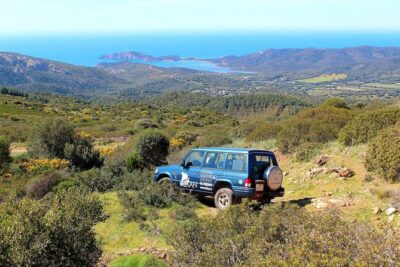
Cagliari Old Town & Castello Walks, compared.
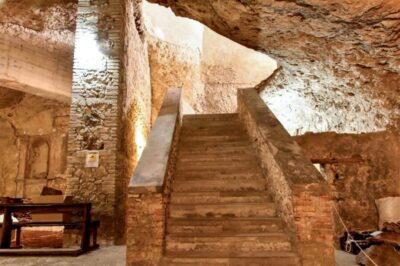 ★ 4.7Cagliari: Underground Cagliari Walking TourFrom $352,329 reviews
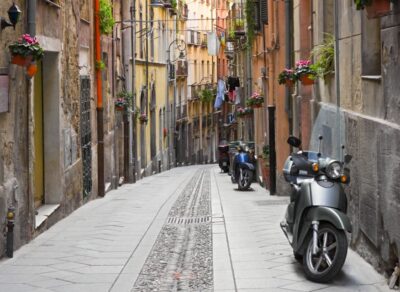 ★ 4.8Cagliari: Walking Tour of the Old CityFrom $25560 reviews
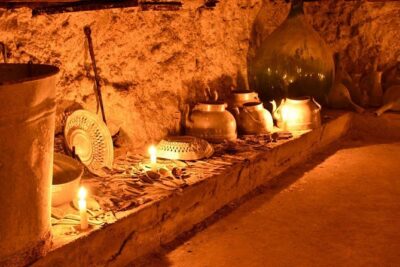 ★ 4.5Underground Cagliari tourFrom $36351 reviews
 ★ 5.0Cagliari Segway TourFrom $83199 reviews
 ★ 5.0Cagliari Vintage TourFrom $84185 reviews
 ★ 4.7Cagliari: Molentargius Natural Park Segway Tour with CoffeeFrom $81114 reviews
 ★ 5.0Cagliari Walking tourFrom $3282 reviews
 ★ 4.9Cagliari: walking tour through the alleys of CastelloFrom $3374 reviews
Browse the lists this tour appears in