
Reviewed · CHIA, TEULADA & THE SOUTHWEST
Cagliari: Nora Archaeological Site Private Experience from Chia
Roman ruins meet modern convenience in Nora. This private outing pairs skip-the-line entry with a small-group guide, so you spend more time seeing and less time waiting around. I especially like how the tour follows Nora’s story across Phoenician, Punic, and Roman layers without turning into a lecture marathon.
One catch to plan for: it’s a real walking experience. Expect about 4 to 5 hours total on site and in town, mostly outdoors and on uneven ground. Also, pickup is only offered for the Domus de Maria and Chia areas, so if you’re staying elsewhere you’ll want to plan around the Chia meeting point.
In This Review
- Key highlights at a glance
- From Chia to Nora: the short transfer that keeps the day on track
- Priority admission and a private guide: why this feels smoother than going alone
- Walking Nora: turning ruins into a real city timeline
- Piazza del Foro, mosaics, and the amphitheater you can picture instantly
- Tophet, Tanit, and the Nora Stone: the ancient documents hidden in plain sight
- Punta del Coltellazzo and a possible snorkeling moment by the waterline
- Pula town stop: craft shops, alleys, and a breather after the ruins
- Returning via Chia: ending the day without the scramble
- Cost and value: what $479.41 per group buys you
- Who should book this private Nora tour (and who might not)
- Should you book Bitan Daily Tours from Chia?
- FAQ
- How long is the Nora archaeological private experience from Chia?
- Is hotel pickup included?
- Is the tour private or shared?
- What’s included in the tour price?
- Do I need a mobile ticket?
- What language is the tour in?
- Will I have to wait in line at Nora?
- Does the experience get cancelled if it rains?
- What’s the cancellation cutoff?
Key highlights at a glance
- Skip-the-line Nora admission so you don’t lose time at the entrance
- A private guided walk through Nora’s most important remains
- Phoenician to Punic to Roman timelines told through the actual ruins
- Tophet, Tanit, and the Nora Stone story that connects Nora to the wider ancient world
- Pula town stop with alleys, craft shops, and a relaxed break from ruins
- Air-conditioned minivan with Wi-Fi (when available) plus bottled water
More of ancient Sardinia and its nuraghi
- Tour to the archaeological site of Nora – from Cagliari★ 5.0 · 80 reviews
- Tiscali mount guided hike★ 5.0 · 53 reviews
- Su Nuraxi of Barumini World Heritage UNESCO site Tour★ 5.0 · 36 reviews
- Nora Tour from Cagliari★ 5.0 · 24 reviews
From Chia to Nora: the short transfer that keeps the day on track
The trip starts from Viale del Porto, 13, 09010 Chia (SU), Italy, and you’ll be on the road quickly. The drive to Nora is about 20 minutes, which matters because it leaves you with more usable time for the archaeological park itself.
If your hotel is in the Domus de Maria or Chia area, pickup is included, which is a big quality-of-life win. You’re not trying to guess parking, bus schedules, or where to drop your group. It’s also one less stress point before you start walking in heat or sea breeze.
The timing is designed for a half-day rhythm: transportation first, then Nora, then a town stroll. That makes it a good choice if you want something meaningful without sacrificing your whole afternoon to logistics.
Priority admission and a private guide: why this feels smoother than going alone
Nora is famous, and famous ruins can mean lines. That’s why I like the focus on priority admission/skip-the-line access. Even if the site isn’t jammed when you arrive, priority entry helps you keep momentum—and momentum is the difference between a good visit and a wandering one.
You also get a private tour (your group only, up to 5 people). That turns the guide from a distant narrator into a real conversation partner. In one highlighted experience, the guide Ricardo stood out for being attentive and careful with explanations—exactly what you want when the ruins are spread out and you’re trying to picture how the ancient city worked.
The tour is offered in English, with mobile tickets used for entry. Practically speaking, it’s easy: you don’t need to hunt for paper tickets on a busy morning. The vehicle is an air-conditioned minivan, and Wi-Fi is available when the service allows (and the exact vehicle type may vary).
Walking Nora: turning ruins into a real city timeline
Your guided walk happens at the Area Archeologica di Nora and lasts about 2 hours with admission included. Nora is one of those places where you don’t just look at stones—you reconstruct daily life from what’s left: streets, public buildings, housing, and the religious spaces that shaped the community.
You’ll start near the thermal baths, which are described as part of what made Nora famous. Bath complexes tell you a lot about Roman social life, and it’s a strong opening because the baths connect quickly to the broader Roman overlay you’ll see across the site.
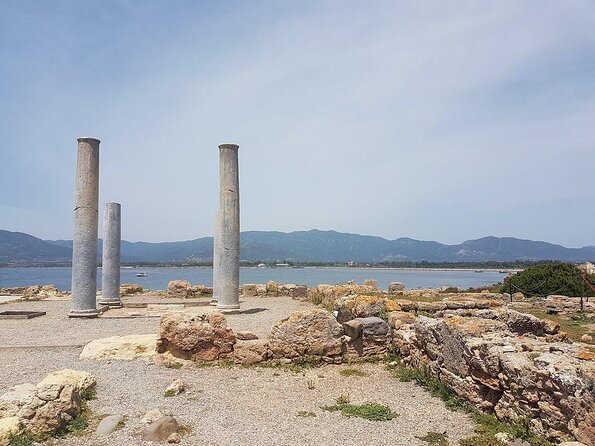
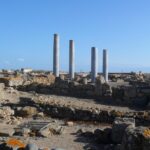
From there, expect a walk along cobbled streets toward Piazza del Foro. This is where you begin to see Nora’s civic heart. Nearby is a temple with a six-column entrance hall (pronao). That kind of layout helps you understand that this wasn’t a small fishing stop—it was a structured city with formal spaces.
To the north, the tour includes areas tied to the city’s outer workings: necropolis and an aqueduct. And along the coast, you’ll encounter domestic remains, including the house of the tetrastyle atrium from the 3rd century AD. Even without getting lost in dates, you’ll feel the shift from one era’s priorities to another.
Piazza del Foro, mosaics, and the amphitheater you can picture instantly
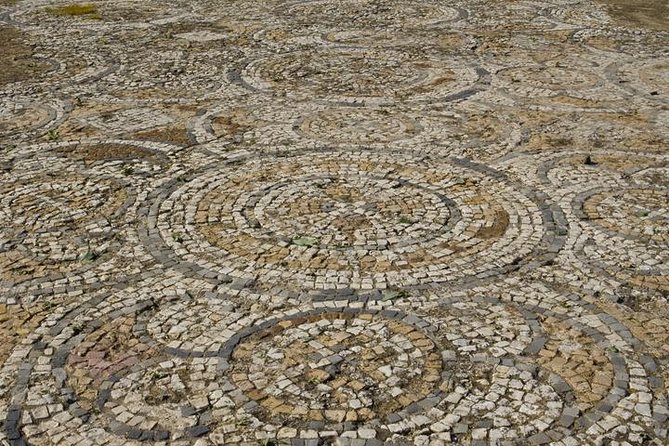
Nora’s mosaics are the kind of detail that makes the walking feel worth it. In the tour route, you’re guided to a key feature in the house complex: the mosaics, including Nereid on a marine centaur. Even if you’re not a mosaic expert, seeing the art in place makes it easier to imagine rooms where people lived, ate, and hosted guests.
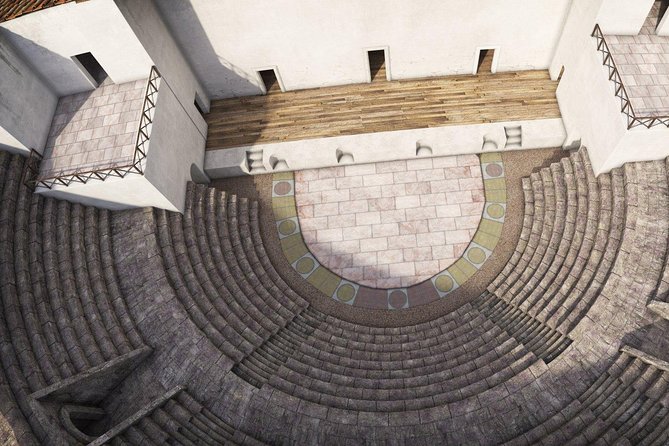
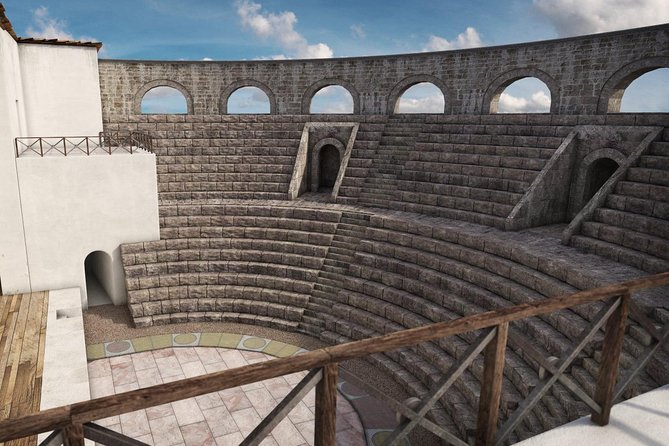
Keep going and the biggest “wow” moment tends to be the amphitheater. Nora’s amphitheater was lined initially with marble, had about twenty terraces, and could seat around one thousand people. Today, it even hosts events like La Notte dei Poeti, which is a reminder that the site isn’t only about history—it’s also part of modern Sardinian culture.
That matters for your experience. When you connect the ruins to something happening now, you don’t just see old architecture. You see a place still in use, still meaningful.
If you’re visiting outside event dates, you’ll still get the same advantage: the amphitheater is an instantly readable structure. You can stand in the right spot and understand the scale right away.
The southwest beaches around Chia and Teulada




Tophet, Tanit, and the Nora Stone: the ancient documents hidden in plain sight
One of the most fascinating elements of Nora is the story behind the discoveries. Excavations are described as beginning in 1889, when a coastal storm revealed a Phoenician-Punic cemetery called the Tophet. That discovery brought forward major religious elements, including the Temple of Tanit, a Carthaginian goddess.
A key point for how you experience the park: parts of the story may be outside the park itself. The Nora Stone is mentioned as being in the Museo Archeologico di Cagliari (National Archaeological Museum). Seeing the name and the context in the tour helps you connect what you’re walking among to what the artifacts and inscriptions say more directly.
The stele on the Nora Stone is described as containing the name Shrdn, connected to Sardinia, appearing for the first time in the Western world. That’s the kind of detail you don’t get from a quick self-guided stroll. A good guide helps you hold onto why a ruined site matters in a bigger historical network.
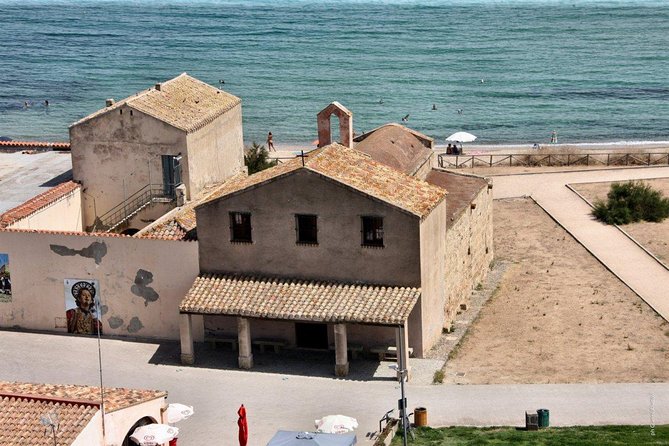
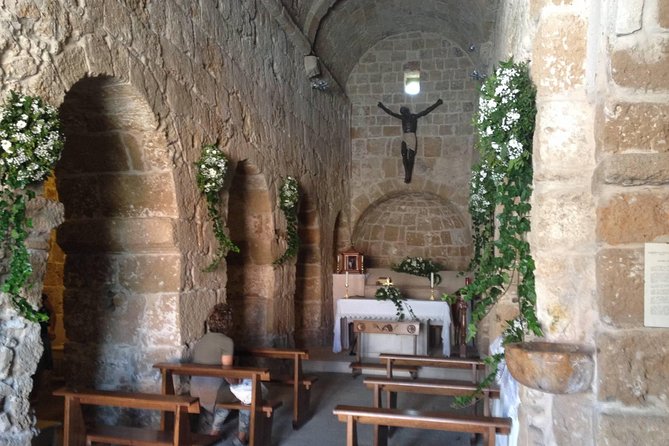
There’s also a local religious thread woven into the site narrative. The Tophet is described as being near a small Romanesque church linked to the martyrdom of the warrior saint remembered each year during Sagra di Sant’Efisio. If you’ve been to Sardinia around that festival, you’ll recognize how the landscape and devotion overlap.
Punta del Coltellazzo and a possible snorkeling moment by the waterline
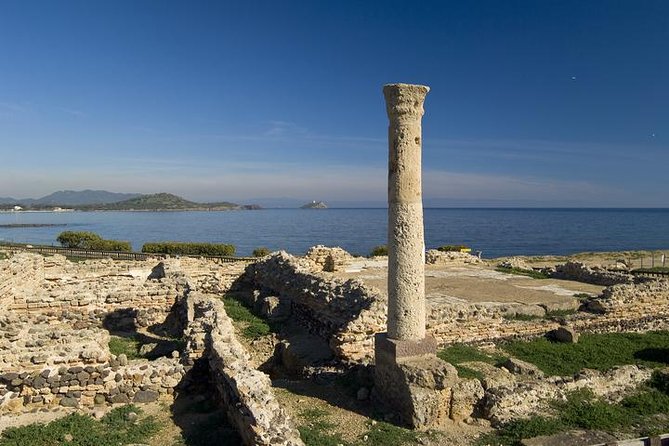
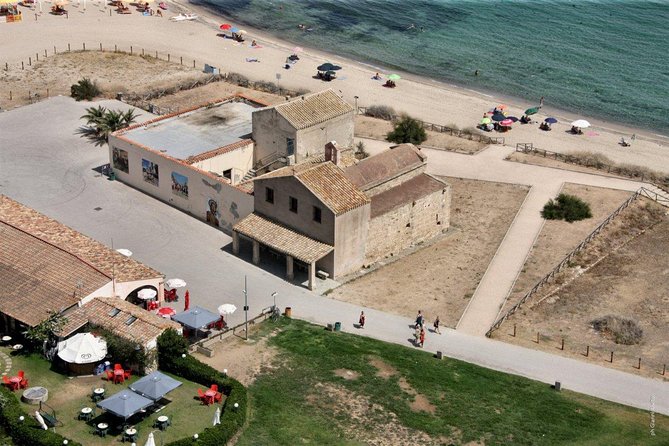
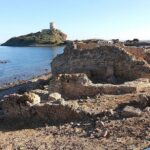
Nora’s setting is part of the draw. The tour mentions Roman roads and remains at the bottom of the isthmus at Punta del Coltellazzo, dominated by a 16th-century tower. That coastline perspective helps you understand why Nora mattered as a port—sailing routes weren’t an afterthought; they were the job.
There’s also a mention of snorkeling in this area to admire the Roman roads and remains. The tour data frames it as a possibility in the overall experience, so I’d treat it as optional rather than guaranteed. Still, it’s a useful detail if you’re the type who likes to bring an extra layer of curiosity into ruins.
If you want to maximize this part, consider coming with a realistic mindset: you’ll likely spend most of your time walking and viewing. The coast moment, when possible, is a bonus that turns the visit from flat-and-dry into something more sensory.
Pula town stop: craft shops, alleys, and a breather after the ruins
After Nora, you’ll head to Pula, about 1 hour on foot and at a slower pace. This is your palate cleanser: you go from ancient stone structures to normal street life, shops, and local architecture.
Pula is described as having charming alleys and patrician homes, which means you’ll likely spot buildings with a sense of presence and symmetry. It’s also framed as a good place to browse for souvenirs, especially because there are craft shops. If your schedule allows, you can also aim for a traditional restaurant, but the time is limited, so you’ll want to keep your choices simple.
Even if you don’t buy anything, the practical value here is spacing. Archaeological sites can be mentally heavy. A town walk gives your eyes a reset and helps you digest what you just learned about Nora’s timeline.
Returning via Chia: ending the day without the scramble
The final driving segment is short: around 20 minutes back to Chia, ending at the meeting point. That gives you a clean cut-off, which is helpful when you still want evening plans—dinner, sunset, or a last beach walk.
You’ll have bottled water included, which sounds small until you’re on cobbles in warm weather. And because the tour is private and capped at up to 5, the pace tends to stay controlled. You’re not constantly waiting for a slow group to catch up.
It’s also worth noting that the tour is designed so rain doesn’t shut you down. The experience is stated as not cancelled due to rain, and refunds aren’t issued for rain. So if weather matters to your comfort, plan with that in mind.
Cost and value: what $479.41 per group buys you
The price is listed as $479.41 per group (up to 5 people), which is the core value question. On paper, it’s easy to compare against public entry. In practice, it’s more about what you’re paying for:
- Private guiding inside Nora for about 2 hours, not a crowded tour format
- Skip-the-line priority entry, which saves time and stress
- Transport in an air-conditioned minivan (with Wi-Fi when available)
- Pickup and drop-off specifically for Domus de Maria and Chia
- Tickets included for the key parts of the visit (Nora admission is included)
Here’s the simple math: if you get the full group of 5, you’re effectively paying under $100 per person for priority, guide time, and transport. If you only go as a couple, the per-person cost rises—so this is best when you’re traveling with 3–5 people or you really value a private pacing.
One more signal: the experience is rated 4.6 out of 5 across 16 reviews. That’s not a guarantee, but it does suggest people feel they’re getting what they paid for—especially around the tour quality.
Who should book this private Nora tour (and who might not)
I think this tour is a strong fit if you want a structured visit to Nora that makes the ruins make sense. Nora is full of overlapping eras—Phoenician, Punic, Roman—and a guide helps you keep those layers straight while you’re still looking at the buildings.
It’s also a good match if you dislike waiting around at busy entrances. Priority access is the difference between arriving and immediately being in the story.
You might consider a different option if you want a totally unstructured day, or if you’re traveling solo and don’t want to pay for the private group model. With up to 5, the pricing is simply designed for shared cost.
Should you book Bitan Daily Tours from Chia?
If your goal is to see Nora without wasting time and to come away with a coherent picture of how the city evolved, I’d book it. The combination of priority entry, private guiding, and a second stop in Pula makes the half-day feel like more than just ruins on a schedule.
If you’re the kind of traveler who likes small details—like the Tophet discovery in 1889, the Temple of Tanit, and why the Nora Stone matters—you’ll get a lot from having a guide connect the dots while you walk.
And if you’re planning around logistics, the Chia connection helps. You start close, you end close, and you get a guided route that keeps you moving.
FAQ
How long is the Nora archaeological private experience from Chia?
It runs about 4 to 5 hours total.
Is hotel pickup included?
Pickup and drop-off are offered for the Domus de Maria and Chia area. If you’re not in those areas, the tour starts at Viale del Porto, 13, 09010 Chia.
Is the tour private or shared?
It’s a private tour. Only your group participates.
What’s included in the tour price?
The tour includes bottled water, tickets, skip the line, and transport in an air-conditioned minivan (with Wi-Fi when available). Tickets are also included for the archaeological stop.
Do I need a mobile ticket?
Yes, a mobile ticket is offered.
What language is the tour in?
The tour is offered in English.
Will I have to wait in line at Nora?
No. The tour includes skip-the-line and priority admission.
Does the experience get cancelled if it rains?
No. The excursion will not be cancelled and refunds won’t be issued because it rains.
What’s the cancellation cutoff?
You can cancel up to 24 hours in advance for a full refund.
More Tour Reviews in Sardinia





Chia and the Southwest Coast
More Nuraghi and Ancient Sites

New in from around Sardinia


Chia, Teulada & the Southwest, compared.
 ★ 5.04×4 Mountains And Beaches – Chia areaFrom $102330 reviews
 ★ 4.9Cagliari: Quad Adventure Experience from ChiaFrom $180187 reviews
 ★ 4.8From Cagliari: Chia and Tuerredda Full-Day Beach TourFrom $105129 reviews
 ★ 5.0Guided day by boat in Carloforte with snorkelling and aperitifFrom $151120 reviews
 ★ 5.0Beach excursion to Chia and Tuerredda from CagliariFrom $10791 reviews
★ 5.0Cagliari: Quad Adventure Experience from ChiaFrom $19176 reviews
★ 5.0Beach excursion to Chia and Tuerredda from CagliariFrom $10791 reviews
★ 5.0Cagliari: Quad Adventure Experience from ChiaFrom $19176 reviews
 ★ 4.7From Cagliari: 4×4 Mountains & Beaches of Chia areaFrom $9067 reviews
 ★ 4.7From Cagliari: Chia Beaches Tour with vanFrom $10046 reviews
Browse the lists this tour appears in