
Reviewed · CAGLIARI OLD TOWN & CASTELLO WALKS
Cagliari Vintage Tour
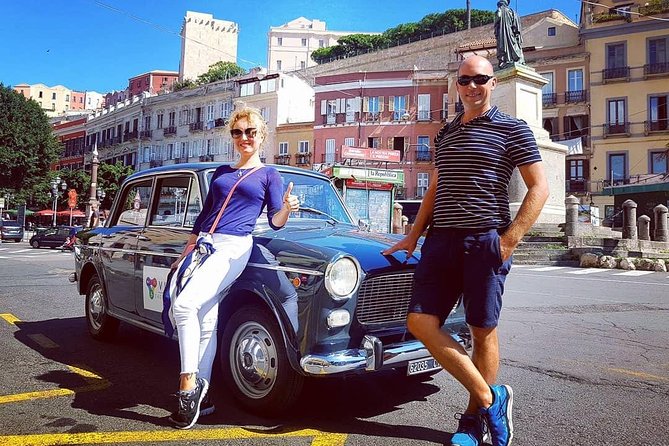
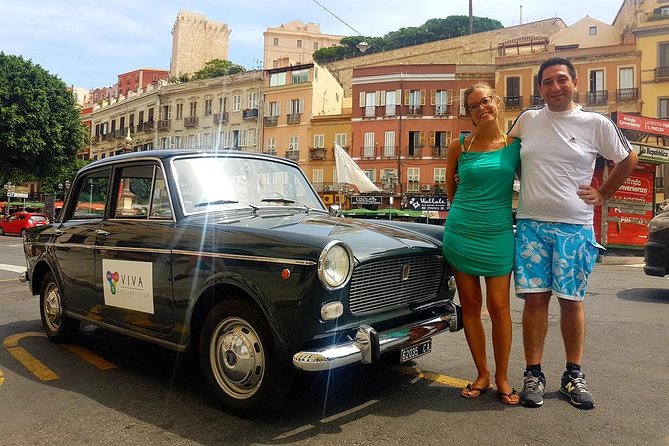
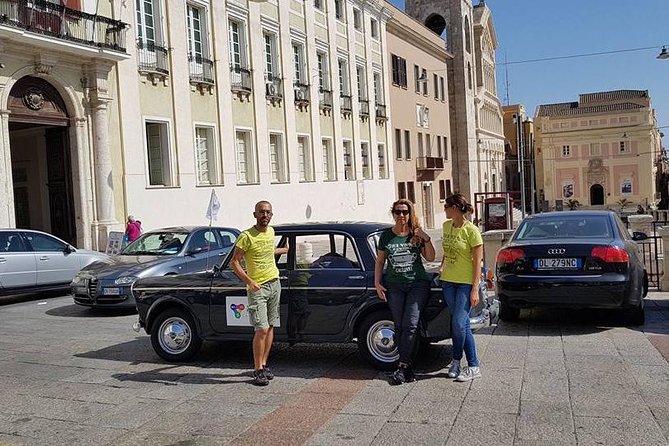
Cagliari clicks fast in a classic car. This Cagliari Vintage Tour uses a vintage Fiat to glide through the steep, narrow historic streets, with frequent stops at hilltop viewpoints and major monuments, all explained in English by a professional guide. You’ll get an old-city feel without the bus-wait-and-jostle rhythm.
I especially like the hotel pickup for central stays and the fact it runs as a private tour just for your group. That means you can ask for photo stops or linger a bit when a gate, church, or terrace catches your eye. The one drawback to consider: the tour is fast-paced by design, with many short stops—so if you want long museum time, you’ll still need a follow-up walk on your own.
In This Review
- Key Points You’ll Actually Care About
- Why a Vintage Fiat Makes Cagliari Feel Easier
- Hotel Pickup and the Carlo Felice Starting Point
- Centro Storico: Stampace, Seven Churches, and Hilltop Photos
- Palazzo Civico (Palazzo Baccaredda): the seaside-looking block
- Stampace: small shrines and the seven-churches vibe
- Chiesa di San Michele: Baroque in the middle of it all
- Torre dello Sperone and the fortifications logic
- The parish church viewpoint at the top of a staircase
- Roman Amphitheatre of Cagliari: Karalis under your feet
- Castello Quarter: Porta Cristina, Santa Cecilia, and the Ghetto Story
- Porta Cristina: an ancient gate with a royal name
- Tower of San Pancrazio: strategic north gate (admission not included)
- Cattedrale di Santa Cecilia: Romanesque in Piazza Palazzo
- Il Ghetto: built among the streets
- Fortifications and Iconic Entrances: Torre dell’Elefante to Bastion Saint Remy
- Torre dell’Elefante: the baby elephant symbol (admission not included)
- Bastion Saint Remy: terrace views you’ll remember
- Villanova Balconies and Bonaria’s Big Cultural Link
- Villanova: 1,000 balconies and the Holy Week connection
- Basilica di San Saturnino: ancient, controversial, and thousand-year
- Santuario e Basilica di Bonaria: the distant-city connection
- A living main street: porticos and Art Nouveau
- What’s Included vs What May Cost Extra at Entrances
- Timing, Pacing, and Getting the Most from a 2-Hour Route
- Price and Value: $84.69 for a Guide-Driven Old City Shortcut
- Who Should Book This Cagliari Vintage Tour
- Should You Book It?
- FAQ
- How long is the Cagliari Vintage Tour?
- How much does the tour cost?
- Where does the tour meet?
- Is hotel pickup included?
- What language is the tour offered in?
- Is this tour private?
- Are entrance tickets included?
- What’s included in the price?
- What isn’t included?
- What if the weather is bad?
Key Points You’ll Actually Care About
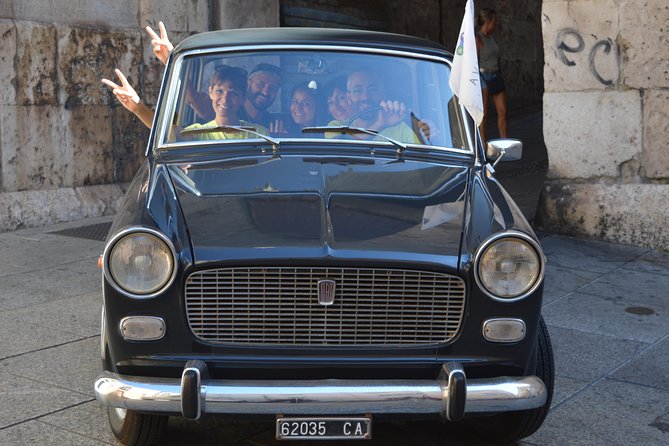
- Vintage Fiat through tight streets: The car helps you cover steep, winding districts without feeling like you’re sprinting.
- Historic neighborhoods, not random stops: Stampace, Castello, and Villanova are treated as connected parts of the city.
- Terraces and viewpoints included in the route: You’ll reach lookouts like Bastion Saint Remy without hunting for them alone.
- Some sites are free, some aren’t: Most stops are marked free, but a handful of entrances are not included.
- Guide + driver combo for real flow: You’re not just listening—you’re being safely moved between places.
- Valentina-style local storytelling shows up on the best days: Many bookings highlight a driver-guide like Valentina for patience, clear history, and extra photo moments.
Deeper into Cagliari, on foot
- Cagliari: Walking Tour of the Old City★ 4.8 · 560 reviews
- Cagliari Vintage Tour★ 5.0 · 185 reviews
- Cagliari: Molentargius Natural Park Segway Tour with Coffee★ 4.7 · 114 reviews
- Cagliari: walking tour through the alleys of Castello★ 4.9 · 74 reviews
Why a Vintage Fiat Makes Cagliari Feel Easier
Cagliari’s old neighborhoods are fun, but they can be tiring. Streets climb, turns are tight, and you often end up weaving between steps and alleys while trying to keep your bearings. A vintage Fiat changes the whole tone: you get that classic Italian feel while the driver handles the tight streets so you can focus on the city.
Another thing I like about this setup is the “stop-and-look” rhythm. Instead of driving past everything and moving on, the tour builds in short stops for landmark photos and quick orientation. When the route includes terraces like Bastion Saint Remy, that matters—you’re positioned for the view without turning it into a self-guided scavenger hunt.
Hotel Pickup and the Carlo Felice Starting Point

The meeting point is Carlo Felice (Rinascente), 09124 Cagliari. If you’re staying in the center, pickup is offered from hotels in that area, and the driver will come to you after you send your hotel name (and ideally help them with pickup access details).
You’ll also get a mobile ticket, which helps if your day runs from one plan to another. And yes, this is private—only your group participates—so you’re not stuck with the pacing of a large bus tour.
One practical note: the tour is offered in English, and most people can participate. Still, you should expect short walks and standing time at churches, gates, and lookout points. The car handles the steepest parts, but some sights still involve steps and staircases.
Centro Storico: Stampace, Seven Churches, and Hilltop Photos
The tour begins in the Centro Storico area, and the focus here is how Cagliari’s districts connect. You’ll travel through neighborhoods like Stampace, Castello, and Villanova, with quick stops at monuments and panoramic points. The pitch is simple: see the key places and understand how the city layers history.
Palazzo Civico (Palazzo Baccaredda): the seaside-looking block
One of the first “big presence” stops is the Municipal headquarters, Palazzo Civico (also called Palazzo Baccaredda). It covers an entire block and dates to the early 1900s. The value here isn’t just architecture—it’s orientation. Once you’ve seen this, you get a stronger sense of where the city’s civic center sits relative to the older quarters.





Stampace: small shrines and the seven-churches vibe
Then the tour drops into Stampace, known for the seven churches. You’ll spend time at small shrines and the kind of street-level sacred atmosphere that’s hard to notice if you only follow major monuments. Even with short stop times, it helps you understand why Stampace has a reputation for devotion and local tradition.
Chiesa di San Michele: Baroque in the middle of it all
At Chiesa di San Michele, you’re seeing the strongest example of Baroque architecture in the city. Because it sits in the center of Stampace’s historic core, it works as a visual anchor. You’ll likely take in the facade and surrounding street life quickly, but the stop is long enough to appreciate the role it plays in neighborhood identity.
Torre dello Sperone and the fortifications logic
Next is Torre dello Sperone, described as the main surviving tower from the fortifications around Stampace. This is the kind of stop that turns random ruins into a story. Once you understand that these towers were part of how the district was controlled and defended, the city’s layout stops feeling accidental.
The parish church viewpoint at the top of a staircase
You’ll also stop at a parish church positioned to dominate the neighborhood from the top of a majestic staircase. This is exactly the sort of place you’d miss if you were just walking through without a guide. Expect some stairs and standing—short, but real.
Roman Amphitheatre of Cagliari: Karalis under your feet
Finally in this first wave, you reach the Roman Amphitheatre of Cagliari, on the edge of ancient Roman Karalis. Even if you don’t go inside (the admission is not included), imagining gladiator-era views gives the area a different weight. It’s the kind of stop that makes you look at the city as a timeline, not a list of photos.
Castello Quarter: Porta Cristina, Santa Cecilia, and the Ghetto Story
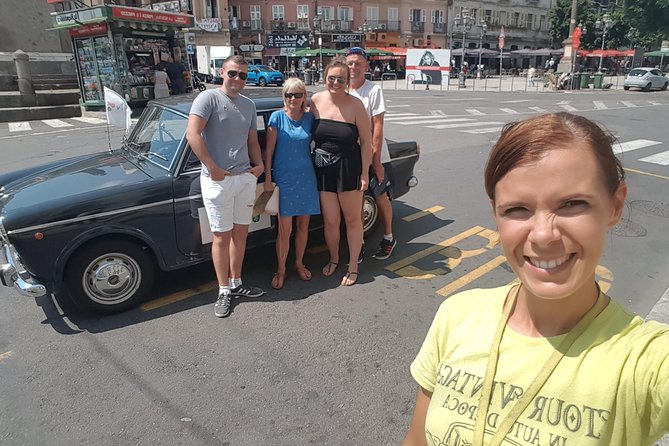
After the Stampace-to-fortifications feel, the tour shifts into Quartiere Castello, the historic district that contains many of the city’s main monuments. This is where Cagliari starts to look like a lived-in maze: gates, courtyards, churches, and viewpoints stacked on different levels.
Porta Cristina: an ancient gate with a royal name
At Porta Cristina, you’re stepping through an ancient medieval gate later dedicated to Maria Cristina di Borbone, wife of Carlo Felice. That detail matters. It shows how the city reused older structures and layered meanings over time—medieval defense becoming a named entrance tied to later rule and identity.
Tower of San Pancrazio: strategic north gate (admission not included)
Then comes Torre of San Pancrazio, described as an ancient north gate for controlling territory. Admission isn’t included here, but the stop helps you connect the fortification network to where you are in Castello. You’re learning how people moved, watched, and controlled access.
Cattedrale di Santa Cecilia: Romanesque in Piazza Palazzo
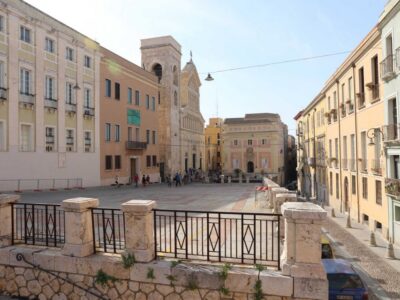
One of the standout “anchor” stops is Cattedrale di Santa Cecilia in Piazza Palazzo, surrounded by major palaces like Palazzo Viceregio, Palazzo Arcivescovile, and the old Town Hall. The church is Romanesque, and the tour gives you the key story behind why this setting feels so important.
This is one of those moments where you’ll likely slow down a bit—even with short stop time—because the square frames the church like a stage. If you’re the kind of person who likes to understand civic space, this stop delivers.
Il Ghetto: built among the streets
Next is Il Ghetto, with the story told around Bastione di Santa Croce and the community that lived there, including the idea that a synagogue was built in the area. Even when you’re not reading plaques yourself, a guide’s explanation can turn a neighborhood corner into a meaningful historical map.
If you’re doing Cagliari for the first time, this stop is valuable. It adds context that many visitors miss when they only chase the photogenic views.
Fortifications and Iconic Entrances: Torre dell’Elefante to Bastion Saint Remy
Now you’re moving through the medieval fortress logic again, but with two stops that feel like icons rather than footnotes.
Torre dell’Elefante: the baby elephant symbol (admission not included)
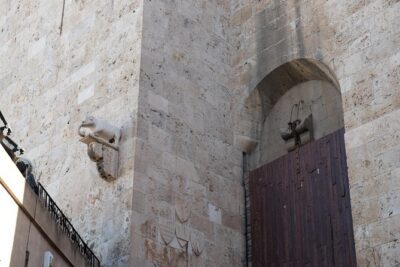
Torre dell’Elefante is the picturesque entrance to the medieval fortress, symbolized by the city’s baby elephant. Admission is not included, so you’re mostly using this stop for exterior appreciation and context. But it’s exactly the sort of stop that makes Cagliari memorable because it’s instantly recognizable.
Bastion Saint Remy: terrace views you’ll remember
Then you reach Bastion Saint Remy, built to connect historic districts. The highlight is the terrace viewpoint—described as breathtaking from the terrace. This is where the “why I picked a guided route” idea pays off. Instead of wandering until you find the best view, you’re brought directly to one.
Even if you only spend a short time here, you’ll walk away with a mental picture of how Castello and the surrounding areas sit together.
Villanova Balconies and Bonaria’s Big Cultural Link

As the tour heads into Villanova, the vibe shifts from fortress edges and gates to neighborhood character. Villanova is known as the flower district with around 1,000 colorful balconies, and it also connects to Holy Week traditions in Cagliari.
Villanova: 1,000 balconies and the Holy Week connection
The balcony detail is part of why this district is so visually distinctive. But the tour also explains where that picture-perfect look comes from and how Holy Week shapes the neighborhood. It’s not just architecture as decoration—it’s tied to local ritual.
If you like places where daily life and tradition are visible, you’ll get extra satisfaction from this stop.
Basilica di San Saturnino: ancient, controversial, and thousand-year
Next is Basilica di San Saturnino, described as one of the most ancient sanctuaries in Sardinia with a controversial and thousand-year history. Admission isn’t included, so you’ll likely focus on the exterior and the story behind the site. Still, the age and the “controversial history” angle give you something to think about while you’re there.
Santuario e Basilica di Bonaria: the distant-city connection
Finally, the tour reaches Santuario e Basilica di Bonaria. Here, the key point is the connection between a strong bond and a distant country and city—so the sanctuary’s importance isn’t just local. The tour also notes that the city takes its name from this place, which turns Bonaria into a must-understand stop rather than a random church visit.
This is a great ending point because it connects your Cagliari story back to origins and identity.
A living main street: porticos and Art Nouveau
You’ll also get a look at one of Cagliari’s main streets as a kind of living room of the city, with porticos and Art Nouveau buildings. It’s the right way to close the tour: from medieval corners back to the everyday urban feel.
What’s Included vs What May Cost Extra at Entrances
Most of the time, this tour is designed so you can see a lot without paying for admissions at every stop. Several stops are listed with admission tickets free. But there are also specific “not included” spots you should plan around:
- Roman Amphitheatre of Cagliari (10 minutes, admission not included)
- Torre of San Pancrazio (10 minutes, admission not included)
- Torre dell’Elefante (10 minutes, admission not included)
- Basilica di San Saturnino (10 minutes, admission not included)
In practice, that means you may want to carry some extra cash or have payment options ready, depending on what you decide to do at those entrances. The good news: even when admission isn’t included, the route still stops at the key exterior points and gives you context.
Also plan on mance (tips) and food and drink being on you. The tour price covers transportation and guiding, but meals are your choice.
Timing, Pacing, and Getting the Most from a 2-Hour Route
The total duration is about 2 hours. That’s short enough to work on a tight day, but long enough to feel like you got a real orientation to Cagliari rather than just a quick drive-by.
Stops range from about 10 minutes to around 40 minutes in the Castello district. Many locations are quick photo-and-context moments. That pace is ideal if you’re trying to see multiple historic layers in one morning or afternoon.
If you have mobility limits, here’s the reality check: the car helps you move between hilltop areas, but you’ll still be stepping on sidewalks, standing for views, and dealing with steps at certain churches or staircases. The parish church stop at the top of a staircase is a clear example of why good mobility helps.
Finally, the tour requires good weather. If it’s canceled for poor conditions, you’ll be offered a different date or a full refund.
Price and Value: $84.69 for a Guide-Driven Old City Shortcut
At $84.69 per person, the value is about what you’re getting for a short time. You’re paying for private transportation, pickup (if you’re central), a professional tour guide, and an experience designed around the city’s steep, narrow streets.
You’re also getting a structured way to see places that would take longer to locate and interpret on your own. The tour isn’t only about stopping at landmarks—it’s about connecting neighborhoods: Stampace’s Baroque center, Castello’s fortress logic, the Ghetto story, and then Bonaria and Villanova’s distinct identity.
If you’re on a cruise day or you want your first visit to feel guided rather than stressful, this price can make sense. The more you value orientation and narrative, the better this tour fits.
Who Should Book This Cagliari Vintage Tour
This tour is a strong match if you:
- Want an efficient intro to Cagliari’s old quarters in about 2 hours
- Like historic neighborhoods more than museum-only stops
- Enjoy classic cars and don’t mind short walking segments
- Prefer a private group experience instead of being one of many
It’s also a good option if you’re the type who likes to return later on your own. You’ll come away with a mental map of where to go deeper—especially around Castello and the terrace viewpoints.
If you’re the kind of traveler who wants a slow pace, long chapel time, and zero movement between stops, you might feel rushed. But if you’re aiming for “get my bearings fast and then roam,” this tour is built for that.
Should You Book It?
If you want a fun, story-led way to understand Cagliari’s hill districts without spending half a day figuring out routes, I think you should book this. The vintage Fiat angle is more than a gimmick—it helps you navigate steep, tight streets while still getting meaningful stops like Porta Cristina, Santa Cecilia, Il Ghetto, and Bastion Saint Remy.
Book it with one expectation: this is a sprint, not a slow stroll. If you’re okay with short stops and you’ll follow up later on your own, this tour can genuinely make the rest of your day in Cagliari feel easier.
FAQ
How long is the Cagliari Vintage Tour?
It runs for approximately 2 hours.
How much does the tour cost?
The price is $84.69 per person.
Where does the tour meet?
The start meeting point is Carlo Felice (Rinascente), 09124 Cagliari, Italy.
Is hotel pickup included?
Yes, pickup is offered from hotels in the center of Cagliari. You’ll need to send the name of your hotel.
What language is the tour offered in?
The tour is offered in English.
Is this tour private?
Yes. It’s a private tour/activity, and only your group will participate.
Are entrance tickets included?
Many stops are listed as admission ticket free, but some are marked as not included, such as the Roman Amphitheatre of Cagliari and a few tower/basilica stops.
What’s included in the price?
Included items are private transportation, pickup for center hotels, a driver who accompanies you around the city, a professional tour guide, and early booking.
What isn’t included?
Tips (mance) and food and drink are not included.
What if the weather is bad?
This experience requires good weather. If canceled due to poor weather, you’ll be offered a different date or a full refund.
More Tours in Cagliari



More Tour Reviews in Cagliari
Cagliari on Foot, Keep Going


New in from around Cagliari



Cagliari Old Town & Castello Walks, compared.
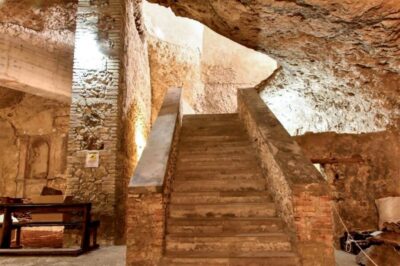 ★ 4.7Cagliari: Underground Cagliari Walking TourFrom $352,329 reviews
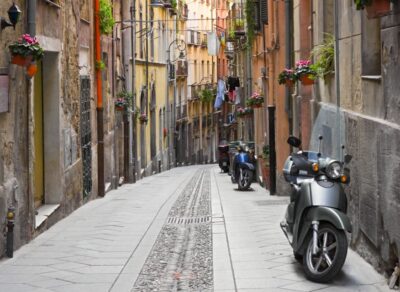 ★ 4.8Cagliari: Walking Tour of the Old CityFrom $25560 reviews
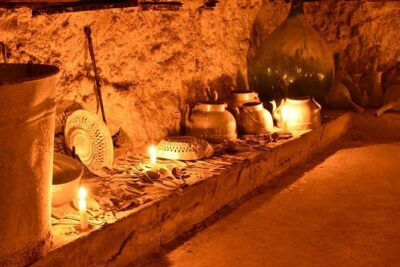 ★ 4.5Underground Cagliari tourFrom $36351 reviews
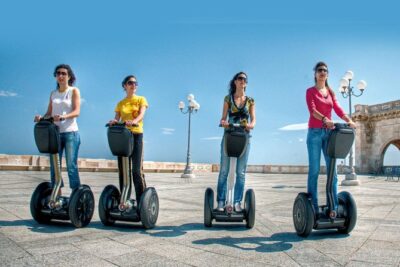 ★ 5.0Cagliari Segway TourFrom $83199 reviews
 ★ 4.7Cagliari: Molentargius Natural Park Segway Tour with CoffeeFrom $81114 reviews
 ★ 5.0Cagliari Walking tourFrom $3282 reviews
 ★ 4.9Cagliari: walking tour through the alleys of CastelloFrom $3374 reviews
 ★ 4.6Cagliari Old Town: Wine Tasting and local productsFrom $6543 reviews
Browse the lists this tour appears in