
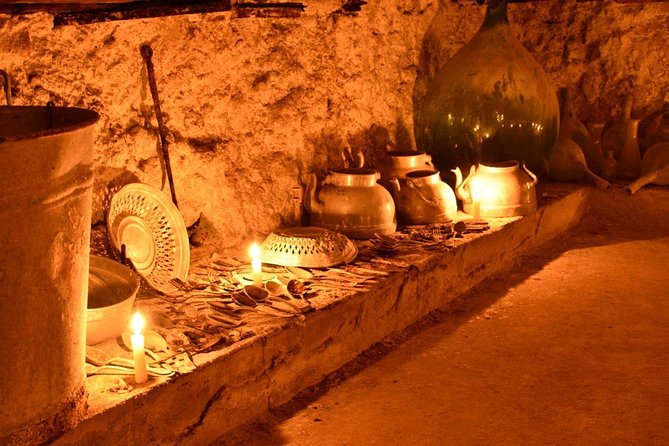
Reviewed · CAGLIARI OLD TOWN & CASTELLO WALKS
Underground Cagliari tour
Cagliari has a secret below your feet. I like the candlelit WWII tunnels because they turn the city into a story you can walk through, with a guide spelling out what each underground space used to be.
I also love that this tour hits three different underground stops in a short window, so you get ancient worship, underground prisons, and wartime survival in one run. Main consideration: it is not for everyone—there is some walking above ground, and it is not recommended for claustrophobia or mobility difficulties.
In This Review
- Key Things You Should Know Before You Go
- Why Underground Cagliari Feels Like a Whole Different City
- Where the Tour Starts (and How the Timing Usually Works)
- Stop 1: Istituto Salesiano Don Bosco Tunnels and WWII Bomb Shelter Stories
- Stop 2: Cripta di S. Restituta, a Natural Cave Turned to Martyr Legend
- Stop 3: Sant’Eulalia Underground Archaeology and the Museum Finish
- Candlelight Photos: How to Get the Best Shots in Real Underground Light
- Packing for Two Hours: Shoes, Water, and Heat Between Stops
- English + Italian Guidance: Why the Explanations Matter
- Price and Value: Is $36.30 Worth It?
- Who Should Book Underground Cagliari (and Who Should Skip It)
- Should You Book This Underground Cagliari Tour?
- FAQ
- How long is the Underground Cagliari tour?
- Is the tour completely underground?
- What language is the tour offered in?
- Where does the tour start and end?
- Is this tour suitable for claustrophobia or mobility issues?
- What if weather is bad or I need to cancel?
Key Things You Should Know Before You Go
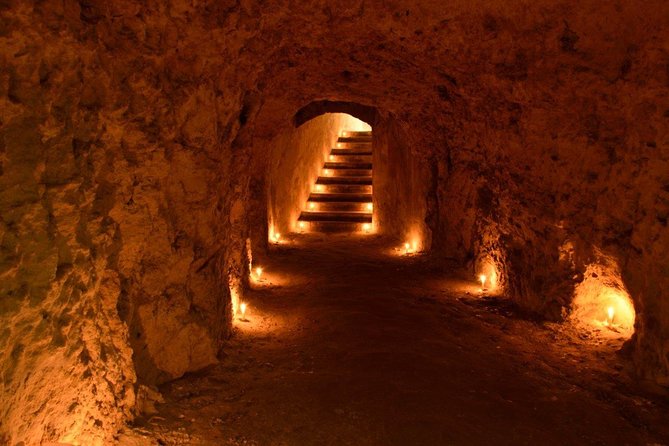
- Candlelit tunnels and photo-friendly caves: bring your phone, and expect dramatic low light
- Three underground stops, not one: Salesian WWII shelters, Santa Restituta, then Sant’Eulalia ruins
- Dual-language tour: English + Italian with a guide who explains the sites clearly
- Group size up to 40: the first stop can feel crowded, especially in tight passages
- Moderate walking and heat management: you cool off underground, but you will still move outside between sites
Deeper into Cagliari, on foot
- Cagliari Segway Tour★ 5.0 · 199 reviews
- Cagliari Walking tour★ 5.0 · 82 reviews
- Cagliari, old town walking tour★ 5.0 · 41 reviews
- Cagliari Easy Tour★ 5.0 · 24 reviews
Why Underground Cagliari Feels Like a Whole Different City
The best part of this Underground Cagliari tour is that it changes your sense of the city fast. Above ground, Cagliari can feel like typical Mediterranean strolling. Below ground, it becomes a layered record of Sardinia’s past, from early Christian devotion to World War II life under pressure.
You also get a smart mix of atmosphere and explanation. You are not just wandering in the dark. Your guide connects the tunnels, crypts, and archaeological areas to the people who used them—at times for worship, at times for survival. Guides named Valentina (praised as a professional historian), Federico, Francesca, Elenia, and Maggie show up repeatedly in feedback, and that matters because you will hear the stories that make the stones mean something.
One big practical benefit: you get a break from the heat. Even if the day is hot, these underground stops cool things down. Just remember it is not all underground. Between sites, you walk outside for short stretches, so plan for sun and wear shoes that work on city sidewalks.
Where the Tour Starts (and How the Timing Usually Works)
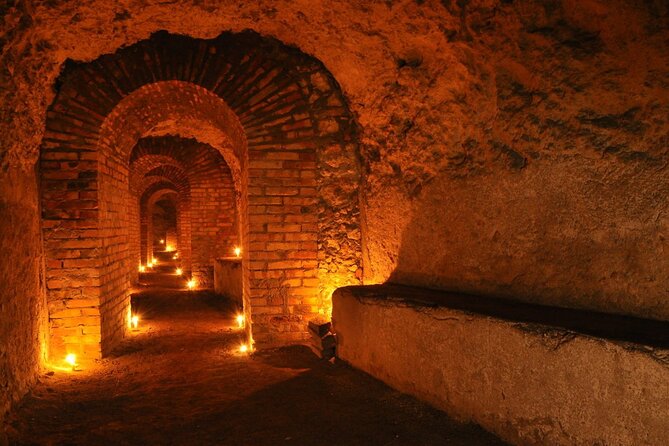
You start at Via Sant’Ignazio da Laconi, 64, near the Cagliari Botanical Gardens area. The tour ends at MUTSEU – Museo del Tesoro e Area Archeologica di Sant’Eulalia on V. del Collegio, 2. Starting and ending this way is handy because you finish close to the historic church area tied to Sant’Eulalia.
The total time is about 2 hours, and the underground portions are scheduled to keep momentum. Think in blocks: a longer first stop, then two shorter underground site visits. There is walking between each place, plus time to follow your guide and look around.
The tour operates in English and Italian, and it runs with a maximum of 40 people. That is a nice ceiling for a small-group feel, but at a tight first site, you can still end up packed. If you care about hearing every word, aim to stay nearer the front when the group compresses.
Stop 1: Istituto Salesiano Don Bosco Tunnels and WWII Bomb Shelter Stories
The first underground site is the Istituto Salesiano Don Bosco area, meeting your guide there for the start of the tour. This is where the experience immediately gets interesting, because these are not ancient caves you found by accident. They are tunnels connected to the school and used as bomb shelters during World War II.
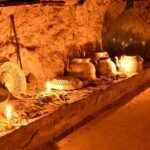
You’ll see the dramatic side of underground Cagliari here. The tunnels are lit by candles, which gives the place that classic cave-and-crypt feel and makes for standout photos. The candles also help you notice details you might otherwise miss: how the passageways funnel people, how the lighting changes your view, and how narrow some stretches get.
The guide’s job at this stop is to give context. You are learning why these spaces mattered in wartime, and how that use differs from what comes later in the tour. That is a key value of the Underground Cagliari format: it jumps across eras without feeling random. WWII is the hook, then the tour slowly shifts you into religious and archaeological layers beneath the city.
Possible drawback at Stop 1: if your group is large, the first tunnel can get cramped. One practical move helps: wear comfortable clothing that you can move in easily, and keep your spot tidy so you do not have to shuffle awkwardly in narrow sections.
Stop 2: Cripta di S. Restituta, a Natural Cave Turned to Martyr Legend
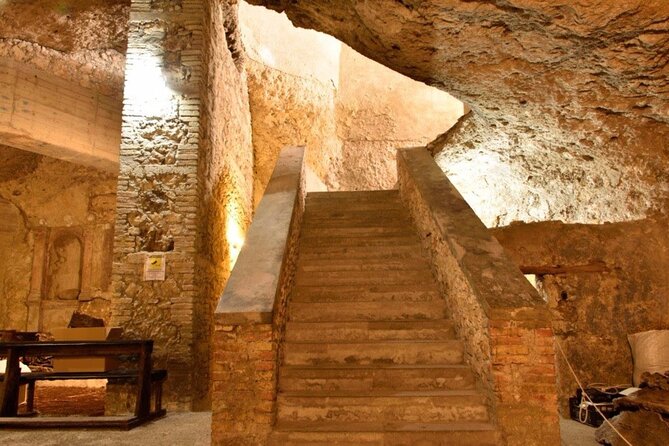
Next you head to the Cripta di S. Restituta. This site is described as a crypt and prison linked to Santa Restituta, and it connects to a much older story: a natural cavern that became associated with the martyr Restituta in the 5th century.
What I find compelling here is the “used in different ways” idea. The same underground space can function like a prison in one period and a sacred place in another. You are essentially watching history re-purpose the built environment. Your guide helps you see those shifts, so it feels less like separate tourist stops and more like one long timeline.
Time at this stop is about 30 minutes, which is enough to look, absorb, and ask questions without dragging. The crypt setting also keeps the mood intense. Even when you know the facts, the physical space still does its job—low light, stone surfaces, and a sense of enclosure.
For comfort: if you hate tight spaces, this is one of the stops where you should think carefully. The tour is not recommended for claustrophobia, and these crypt spaces are part of why.




Stop 3: Sant’Eulalia Underground Archaeology and the Museum Finish
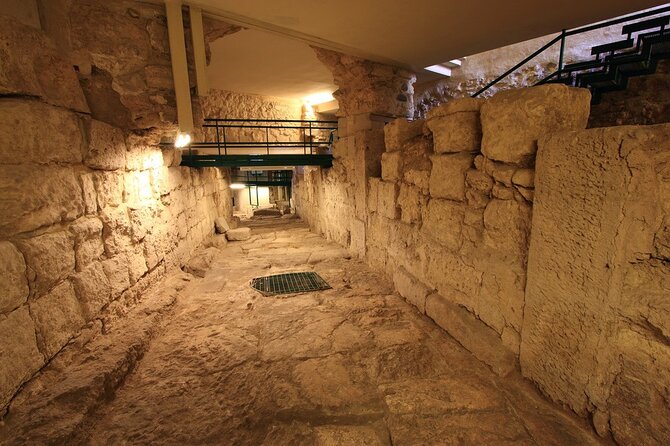
The last stop brings you to Museo del Tesoro e Area Archeologica di Sant’Eulalia (ending your tour there). This underground area includes ruins from several periods, including a paved Roman road, plus additional archaeological remains tied to different eras.
This is the stop that gives you the best “how the city was built” feeling. Instead of just hearing that something is old, you see the physical layers. Roman paving under a later religious setting makes the underground story feel grounded. You also get a transition from the darker tunnel world into a museum-like finish zone near the church area tied to Sant’Eulalia.
You’ll spend about 30 minutes here, and it works as a satisfying ending. You finish with a clearer sense of Cagliari’s underground past across centuries, plus a more open area to re-orient before you head on with your day.
One practical point: the tour ends at the museum. That’s convenient because you do not have to retrace your steps right away. It also means your last stop is your best time to grab photos, check your map, and plan dinner nearby.
Candlelight Photos: How to Get the Best Shots in Real Underground Light
The Underground Cagliari tour is famous for the look of its candlelit spaces. In plain terms, those tunnels are dark enough that your phone will struggle if you expect bright daylight results. The upside is that the lighting is dramatic, and the atmosphere makes people’s photos look instantly more cinematic.
A few tips that will help:
- Keep your camera steady. Low light can make everything blurry.
- Take photos in short bursts as your guide moves the group along. That way you catch each angle before the space compresses around you.
- Use the guide’s timing. When the group stops for the explanation, that is usually when you get the best moment to shoot.
Also, expect the group flow to affect your photo options. With up to 40 people, you may not be able to “wander and frame” like you would in an open outdoor attraction. If photos matter, stick closer to where your guide pauses and you will get more keepers.
Packing for Two Hours: Shoes, Water, and Heat Between Stops
Even though the tour’s name says underground, you should treat it as a mixed walking experience. The tour is not all underground, and there are parts where you will walk outside between sites. On hot days, you will enjoy the underground cool-down, but you still need to handle the above-ground stretches safely.
From feedback, two comfort issues come up:
- Bring lots of water. There is nowhere easy to refill bottles during the route.
- Plan for no toilet access. One downside noted is that there are no toilets available during the tour.
So, pack like you are doing a short guided walk in town, with caves on top. Comfortable walking shoes matter. One review advice was to bring a good pair of shoes, and I agree—some surfaces can be uneven, and you will move between different underground entrances.
Also note the physical expectation: the tour is described as requiring moderate physical fitness. The pace is manageable, but you should be prepared for walking and changing environments quickly.
Finally, service animals are allowed, and the tour is near public transportation, which helps if you want an easy start and finish without complicated logistics.
English + Italian Guidance: Why the Explanations Matter
A tour like this works only if the guide makes the sites coherent. The best Underground Cagliari visits do exactly that: you leave knowing why each tunnel or crypt matters, not just that it looks spooky.
This one is designed for that. It is offered in English with Italian as well, and guides are credited with being friendly, enthusiastic, and able to handle questions. Names like Valentina and Federico come up in feedback for strong context, and Elenia and Francesca also appear as guides who keep the story moving.
Here’s what that means for you on the ground: you will understand the WWII shelter function at the first stop, the martyr and prison layers at Santa Restituta, and then the archaeology and Roman paving at Sant’Eulalia. Without those explanations, the underground places would still be impressive. With them, the tour becomes much more memorable.
Price and Value: Is $36.30 Worth It?
At $36.30 per person, this Underground Cagliari tour is priced like a focused, guided experience rather than a museum pass you can do alone. The value angle is straightforward: the price includes a local guide and entry fees for the three underground sites.
That matters because you are getting access to multiple locations in one go. You also get the “story stitching” you would not get by showing up at each entrance separately. In a city like Cagliari, underground spaces can be hard to piece together without local context. This tour does that for you.
One word of caution: entry fees are listed as included, but at least one visitor noted a small extra amount on the day. To protect yourself, I’d check your confirmation details right before you leave, and ask the guide if anything seems unclear when you start.
If you want an affordable way to experience a side of Cagliari most people skip, the price is very reasonable for what you actually see and learn in about two hours.
Who Should Book Underground Cagliari (and Who Should Skip It)
This is a good match if you:
- Like history that spans ancient times to WWII, not just one era
- Want a break from the midday heat
- Enjoy atmosphere and low-light photography
- Prefer guided access to underground sites
It is not a good match if you:
- Have claustrophobia (the tour is explicitly not recommended for it)
- Have mobility difficulties (also not recommended)
- Need frequent stops or easy toilet access during the route (there is no toilet access noted)
Group size can also matter. If you prefer quieter tours, know that up to 40 people can make the first tunnel feel tight.
If you are traveling with kids, this tour can work too. Feedback includes families with children who enjoyed the candlelit tunnels and WWII context, especially with guides who keep things engaging.
Should You Book This Underground Cagliari Tour?
If you want something different from the usual Cagliari sightseeing loop, I’d book this. The combination of three underground stops, candlelit WWII tunnels, and guided context across centuries is exactly the kind of experience that makes a short trip feel full.
Just be honest with yourself about the cave factor. If enclosed spaces make you anxious, skip it. If you can handle tight passageways and you’re comfortable walking outside between stops, you’ll likely love how Cagliari’s underground life comes alive.
FAQ
How long is the Underground Cagliari tour?
The tour is about 2 hours. The underground visits are scheduled in three parts, with the first stop taking the longest.
Is the tour completely underground?
No. It includes three underground sites, but there are also parts where you walk outside between locations.
What language is the tour offered in?
The tour is offered in English and Italian (dual language).
Where does the tour start and end?
It starts at Via Sant’Ignazio da Laconi, 64, 09123 Cagliari CA, Italy and ends at MUTSEU – Museo del Tesoro e Area Archeologica di Sant’Eulalia, V. del Collegio, 2, 09124 Cagliari CA, Italy.
Is this tour suitable for claustrophobia or mobility issues?
No. It is not recommended for people who suffer from claustrophobia or for people with mobility difficulties.
What if weather is bad or I need to cancel?
This experience requires good weather. If it is canceled due to poor weather, you will be offered a different date or a full refund. You can cancel for free up to 24 hours in advance for a full refund.
More Tours in Sardinia




More Tour Reviews in Sardinia

Cagliari on Foot, Keep Going




New in from around Sardinia

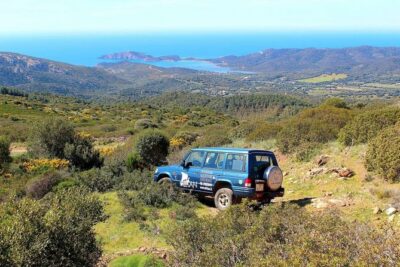
Cagliari Old Town & Castello Walks, compared.
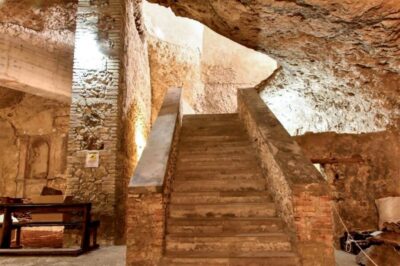 ★ 4.7Cagliari: Underground Cagliari Walking TourFrom $352,329 reviews
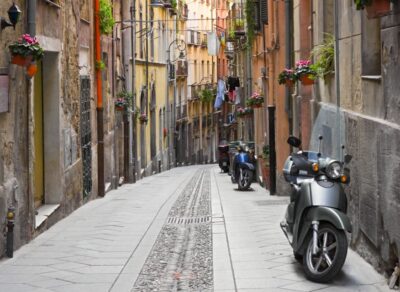 ★ 4.8Cagliari: Walking Tour of the Old CityFrom $25560 reviews
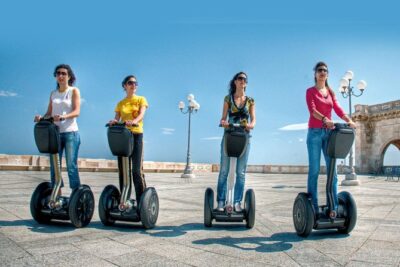 ★ 5.0Cagliari Segway TourFrom $83199 reviews
 ★ 5.0Cagliari Vintage TourFrom $84185 reviews
 ★ 4.7Cagliari: Molentargius Natural Park Segway Tour with CoffeeFrom $81114 reviews
 ★ 5.0Cagliari Walking tourFrom $3282 reviews
 ★ 4.9Cagliari: walking tour through the alleys of CastelloFrom $3374 reviews
 ★ 4.6Cagliari Old Town: Wine Tasting and local productsFrom $6543 reviews
Browse the lists this tour appears in