
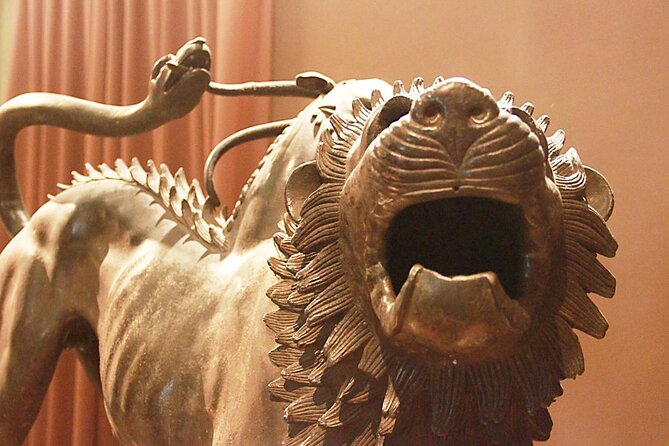
Reviewed · CAGLIARI OLD TOWN & CASTELLO WALKS
Cagliari City Tour – Minivan Sightseeing and Walking
Cagliari clicks into place in hours. This minivan-and-walking tour gives you a clear route through major sights without turning your day into map math, and you get a comfort boost from the air-conditioned vehicle when the Sardinian sun ramps up. I especially like how the stops are arranged for quick picture moments and short walks, so you can see a lot without feeling dragged from place to place.
The main thing to watch is pacing: you’ll do some walking and standing at viewpoints and historic stops, so moderate fitness is a good idea. Also, the archaeological museum stop depends on time.
In This Review
- Key highlights you’ll feel right away
- How the van-and-walk route makes Cagliari easier to enjoy
- Monte Urpinu viewpoint, Roman amphitheatre, and the “why here” stops
- Two church stops that anchor Cagliari’s identity
- The museum moment: what you can gain even if time is tight
- Birdlife park and the road toward Poetto Beach
- Food tasting, pricing value, and the small comforts that matter
- Who should book this Cagliari city tour
- Should you book it
- FAQ
- How long is the Cagliari city tour?
- What does the tour cost?
- Is the tour offered in English?
- Do they pick up from hotels or ports?
- What’s included in the price?
- Are entrance tickets included for the sights?
- How many people are in a group?
- Can I cancel for free?
Key highlights you’ll feel right away
- Small group size (max 8): easier questions, less waiting, better flow at photo stops.
- Air-conditioned comfort: the van does the heavy lifting between sights.
- Big-name Cagliari anchors: Roman amphitheatre area, and the city’s key church, the Basilica of the Holy Cross.
- Views from Monte Urpinu: quick out-and-back style stop with a standout viewpoint.
- Bird-focused regional park: a change of pace from stone and streets.
Deeper into Cagliari, on foot
- Cagliari: Walking Tour of the Old City★ 4.8 · 560 reviews
- Cagliari Vintage Tour★ 5.0 · 185 reviews
- Cagliari: Molentargius Natural Park Segway Tour with Coffee★ 4.7 · 114 reviews
- Cagliari: walking tour through the alleys of Castello★ 4.9 · 74 reviews
How the van-and-walk route makes Cagliari easier to enjoy
Cagliari can be a fun city, but it also has that normal Mediterranean problem: heat, hills, and lots of scattered landmarks. This tour smartly mixes short walking with minivan time, which helps you keep your energy for the sights that matter most. You’re not spending your best hours figuring out buses or playing guess-the-direction with tight streets.
You’ll start with pickup (or meet near public transport), then roll through the areas that shape Cagliari’s identity. The format is built for people who want a guided “greatest hits” loop but still like having time to look around. And because the group is capped at 8 people per booking, the guide can actually manage the stops without turning everything into a chaotic herd.
If you’re the type who likes learning while you move, this tour works well. Stops are compact, and the guide can point out what to notice in the moment—why a church matters, what kind of Roman structure you’re seeing, and how the city’s geography shapes the views.
One practical note: the tour lasts about 3 to 4 hours, so it’s not trying to cover every corner of Cagliari. It’s more like a strong orientation tour—then you take that map in your head and continue on your own.
Monte Urpinu viewpoint, Roman amphitheatre, and the “why here” stops
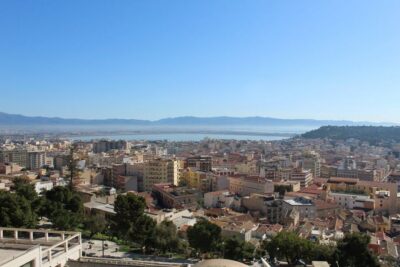
The tour’s best early win is how it gets you to high-impact spots quickly. Monte Urpinu is a great example: it’s a quick 10-minute stop with a viewpoint that makes you understand Cagliari’s layout. Even if you don’t consider yourself a “views person,” this kind of stop helps you orient yourself. After that, street-level sightseeing feels more meaningful, because you’ve seen the city from above at least once.
Next comes the Roman Amphitheatre of Cagliari, a short 5-minute pause at a site that’s often described as one of Sardinia’s most important amphitheatres. The brief timing can sound limiting on paper, but it works in a short tour format. You get the key moment: see the structure, understand its significance, then move on while you still have energy. The stop is also listed as admission-free for this part, which helps you keep the tour’s schedule smooth.
After that, you’ll pass by the Old King’s Palace area. The timing here is less about a long, ticketed visit and more about context. If you’ve ever walked through a town and wondered what rulers, power, and history have to do with what’s on the street today, this is the kind of stop that connects the dots.
Then you shift away from the heaviest archaeology and into a more natural change of scenery at the regional park. That contrast is not accidental. It breaks up the “stone and stories” feeling and gives your brain a reset before the final church stop.
Here’s the small drawback: because several stops are short, you’ll want to bring your camera mindset. Think of this as “see it, get the idea” rather than “wander for an hour and read everything.”
Two church stops that anchor Cagliari’s identity
Religious architecture in Italy isn’t just decoration—it’s a map of priorities: what a city valued, who funded what, and what traditions survived. This tour uses two church moments to anchor Cagliari’s story.
One stop is an impressive church outside the city. It’s short, but it’s a meaningful contrast to the urban core. You get a sense of how Cagliari’s identity spreads beyond the center and how the region’s story isn’t confined to one compact area.
The second stop is the Basilica of the Holy Cross, which is the city’s most important church on this itinerary. You’ll get about 15 minutes at this stop, and it’s also listed as admission-free. That matters because it reduces friction in your schedule: you’re not juggling ticket lines or extra costs during a short tour window.
The guide’s job here is to help you read the church like a clue trail. Even if you’re not a church-hunter, you’ll likely walk away with a clearer sense of why this particular basilica is a centerpiece for locals. And because the stop is timed, you don’t have to stand around waiting for the rest of the group to catch up.
Dress code is smart casual, so this is easy to fit into a normal day. Just keep in mind that churches often mean more standing than you expect, so comfy shoes help.
The museum moment: what you can gain even if time is tight
The tour includes a chance to explore Sardinia’s famous archaeological museum, if there’s time. The idea here is simple: after seeing Roman-era stonework and city institutions, you get a chance to place those sights in a broader timeline.
Because the museum stop is conditional, you should treat it like an optional bonus rather than the main event. If you do get in, focus on what helps you connect the tour’s visuals. Think along these lines:
- What the objects tell you about daily life and belief
- What periods seem most emphasized
- How the museum frames Sardinia in relation to wider Mediterranean history
If you don’t get museum time, you’re not left empty-handed. The tour still gives you key anchor sights that make the city easier to understand on your own later.
This is one of the most valuable angles of this tour for independent travelers: you’re not just collecting photos. You’re getting enough context that you can recognize what you see afterward when you wander on your own.
Also, admission details for the museum itself aren’t listed here, so if museum access is a deciding factor for you, I’d treat it as a “maybe” and plan extra time if the museum matters a lot to your trip.
Prefer to see Cagliari at walking pace? A few more





Birdlife park and the road toward Poetto Beach
After the amphitheatre and palace context, the tour shifts to a regional park known for birdlife. This part changes the tempo. You’re moving from architecture and ancient ruins into an area that feels more tied to nature and local ecology.
Even if you’re not an expert birder, this stop can still be satisfying because it helps you see Cagliari as more than historic streets. It also gives your feet a break: the tour is built around short, guided moments rather than a long hike.
Then you travel along the important road toward Poetto Beach. Poetto Beach is one of the names most people recognize from Cagliari, so even a transit-and-orientation run helps you place the coastline relative to the city center. It’s the kind of route detail that can save you time later when you decide whether to go for sunset or a swim.
One practical consideration: this is still a short tour, so you won’t get a full beach day. But you will get the sense of where the beach sits in relation to the rest of your plans.
Food tasting, pricing value, and the small comforts that matter
At $108.02 per person for about 3 to 4 hours, this tour isn’t “cheap,” but it also isn’t pricing itself like a luxury private guide. For the money, you’re buying three things that tend to cost time and energy when you try to do them solo:
- guided interpretation at the key stops
- air-conditioned transport between sights
- pickup and drop-off through the hotel/port area
Included in the tour is a driver/guide and professional guidance, plus food tasting if a market is open. That’s a nice local touch because it’s tied to Cagliari’s everyday life, not just tourist snacks. If no market is operating, you’ll still have the main sight plan, so you won’t feel like something essential was removed.
Not included is food and drinks (unless specified) and lunch, so it’s smart to plan for a meal after the tour. Many people do this as a morning plan, then eat once they’re back on their own schedule.
What people seem to really value here is the guide quality and the smoothness of the ride. One named guide, Franco, comes up in the experience details as a standout—someone who keeps things on time, stays in contact with where the minivan is, and helps with photo stops. If you end up with Franco, you’re likely to get extra attention to where to stand and what angles matter.
Price-wise, the biggest “value signal” is that the tour is designed for short stops with admission-free moments listed for some key sites (Monte Urpinu, Roman amphitheatre, and the Basilica of the Holy Cross). Even though you shouldn’t assume every stop is free, those notes point to a tour that doesn’t rely on added tickets to justify itself.
Who should book this Cagliari city tour
This tour is a good fit if you want:
- a fast overview of Cagliari’s main sights in a tight time window
- a guide to explain what you’re seeing without you having to do homework
- comfort between locations, especially in hot weather
- a small group experience that doesn’t feel overbooked
It’s also a solid choice if you’re visiting as part of a cruise-style schedule. The tour requests cruise ship details at booking time, which suggests the organizers plan around docking and reboarding.
I’d think twice if you’re the kind of traveler who wants deep, slow museum time. The itinerary is built around compact stops. The archaeological museum is “if time allows,” so you may not get the length you want for a careful museum visit.
It also calls for moderate physical fitness. There’s some walking and standing involved, especially around viewpoint and historic stops, so wear shoes you’d be comfortable in for short stretches.
Should you book it
If you’re looking for a practical, guided way to see Cagliari’s core highlights without wasting half your day in transit logistics, I’d say yes. The strongest reasons are the small group size, the air-conditioned transport, and the way the route connects viewpoints, Roman-era remains, and Cagliari’s major churches.
One more helpful decision tip: if you care a lot about the archaeological museum, consider building extra time around your day so you can revisit it on your own if the tour’s schedule cuts it short. If you’re okay with a guided overview and optional museum time, this tour gives you a lot for a single morning or afternoon.
FAQ
How long is the Cagliari city tour?
The tour is listed as about 3 to 4 hours.
What does the tour cost?
The price is $108.02 per person.
Is the tour offered in English?
Yes, English is offered, and the guide may be multi-lingual.
Do they pick up from hotels or ports?
Yes. Hotel or port pickup and drop-off are included. If your hotel is more than 10 km from Cagliari, you’re asked to contact the operator to ask about pickup, and areas like Pula, Costa Rei, and Villasimius have an extra charge of 150 €.
What’s included in the price?
Included are food tasting if a market is open, the driver/guide and professional guide, hotel/port pickup and drop-off, and transport by air-conditioned minivan.
Are entrance tickets included for the sights?
Admission tickets are listed as free for certain stops, including Monte Urpinu, the Roman Amphitheatre of Cagliari, and the Basilica of the Holy Cross. Other stops may vary since not all entry details are stated.
How many people are in a group?
The maximum is 8 travelers per booking.
Can I cancel for free?
Yes, free cancellation is offered. You can cancel up to 24 hours in advance for a full refund.
If you tell me your travel dates and whether you’re starting from a hotel in Cagliari or a nearby area, I can help you sanity-check timing for a smooth day plan.
More Tours in Cagliari



More Tour Reviews in Cagliari
Cagliari on Foot, Keep Going


New in from around Cagliari


Cagliari Old Town & Castello Walks, compared.
 ★ 4.7Cagliari: Underground Cagliari Walking TourFrom $352,329 reviews
 ★ 4.8Cagliari: Walking Tour of the Old CityFrom $25560 reviews
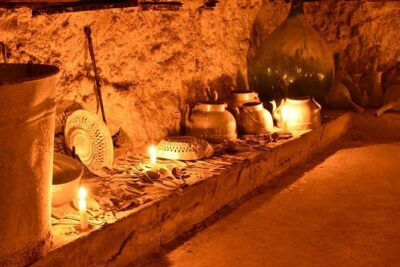 ★ 4.5Underground Cagliari tourFrom $36351 reviews
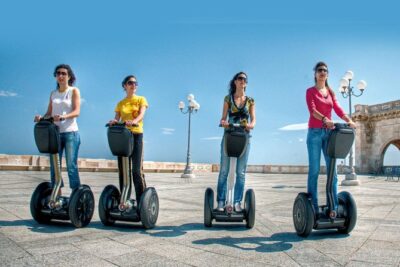 ★ 5.0Cagliari Segway TourFrom $83199 reviews
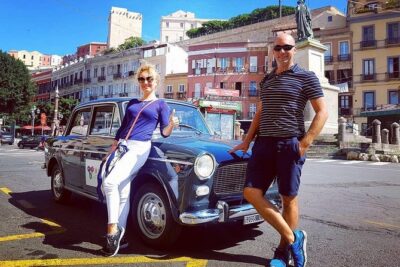 ★ 5.0Cagliari Vintage TourFrom $84185 reviews
 ★ 4.7Cagliari: Molentargius Natural Park Segway Tour with CoffeeFrom $81114 reviews
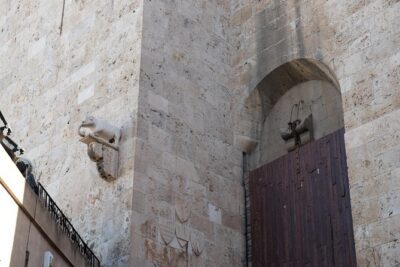 ★ 5.0Cagliari Walking tourFrom $3282 reviews
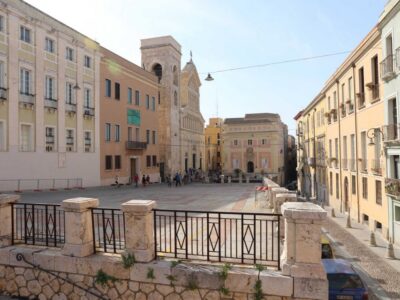 ★ 4.9Cagliari: walking tour through the alleys of CastelloFrom $3374 reviews
Browse the lists this tour appears in