
Reviewed · GUIDED
Guided Electric Bicycle Tour in Cagliari
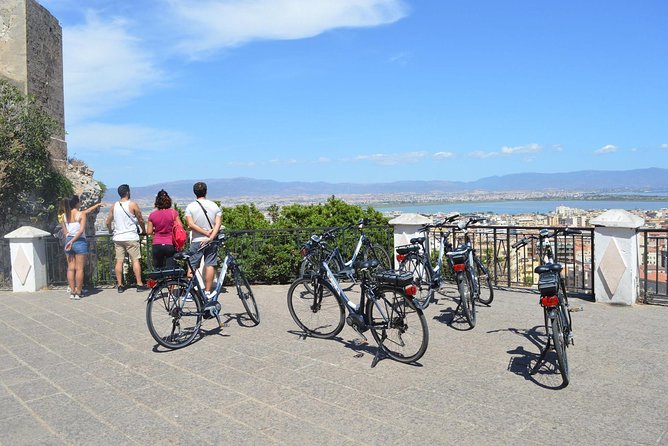
Cagliari’s hills feel easy on an e-bike. You get a tight 2-hour loop through the old quarters, with assisted pedaling that turns steep climbs into smooth cruising. What I like most is the way the route mixes big-picture town geography with real stops like Stampace churches and the panoramic fortress viewpoints, and the guides’ clear, friendly storytelling (Valentina and Simone come up again and again). One thing to consider: the ride goes through areas with car and pedestrian traffic, so you’ll want to stay alert and expect slower moments.
If you’re only in town for a day, this is a smart way to see more than walking would let you. The pace is designed for sightseeing on a schedule, not for workout bragging. And the group size stays small, capped at 9 travelers, which helps the guide keep an eye on everyone.
You’ll also want to be comfortable on a bike (at least basic balance and steering). The tour is listed for riders with a minimum height of 150 cm and assumes good weather, so plan around that if you’re visiting in shoulder season.
In This Review
- Key highlights I’d plan around
- E-Bike power meets Cagliari’s steep streets
- Meeting by the port: start point and what to expect first
- Centro Storico: the hill-hugging neighborhoods and the views
- Portus Karalis and the seaside city showcase
- Stampace: churches, shrines, and a neighborhood you can feel
- Quartiere Castello: medieval streets and the museum-citadel feel
- Porta Cristina and San Pancrazio: gates as living landmarks
- Cattedrale di Santa Cecilia and civic power in Piazza Palazzo
- Il Ghetto and Torre dell’Elefante: stories at the edges of the route
- Bastion Saint Remy: the terrace viewpoint that makes the ride worth it
- Villanova and the balcony district feel
- Guides, comfort, and the little stuff that affects your experience
- Timing and value: the price that makes sense for a short stay
- Who this tour fits best
- Should you book this electric bike tour of Cagliari?
- FAQ
- What is the duration of the guided electric bicycle tour in Cagliari?
- How much does the tour cost per person?
- What language is the tour offered in?
- Where do you meet for the tour?
- How many people are in a group?
- Do I need to know how to ride a bike?
- Is there a height requirement?
- Which stops include admission tickets and which are free?
Key highlights I’d plan around
- Assisted pedaling that handles Cagliari’s hills without beating you up
- Old districts in a short time: Stampace and Quartiere Castello
- Strong viewpoint payoff at Porta Cristina and Bastion Saint Remy
- A route that balances monuments, neighborhoods, and city stories
- Usually smooth group management with a max of 9 travelers
Rather have a local along? More guided Cagliari days
- Guided Electric Bicycle Tour in Cagliari★ 5.0 · 320 reviews
- Cagliari: 2-Hour Guided E-Bike Tour with Coffee★ 4.7 · 240 reviews
- Cagliari: Old Town Guided E-Bike Tour★ 4.9 · 189 reviews
- Cagliari: Guided Kayak Excursion in the Gulf of Cagliari★ 4.9 · 173 reviews
E-Bike power meets Cagliari’s steep streets
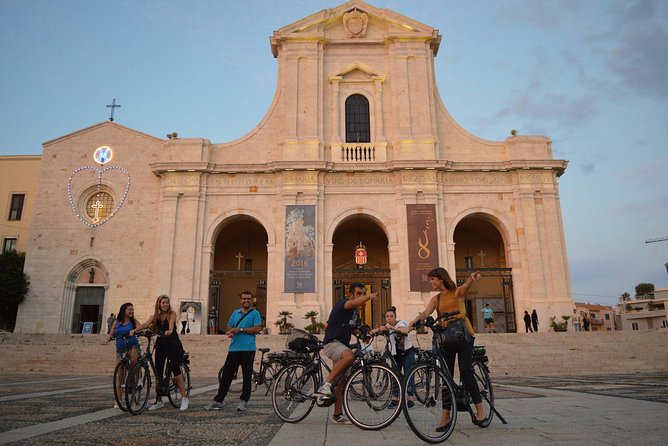
This tour is built for one big reality: Cagliari climbs. The city’s historic neighborhoods sit up and down the hills, and on a regular bike you’d spend your energy fighting the slope. With an electric bike, the effort stays reasonable while you still move at a sightseeing pace.
The payoff is that you can actually cover multiple areas in about 2 hours without rushing or arriving exhausted. It also helps if you’re traveling as a couple, with friends, or as a family group where not everyone wants a strenuous outing. People commonly describe the ride as easygoing, even on steep sections.
Now, the practical caution: e-bike doesn’t mean traffic disappears. The route runs through streets where cars and pedestrians share space. The best plan is to treat it like a guided city walk that happens on wheels—stay predictable, slow down at crossings, and keep close to the guide when you’re called up to the next stop.
Meeting by the port: start point and what to expect first
You’ll meet at Via Molo Capitaneria di Porto, 17, 09125 Cagliari and the tour loops back to the same place. That port-adjacent start matters, especially if you’re coming from a cruise area or you’re trying to minimize complicated transfers.
Before you head out, you’ll get oriented—people mention having a moment to get comfortable with the bike in a quieter area. That’s a big deal on an e-bike tour: once you’re confident with braking, starting, and how much assistance you’re getting, the rest feels calmer.
Small group size also helps here. With a maximum of 9 travelers, the ride doesn’t turn into a long moving conga line. You’re more likely to hear the guide’s explanations clearly at each stop, and it’s easier to pause without holding everyone hostage.
Centro Storico: the hill-hugging neighborhoods and the views
The center of the route is Centro Storico, and the assisted pedaling is the whole reason this works. You’ll travel up and down city hills with far less strain than you’d expect, which lets you actually stop, look, and listen instead of just surviving the climb.
In this area, you’ll pass through districts tied to Cagliari’s layers of time—places like Stampace, Castello, and Villanova come up as key neighborhood stops. You’re also given chances to reach the kind of panoramic points where the city opens up. If you like cities more from above—harbors, rooftops, church domes—this is where the tour starts stacking up value.
There’s also a common pattern to the pacing: you’ll move, pause, and move again. That’s ideal for a short visit because you don’t spend all your time doing one long sit-down photo session. Just be aware that if you end up riding slightly behind the guide, the spoken bits can feel less loud or less clear—so try to stay near the group front when possible.
Portus Karalis and the seaside city showcase
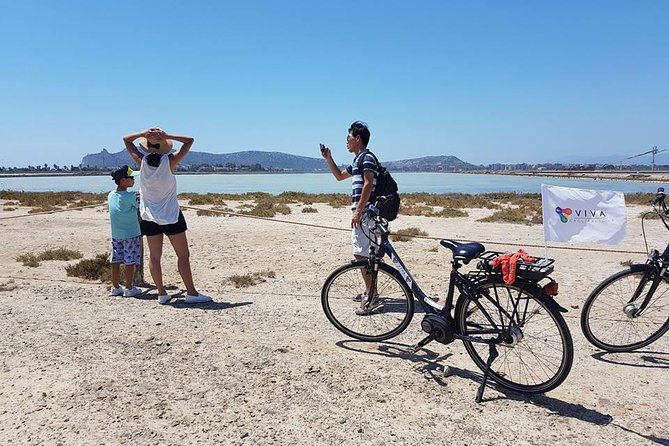
The tour then shifts toward the water at Portus Karalis, described as one of the most beautiful Mediterranean ports. You’ll spend a short moment here—about 10 minutes—and the idea is less about museum time and more about context. You’re seeing how the port and historic city connect, and how the seafront becomes part of the city’s identity.
From there, the route references major city streets that feel like the living room of Cagliari—lined with porticoes and Art Nouveau buildings. This matters because it helps you read Cagliari beyond the medieval layers. It’s a reminder that the city kept evolving, and those later styles sit right alongside older stone.
If you like a mix of eras—medieval gates followed by streets with early-1900s architecture—this “port-to-city” stretch is a good bridge.




Stampace: churches, shrines, and a neighborhood you can feel
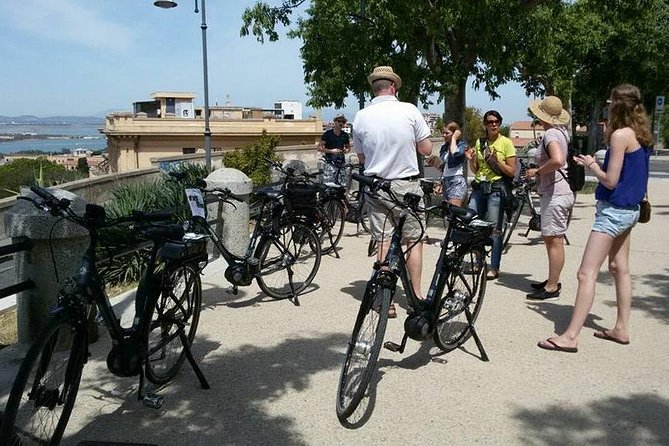
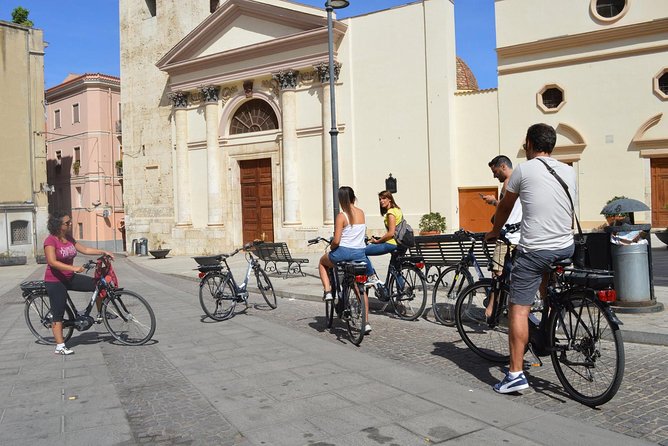
Stampace is where the tour gets especially interesting for anyone who likes church architecture and local religious traditions. You’ll move through the district tied to the seven churches theme, which in practice means you’re stopping at multiple sacred sites in a compact area.
Here’s what you’ll experience through the stops:
- Torre dello Sperone: the last surviving tower tied to the fortifications that once circled Stampace. It’s short but it signals the neighborhood’s defensive past.
- Chiesa di San Michele: highlighted as the city’s main example of Baroque architecture, and placed right at the center of the Stampace story.
- Chiesa di Sant’Efisio: a smaller eighteenth-century church tied to an ancient cult important to the whole island. This is the kind of stop where the guide’s storytelling adds a lot, because the building alone can’t explain the tradition.
The tour also includes a mention of the parish church that dominates the neighborhood at the top of a majestic staircase. Even if you don’t go inside, the placement tells you how Stampace was designed for community life—higher ground, more visibility, and a strong focal point.
One drawback to flag: this section is full of short stops. That’s great for variety, but if you want long museum-style time in each church, this isn’t that format. It’s a “see it, learn it, move on” approach.
Quartiere Castello: medieval streets and the museum-citadel feel
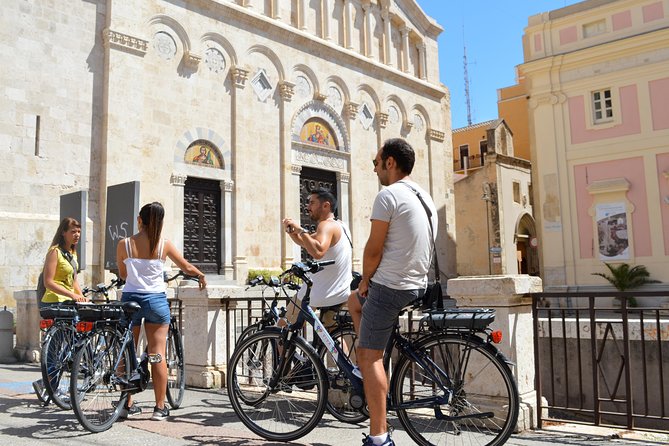
After Stampace, you’ll head into Quartiere Castello, described as Cagliari’s historic center par excellence. You’ll get more time here—around 40 minutes—which helps you slow down a bit and take in the medieval-quarter atmosphere.
Castello is also tied to the museum-citadel concept. The tour highlights collections housed in the citadel area, including the National Archaeological Museum (with Nuragic artifacts such as small bronzes) and the National Art Gallery. Even if you don’t spend hours inside, stopping in this area helps you understand why people go to Castello: it’s where Cagliari’s identity feels concentrated.
As you move, the guide typically connects street layout to history—fortifications, gates, and how people used these spaces. It’s a good match for visitors who want the “why” behind the view, not just the photo.
Porta Cristina and San Pancrazio: gates as living landmarks
The tour then spotlights Porta Cristina, an ancient medieval gate with a dedication history tied to Maria Cristina di Borbone. It’s also a major “panoramic point,” so it works well as a photo break and a viewpoint lesson.
Nearby, you’ll also hear about the Tower of San Pancrazio, linked to the north gate of the medieval city of Castel di Castro. This one is listed as not including admission, so if you’re hoping for optional entry, plan your expectations accordingly.
The bigger value here is how gates function in city life. They’re not just old stone—they’re evidence of how the city controlled movement and protected neighborhoods. When you see a gate from the street, you instantly understand why those medieval quarters felt like separate worlds.
Cattedrale di Santa Cecilia and civic power in Piazza Palazzo
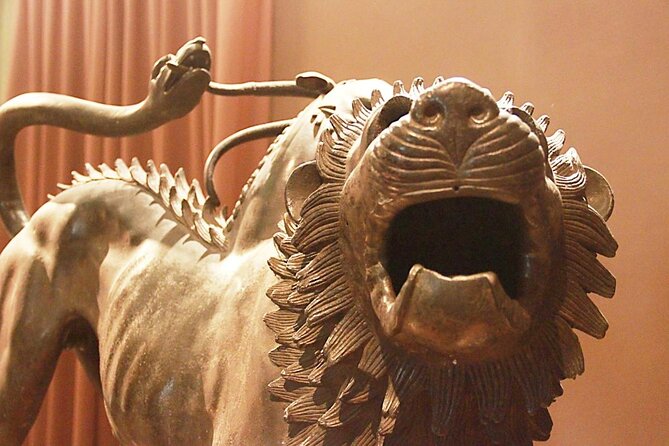
The route includes Cattedrale di Santa Cecilia, set in Piazza Palazzo and framed by several major historic buildings, including Palazzo Viceregio and Palazzo Arcivescovile. This stop is about more than architecture. It’s about the way political and religious power sit together in the same square.
You’ll also see Palazzo di Citta (not included in admission) and the Royal Palace area (also not included). Even without entry time, these exterior views help you connect the dots: Cagliari wasn’t only a fortress and a harbor—it was a seat of administration from different eras.
If you like “city reading,” this is a strong segment. You start to see how public space is organized, where authority concentrates, and why the most important buildings tend to sit where you can’t miss them.
Il Ghetto and Torre dell’Elefante: stories at the edges of the route
A stop at Il Ghetto at the Bastione di Santa Croce sets up the story of Jewish life in the city and the community’s synagogue site. This is the kind of stop that works best when the guide’s narration is strong—because it turns a corner of stone into a human history.
Then there’s Torre dell’Elefante, described as one of the most picturesque entrances to the medieval fortress, symbolized by a baby elephant. Even if you only have minutes here, it’s visually memorable and helps you spot key parts of the fortified structure as you ride.
The general strategy of the tour—short, well-chosen stops—works here. You don’t get swallowed by any single location, but you do leave with a set of images and stories you can connect later.
Bastion Saint Remy: the terrace viewpoint that makes the ride worth it
One of the strongest “why this works” moments is Bastion Saint Remy. You’ll get a brief stop—around 5 minutes—but it’s positioned as one of the city’s symbolic monuments with a breathtaking terrace view.
This kind of endpoint matters because it anchors everything you’ve just ridden through. After hopping between neighborhoods and monuments, a viewpoint turns the scattered pieces into a single map in your mind.
It’s also a reminder that Cagliari’s charm isn’t only in buildings. It’s in how the city sits in the terrain and how your perspective changes as you move.
Villanova and the balcony district feel
Finally, the tour reaches Villanova, known as a flower district with 1000 colorful balconies and also tied to Holy Week traditions. You’ll spend about 15 minutes here, which is enough time to absorb the mood of the neighborhood and understand why it’s associated with seasonal celebrations.
This stop is a useful contrast to the older stone structures earlier in the tour. You’re shifting from medieval and civic power centers into a more residential-feeling district where color and everyday life become part of the sightseeing.
If you’re coming from a cruise stop or you only have one morning in Cagliari, this closing segment can feel like the city “settles into place.”
Guides, comfort, and the little stuff that affects your experience
Guides are a big reason this tour earns such strong ratings. Valentina and Simone are repeatedly described as warm, friendly, and patient, with the kind of pacing that works even when families or mixed-experience riders are in the group.
There’s also a consistent theme: the bikes are in good working condition, and the e-assist is powerful enough to handle steep hills. That matters for confidence. When the bike responds well, you relax—and when you relax, you can actually enjoy the views.
A couple of comfort notes are worth keeping in mind. Some people say helmets and water are provided, while another note says no helmets were offered. Because that’s not uniform in the details you see, it’s smart to ask ahead. Also, even on an e-bike tour, wearing comfortable shoes helps because you’ll still be walking short distances between viewpoints and monuments.
Finally, traffic. One person described the experience as a bit harrowing due to auto and pedestrian traffic. That doesn’t mean it’s unsafe in general, but it does mean you should treat busy streets as part of the plan: keep your focus, don’t drift, and follow the guide’s instructions closely.
Timing and value: the price that makes sense for a short stay
At $56.86 per person for about 2 hours, this isn’t just a bike rental with a vague route. You’re paying for a guided circuit that hits a lot of Cagliari’s most memorable areas, including multiple neighborhood districts and several major monuments or viewpoint moments.
The best value angle here is time. On a short visit, you’d spend a lot of energy trying to stitch together all these areas on your own. With an electric bike and a planned route, you get the “lay of the land” effect fast. People also point out that the cost can be much lower than booking something similar through a cruise ship, especially when you’re trying to avoid inflated port-area pricing.
Is it worth it if you prefer unguided travel? That depends. If you love wandering and making your own stops, you might prefer a self-guided bike rental. But if you want structure and context—especially around neighborhoods like Stampace and the Castello district—this style of tour tends to feel like a good deal.
Who this tour fits best
This works well if you:
- want an efficient introduction to Cagliari without climbing on foot
- like city history told while you move, not in a classroom
- enjoy short stops at many sites, including viewpoints
- want an experience that feels approachable for mixed fitness levels
It may not be ideal if you:
- hate busy street cycling or get nervous in crowds
- want lots of time inside churches or museums
- only want slow, relaxed photo stops without moving between areas
Should you book this electric bike tour of Cagliari?
I’d book it if you’re planning a short stay and want a guided way to understand how Cagliari hangs together—port, old quarters, churches, medieval gates, and panoramic terraces—without spending your day fighting hills.
I’d hesitate if you’re highly traffic-sensitive or expect long stays at each monument. This tour is designed for movement and broad coverage, not museum deep dives.
If you do book, one smart move is to go early in your day (when streets can feel calmer) and ride near the front when you can, so you don’t miss the story bits. With a strong guide and an e-bike that makes the hills manageable, it’s one of the easiest ways to turn limited time into real city understanding.
FAQ
What is the duration of the guided electric bicycle tour in Cagliari?
It runs for about 2 hours.
How much does the tour cost per person?
The price is listed as $56.86 per person.
What language is the tour offered in?
The tour can be offered in English and Italian.
Where do you meet for the tour?
The meeting point is Via Molo Capitaneria di Porto, 17, 09125 Cagliari CA, Italy.
How many people are in a group?
The tour has a maximum of 9 travelers.
Do I need to know how to ride a bike?
Yes. It’s essential to know how to ride a bike.
Is there a height requirement?
Yes. The minimum height is 150 cm.
Which stops include admission tickets and which are free?
The Centro Storico stop includes an admission ticket. Many other stops are listed as free, while a few are listed as not included (such as the Tower of San Pancrazio, Palazzo di Citta, the Royal Palace, Il Ghetto, and Torre dell’Elefante).
A Cagliari Local Shows You Round


More Tours in Cagliari

More Tour Reviews in Cagliari
New in from around Cagliari


Guided, compared.
 ★ 4.4From Arbatax: Full-Day Guided Boat Tour of the Baunei CoastFrom $69509 reviews
 ★ 4.7Olbia: Gallura Winery Guided Tour with TastingFrom $61451 reviews
 ★ 4.5One day guided boat tour along the Baunei coast.From $68320 reviews
 ★ 4.9Cagliari: Guided Segway TourFrom $81314 reviews
 ★ 5.0Alghero – Dolphin Watching and Guided Snorkeling (summer tour)From $78311 reviews
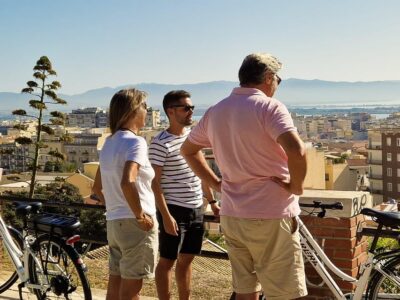 ★ 4.7Cagliari: 2-Hour Guided E-Bike Tour with CoffeeFrom $58240 reviews
 ★ 4.7Alghero: Guided Horseback Ride at Lake Baratz & Porto FerroFrom $98201 reviews
 ★ 4.9Cagliari: Old Town Guided E-Bike TourFrom $56189 reviews