
Reviewed · NURAGHI & ANCIENT SARDINIA
Excursion to the Nuraghe Su Nuraxi of Barumini from Cagliari
One drive and you’re in pre-Roman world. This tour mixes Su Nuraxi at Barumini with quick cultural stops that explain what made Sardinia powerful long before Rome. You also get a guided look at fortifications and ritual sites without the stress of renting a car.
What I love most is the way the guide turns stone into a story. The defensive design at Su Nuraxi really comes alive—especially the double-walled central keep and how the water system was protected. I also like that the group stays small (up to 8), so you’re not stuck watching from the back.
My main caution: your schedule on-site is tight, and the Su Nuraxi entrance fee is not included. If you’re the type who wants to linger in every corner or read every museum panel, you may need a separate add-on day.
In This Review
- Key things that make this tour worth your time
- Why Su Nuraxi from Cagliari is a smart half-day choice
- Meeting point at Beachtours: how the day starts smooth
- On the drive: wine press discovery and the story of gold mining
- Villamar in Piazza del Arte: murals, a drink, and a bathroom break
- Las Plassas: a medieval castle explanation that adds depth
- Entering Su Nuraxi: UNESCO fortifications and the double-walled keep
- The walking reality
- Ticket and timing matter
- The giant tomb Tomba dei giganti Sa Domu e S’Orcu on Giara of Siddi
- Price and value: what $81.71 really covers
- Who this tour suits best—and who should adjust expectations
- Practical tips to make your morning feel easier
- Should you book this Su Nuraxi day trip from Cagliari?
- FAQ
- How long is the excursion from Cagliari?
- Where do I meet for the tour?
- Is the Su Nuraxi entrance fee included?
- Are there any other entrance fees during the trip?
- What language is the tour offered in?
- What happens if weather is bad?
Key things that make this tour worth your time
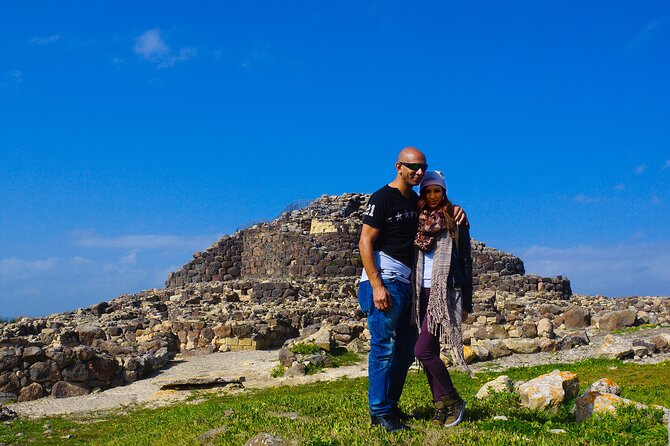
- UNESCO guided tour of Su Nuraxi with enough time to understand the complex, not just take photos
- Small-group format (max 8 travelers) which helps the tour feel paced and personal
- Real fortress details explained, including storage and water protection ideas
- Free stops built in for a break, plus a visit to a well-preserved giant tomb
- Sardinia backstories on the drive, from the oldest Mediterranean wine press concept to gold mining
More of ancient Sardinia and its nuraghi
- Tour to the archaeological site of Nora – from Cagliari★ 5.0 · 80 reviews
- Tiscali mount guided hike★ 5.0 · 53 reviews
- Su Nuraxi of Barumini World Heritage UNESCO site Tour★ 5.0 · 36 reviews
- Nora Tour from Cagliari★ 5.0 · 24 reviews
Why Su Nuraxi from Cagliari is a smart half-day choice
Cagliari to Barumini isn’t a quick hop, so I like that this tour is designed as a 4-hour loop. You leave at 9:00 am and return to the same meeting point, which keeps the day from getting swallowed by logistics. It’s a good fit when you want one of Sardinia’s top archaeological sites without losing a full day.
This is also a day trip built around context. You’re not just dropped at Su Nuraxi and sent off. You’ll get explanations along the way—covering what people produced and how they organized power—so when you finally arrive, the place makes more sense.
The pace is brisk, but that’s not a flaw if you plan for it. Think of it as a guided orientation to a major UNESCO site, plus a couple of smaller stops that give you a feel for the region. You’ll walk a bit, and some areas can be narrow with stairs, so comfortable shoes matter.
If you’re traveling with limited time in Sardinia, or if you want your history stops to feel alive rather than like a checklist, this format works.
Meeting point at Beachtours: how the day starts smooth
The tour starts at Beachtours | Secrets of Sardinia, Largo Carlo Felice, 76, 09124 Cagliari. You’ll meet there at 9:00 am, and the tour ends right back at the same place. For me, that simple “start and end in the same spot” is the kind of detail that prevents day-trip stress.
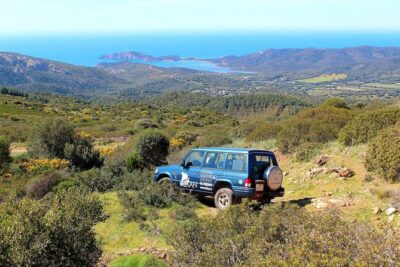
You’ll use a mobile ticket, so plan to have it ready on your phone. The tour includes a minivan with air conditioning, which is a real comfort when you’re crossing Sardinia in warmer months. Plus, the small group size (again, up to 8) helps the trip feel coordinated.
One more practical note: the tour is described as offered in English. If you’re in a multilingual group, you may find that explanations are handled in different languages without everyone listening to the same thing at once. I like this approach because it usually keeps time from being wasted.
If you want your day to feel relaxed, arrive a few minutes early. The meeting point is easy enough to reach with public transportation, but you’ll still want a calm start.
On the drive: wine press discovery and the story of gold mining
A big part of what makes this tour satisfying is what happens before you even reach Su Nuraxi. Early on, you’ll hear about the discovery of the oldest wine press in the Mediterranean, plus how Sardinia’s wine production shaped local life. Even if you don’t drink wine, it’s a useful lens: it explains how people organized agriculture, labor, and trade long before modern tourism.
Then the tour shifts to another form of power: gold mining and mining in Sardinia. These are the kinds of topics that help you understand why communities invested in defense and infrastructure. When you connect economic force to security needs, the stone structures you’ll see later feel less random.
I also appreciate that these stories are told in a way that fits a road trip. You’re not sitting through a classroom lecture. It’s more like getting the right background chapters so the main attraction lands harder when you arrive.
If you enjoy historical explanations but don’t want an all-day museum marathon, the driving segments help you stay engaged.
Villamar in Piazza del Arte: murals, a drink, and a bathroom break
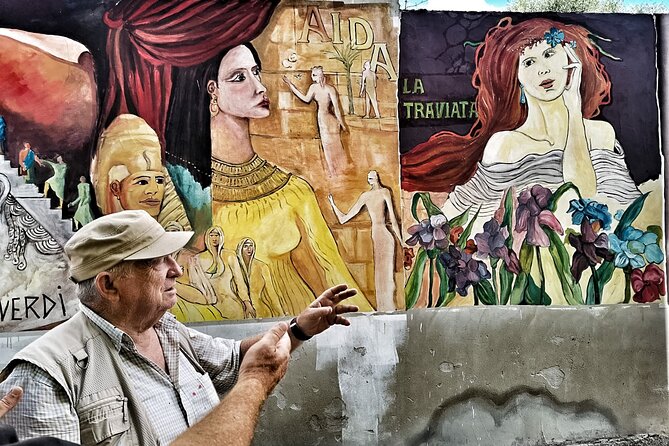
One of the most practical stops is in Villamar, at Piazza del Arte. This is a short 10-minute break where you can grab a drink and use hygienic facilities—exactly the kind of thing that makes a half-day tour feel doable.
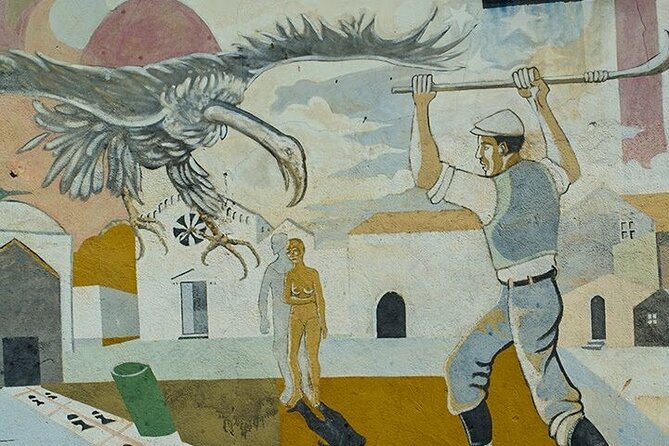
You’ll also get a quick orientation to the murals in the piazza. The murals aren’t just a background detail; they’re a fast way to see how today’s community expresses identity in public space. It’s also one of those stops where you can stretch your legs without committing to a long walk.
Because the timing is short, keep your expectations realistic. This is not a café hangout. It’s a reset button, plus a small dose of local art.
If you’re someone who prefers not to rush through every stop, try to use this moment efficiently: drink some water, take a few photos of the murals, and be ready when the group reforms.


Las Plassas: a medieval castle explanation that adds depth
Another stop is focused on the medieval castle of Las Plassas. You won’t necessarily be touring a building with long entry time here; instead, you’ll learn about the castle and what it meant in the medieval period.
I like this kind of “context stop” because it keeps the day from becoming only prehistoric archaeology. Sardinia didn’t stop at Nuraghi towers. The island’s control changed over time, and castles were part of that story.
Even if you’re not a medieval specialist, the explanation helps you notice patterns. People keep building systems to defend what they value. When you pair that idea with what you’ll see at Su Nuraxi, the day feels connected rather than chopped into separate eras.
If you’re the type who loves historical continuity, this stop is a plus.
Entering Su Nuraxi: UNESCO fortifications and the double-walled keep
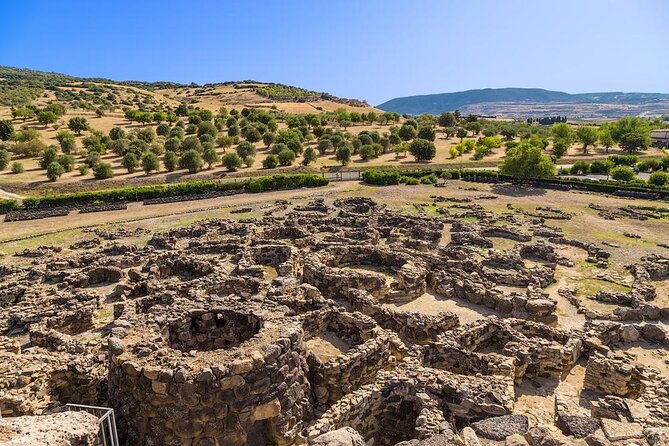
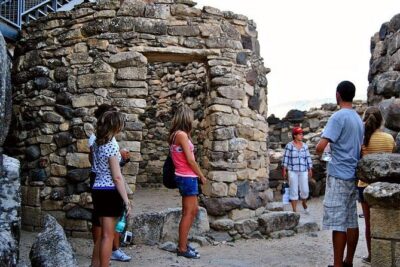
This is the heart of the day: Su Nuraxi in Barumini, a UNESCO World Heritage Site. You’ll have a guided tour of about 1 hour 10 minutes, and this is where the archaeology stops being abstract.
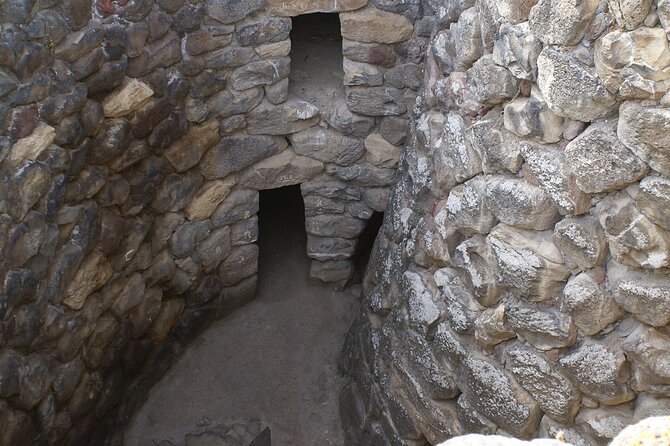
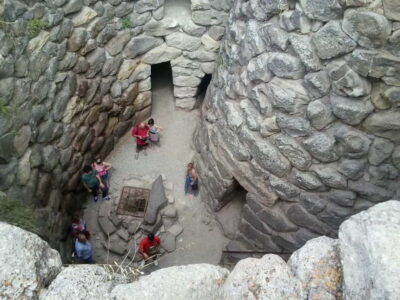
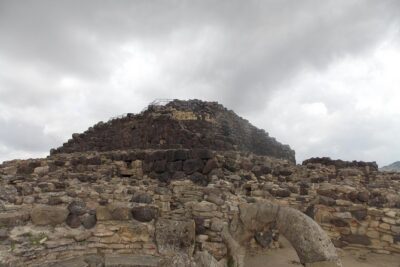
Expect a guided route that focuses on what makes Su Nuraxi such a standout fortress structure. What really grabbed me is the defensive logic: how the central area is designed for protection, including a double-walled keep. The explanations connect the layout to practical needs—storage for grain and protected access to water. In other words, it’s not just a monument. It’s a designed system.
From the higher points, you can also understand Su Nuraxi as part of a larger defensive network. Even in a short visit, the guide helps you “read” the structure instead of just looking at it.
The walking reality
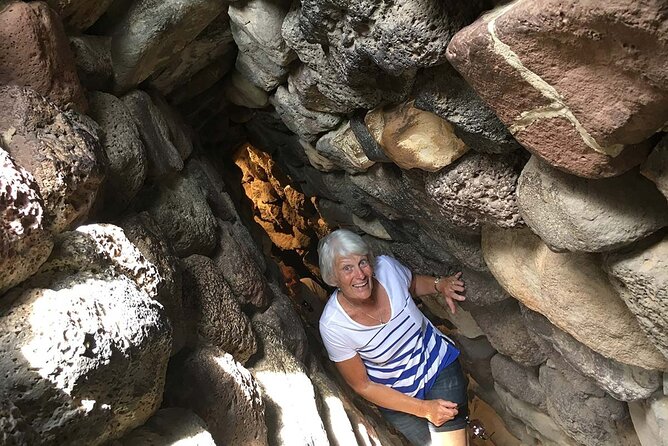
There’s some walking and parts can involve narrow stairs. If you’re sensitive to uneven stone or tight steps, wear shoes with good grip. I’d also avoid bulky backpacks that swing around on stair sections.
Ticket and timing matter
The key point for planning: the Su Nuraxi entrance fee (about €15 per person) is not included. Make sure you’re ready to pay at the right time, so you don’t lose the rhythm of the tour.
One more consideration: the on-site time is built for guided understanding, not slow wandering. If you love museum-style reading or want extra time beyond the route, you may feel a bit rushed. That’s not a deal-breaker, but it is worth knowing before you book—especially if you’re tempted to pair this with lots of your own independent exploring right afterward.
The giant tomb Tomba dei giganti Sa Domu e S’Orcu on Giara of Siddi
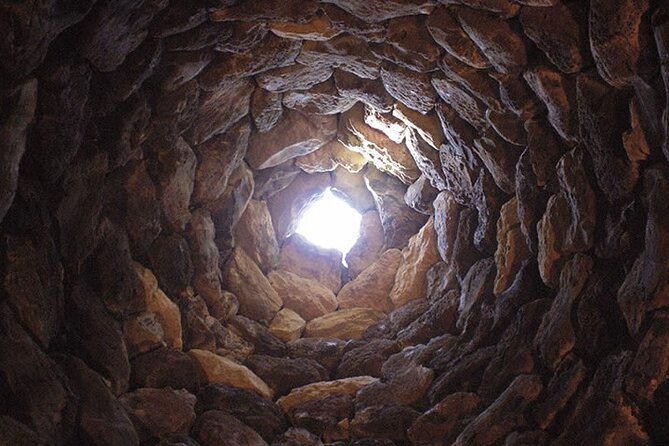
After Su Nuraxi, you’ll visit Tomba dei giganti Sa Domu e S’Orcu. This stop is short—about 15 minutes—but it’s a special one. Giant tombs like this are part of Sardinia’s long pre-Roman ritual tradition, and this one is described as very well preserved.
You’ll also be on the Giara of Siddi, which gives the site an extra sense of place. Even with limited time, you’ll get enough context to understand what the tomb represents and why it fits into the broader prehistoric world you’ve been learning about.
This isn’t the place to expect a long independent audio stroll. It’s more like a compact, guided “look and understand” moment before you head back.
Still, I think it’s a good balance: Su Nuraxi gives you fortifications and day-to-day power. The giant tomb gives you the spiritual and communal side—at least as much as time allows on a half-day tour.
Price and value: what $81.71 really covers
The price is $81.71 per person, and it’s best evaluated as a package rather than a single-site ticket.
What’s included is meaningful:
- Driver/guide
- Transport by minivan with air conditioning
What’s not included:
- Food and drinks
- Any purchases
- Entrance fee for Su Nuraxi (about €15 per person)
The best value here is the guidance at Su Nuraxi and the way the route stacks multiple learning moments into one managed morning. You’re paying for time saved (no car rental, no route planning), plus interpretation that you might miss if you visit on your own without local context.
Also, the small group size (max 8) matters. On bigger buses, you can get stuck in a crowd. Here, you’re more likely to hear the guide clearly and stay organized at the stops that require walking.
Yes, there’s extra cost for the Su Nuraxi ticket. But once you factor in that you’re also getting guided time, transport, and several short stops (including free ones), the total feels reasonable for a UNESCO-focused half-day.
Who this tour suits best—and who should adjust expectations
This tour is a strong match for you if you want:
- One main UNESCO site with a guide who focuses on how it worked
- A few quick regional stops that add color (murals, medieval context, ritual tombs)
- A small group day that stays under 4 hours
It may not be ideal if you:
- Want to spend lots of time at the site museum areas or read every label slowly
- Prefer a more flexible schedule where you can pause for longer at viewpoints
Also note the physical reality. Some stairs can be narrow, and you’ll do enough walking to feel it by the end. Most people can participate, but if mobility is a concern, go into it knowing the pace is guided and the terrain is real.
Language is another expectation to manage. The tour is offered in English, and if multiple languages are present, the group may be handled by language sections. That’s usually efficient. It can also mean you might not hear every detail if you’re not in the language track you expected.
Practical tips to make your morning feel easier
A few small moves make this kind of day trip much smoother:
- Bring cash or a card for the Su Nuraxi entrance fee, since it’s not included.
- Wear shoes you trust on stone stairs.
- Bring water. Food and drinks aren’t included, even though there’s a Villamar pause for a drink.
- If you love photography, plan for quick shots. The tour schedule is tight, so you won’t have long free roam time.
- Use the Villamar stop well. Take a bathroom break there, not later when time is scarce.
If you’re the type who likes to learn as you go, pay attention during the drive segments about wine press discovery and mining. Those explanations give you something to connect with when you see defenses and communal sites later.
Also, one of the best signals for this tour is that it tends to sell in advance. If your dates are firm, I’d avoid waiting too long.
Should you book this Su Nuraxi day trip from Cagliari?
I think you should book if you want a guided, efficient way to see Su Nuraxi and understand what you’re looking at. The fortress explanations—storage, protected water access, and the double-walled keep—are the kind of details that turn a stone site into a clear story. Add in the short visit to a well-preserved giant tomb, plus quick stops that cover wine production and gold mining, and you get a day that feels more like learning than touring.
I wouldn’t book this if your top priority is slow museum time or if you need lots of independent wandering. The on-site time is designed for guided coverage, and that means you’ll move on even if you’re still curious.
If you’re flexible, comfortable with a bit of walking, and ready to pay the Su Nuraxi entrance fee, this is a solid value way to experience one of Sardinia’s defining prehistoric sites without the hassle of planning it yourself.
FAQ
How long is the excursion from Cagliari?
The tour is about 4 hours long, starting at 9:00 am and ending back at the meeting point in Cagliari.
Where do I meet for the tour?
You meet at Beachtours | Secrets of Sardinia, Largo Carlo Felice, 76, 09124 Cagliari.
Is the Su Nuraxi entrance fee included?
No. The entrance fee for Su Nuraxi is about €15 per person and is not included in the tour price.
Are there any other entrance fees during the trip?
The visit to Tomba dei giganti Sa Domu e S’Orcu and the Villamar stop are described as free. The only listed paid entrance is Su Nuraxi.
What language is the tour offered in?
The experience is offered in English. If there are multiple languages on board, the group may be split by language.
What happens if weather is bad?
This experience requires good weather. If it’s canceled due to poor weather, you’ll be offered a different date or a full refund. You can cancel up to 24 hours in advance for a full refund.
More Tours in Sardinia



More Tour Reviews in Sardinia

More Nuraghi and Ancient Sites
New in from around Sardinia

Nuraghi & Ancient Sardinia, compared.
 ★ 5.0SU NURAXI BARUMINI Unesco World Heritage SiteFrom $108129 reviews
 ★ 4.9Cagliari: Su Nuraxi di Barumini UNESCO Site Guided TourFrom $7992 reviews
 ★ 5.0Tour to the archaeological site of Nora – from CagliariFrom $9080 reviews
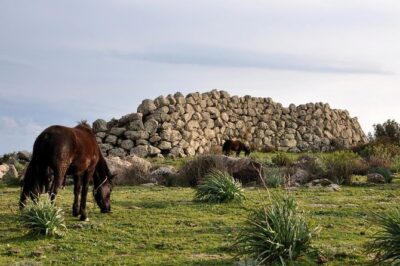 ★ 5.0Barumini Unesco Site and Giara of Gesturi Tour from CagliariFrom $10879 reviews
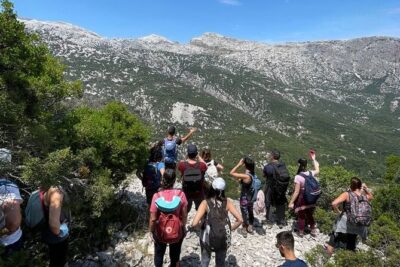 ★ 5.0Tiscali mount guided hikeFrom $7853 reviews
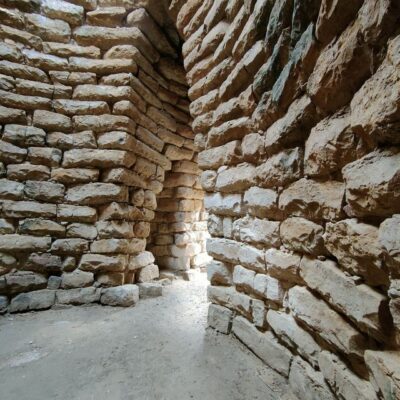 ★ 4.9The Nuraghe Tour: Day Trip from CagliariFrom $10038 reviews
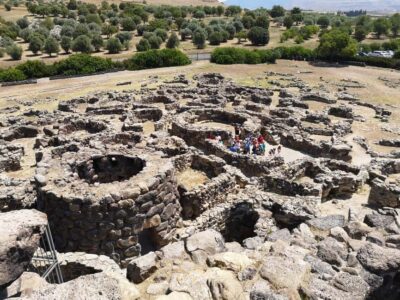 ★ 5.0Barumini Nuraghe Tour from CagliariFrom $10637 reviews
 ★ 5.0Su Nuraxi of Barumini World Heritage UNESCO site TourFrom $8336 reviews
Browse the lists this tour appears in