
Reviewed · NURAGHI & ANCIENT SARDINIA
Cagliari Private Shore Excursion: Nora Archaeological Site and Pula Town
Nora is a rare Sardinian stop. In one private day, you’ll pair the Phoenician-to-Roman ruins of Nora with relaxed time in Pula. The big win is the pacing: your guide keeps things efficient so you see the highlights without losing your whole cruise day.
I really like two things about this outing: the private guide (focused on Phoenician, Carthaginian, and Roman connections) and the round-trip private transfers that work around cruise schedules. And the experience level shows up in the details too, including the effort a guide named Jr put into keeping the day smooth and uncrowded.
One thing to plan for: the main site visit is about 1.5 hours and you’ll be walking paths that include cobblestones. If you love slow, museum-style archaeology time, this may feel just a bit tight.
In This Review
- Key Things You’ll Notice on This Private Day
- Nora and Pula Work So Well Together
- Port Pickup and the Real Meaning of a Private 5–6 Hours
- The Drive From Cagliari to Nora (and Why the Timing Is Right)
- Area Archeologica di Nora: The Layout You Should Aim For
- Thermal baths and the cobbled approach
- Piazza del Foro: the center of action
- Temple of Tanit: Carthaginian religion made stone-visible
- The Tophet uncovered by a storm
- Aqueduct, necropolis, and mosaics
- Nora’s Theater and the Sinking Shore Reality Check
- Pula Town: 90 Minutes That Feels Like a Real Break
- Price and Value: What You’re Paying For
- Who Should Book This Shore Excursion
- Should You Book Bitan Daily Tours for Nora and Pula?
- FAQ
- How long is the Cagliari private shore excursion to Nora and Pula?
- Where does the tour meet and end?
- Is pickup and drop-off included?
- Is there a guide, and what language is it in?
- What admissions are included?
- Is bottled water included?
- Does the tour include mobile tickets and skipping lines?
- What vehicle should I expect?
- Is this tour limited to a small group?
- Is the excursion flexible if delays happen?
Key Things You’ll Notice on This Private Day
- Nora’s layers: Phoenician beginnings, Carthaginian influence, and Roman expansion in one archaeological zone
- Skip-the-lines access and a timed plan that respects cruise ship timing
- Piazza del Foro and the Temple of Tanit as key visual anchors inside the open-air ruins
- Tophet details after a storm: the uncovered Phoenician cemetery area that led to excavations
- Nora’s theater and how festivals like La Notte dei Poeti can affect what you see
- About 90 minutes in Pula for alleys, craft shops, and optional restaurant time
More of ancient Sardinia and its nuraghi
- Tour to the archaeological site of Nora – from Cagliari★ 5.0 · 80 reviews
- Tiscali mount guided hike★ 5.0 · 53 reviews
- Su Nuraxi of Barumini World Heritage UNESCO site Tour★ 5.0 · 36 reviews
- Nora Tour from Cagliari★ 5.0 · 24 reviews
Nora and Pula Work So Well Together
A Cagliari cruise day can turn into a blur: bus rides, long waits, photos from the window. This one avoids that. You get a focused run at Nora’s archaeological core, then you switch gears to Pula’s small-town streets, where the day feels more human and less like a checklist.
Nora is especially good on a first visit because it’s not just “old stones.” The site tells a story of trading power in the Mediterranean—Phoenician beginnings that later connect to Carthaginian worship (like the Temple of Tanit) and then Roman urban life. Even if you’re not a hardcore history person, your guide’s explanations make the layout easier to read.
And Pula adds a nice balance. You can browse, snack, and slow down after the ruins. This combo makes the day feel like two different flavors of Sardinia in one outing.
Port Pickup and the Real Meaning of a Private 5–6 Hours
The schedule is built for cruise passengers. You meet at Calata Azuni, Cagliari, and then you’re in a private vehicle for the drive down to Nora. From there, your total time is roughly 5–6 hours, with the plan structured so you get back to the pier on time.
In practical terms, private transport matters more than most people think. It reduces waiting time, and it also means your guide can adjust the rhythm if the port situation is busy. There’s also an explicit safety valve: if the tour starts late or delays happen, the day may be shortened to ensure you’re back by the scheduled ship time.
What’s included that makes this smoother:
- Port pickup and drop-off (so you’re not managing taxi math)
- Bottled water
- Insurance
- Guaranteed skip-the-lines access
- A professional guide
- Mobile ticket use
Vehicle comfort note: the tour uses an air-conditioned minivan, and Wi‑Fi is offered when available. The exact vehicle can vary, and the operator notes that it may differ based on management discretion.
The Drive From Cagliari to Nora (and Why the Timing Is Right)
Your first stop is the 30-minute drive from Cagliari cruise port to Nora. This is more than just getting there. A private guide uses this travel time to set context, and that’s what turns Nora from a pile of ruins into a place you can follow.
You’ll be heading to the ancient ruins of Nora, described as Sardinia’s first Phoenician city. Even if parts of the story are hard to prove, the tradition is part of what makes the site engaging, and your guide will connect those legends to what archaeology shows.
Also, the day starts efficiently: the itinerary lists admission as free for the Cagliari portion. The “real ticket money” goes toward Nora.
Area Archeologica di Nora: The Layout You Should Aim For
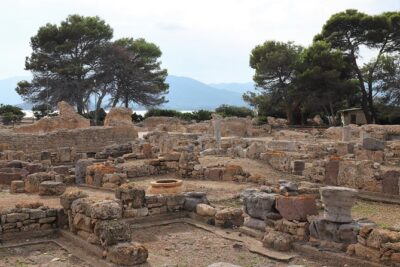
Once inside the archaeological zone, the visit is about 1.5 hours with your guide. This is the heart of the day, and it’s where you’ll want to stay present. Nora is an open-air site, and the structures are spread out enough that a guide helps you avoid wandering randomly.
Here’s what you should expect to focus on:
Rather keep it private in Sardinia? A few more

Thermal baths and the cobbled approach
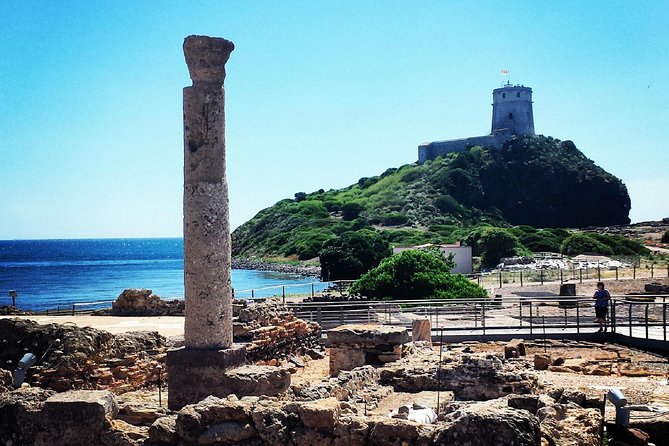
You’ll see the remaining thermal baths, then walk along a cobbled street toward the main open-air center. Walking this route is useful because it connects how daily life worked to what you see next. It’s not abstract history; it’s movement through the site.
Piazza del Foro: the center of action
The key hub is Piazza del Foro, which functions like the archaeological “stage” where major religious and civic elements are visible. It’s a practical meeting point for photos and orientation, and it helps you understand Nora as a functioning town rather than separate attractions.
Temple of Tanit: Carthaginian religion made stone-visible
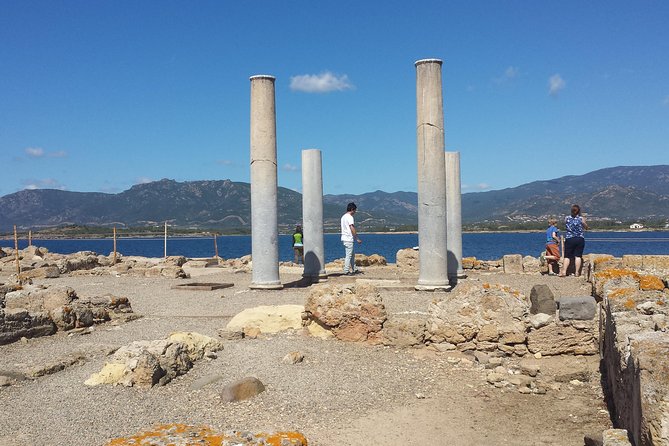
In this area you’ll see the ruins of the Temple of Tanit, tied to a Carthaginian goddess. If you want one “aha” moment at Nora, it’s this kind of landmark—because it shows the site’s layered identity, not just a single Roman chapter.
The Tophet uncovered by a storm
Nora’s excavations gained momentum in 1889, when a storm uncovered the Phoenician Tophet, described as a cemetery for children. That detail matters because it links the archaeology to real-world events: weather, coastline change, and the chance discovery of buried remains.
Aqueduct, necropolis, and mosaics
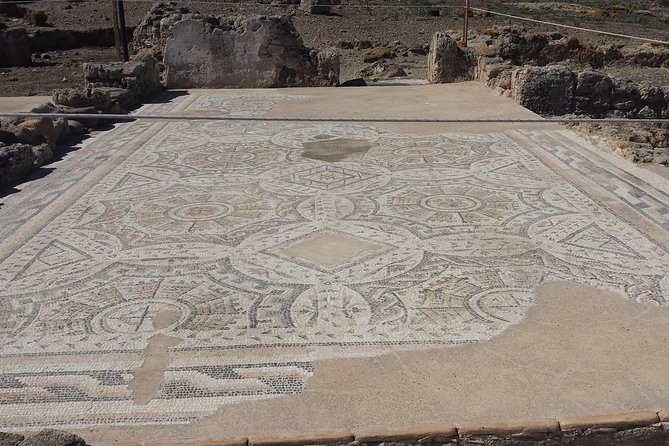
As you move through the zone, you’ll also encounter an aqueduct and necropolis, plus remains of a nobleman’s house dating back to the third century. The standout inside that home is the mosaic-lined rooms—the kind of artistic work that makes ancient life feel less distant.
In a short visit, this is where your guide earns their fee: you don’t just get facts, you get a sense of why these pieces belong together.
Nora’s Theater and the Sinking Shore Reality Check
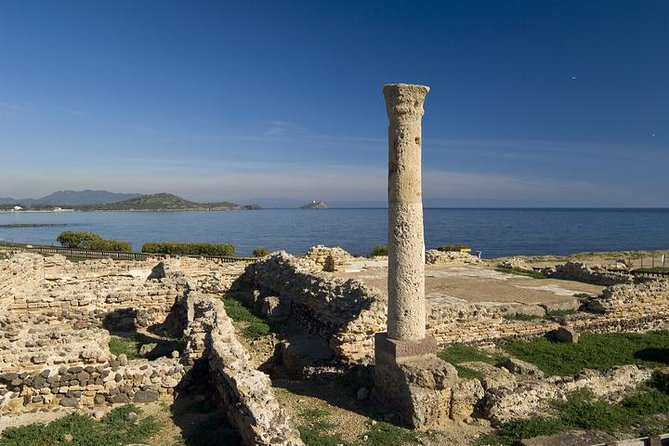
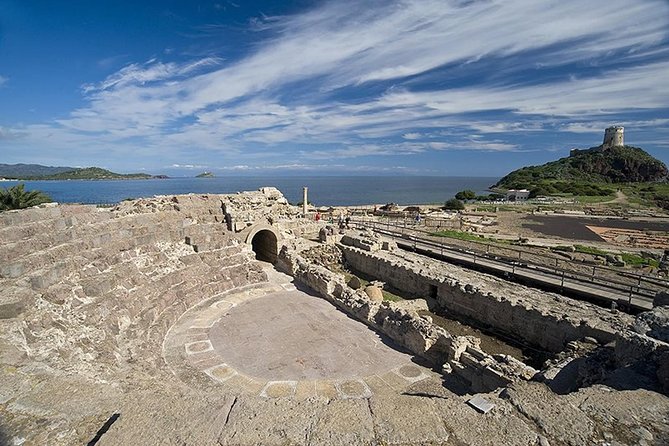
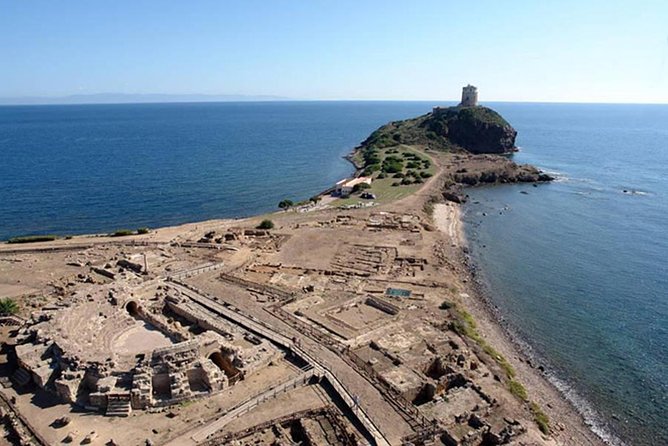
If you remember one image from Nora, make it the theater. It’s described as the only theater in Sardinia, and it once held about 1,000 people across 20 terraces, with marble lining in its day. Today, it’s still an impressive structure, and it’s the site’s main “big moment.”
One practical twist: La Notte dei Poeti is held there, and during that festival the theater can be covered to protect the ruins. Your chance to see the theater “fully open” depends on timing, so don’t assume it will always look identical to photos online.
Now, here’s the part that makes Nora feel both historic and urgent. The southern part of Sardinia is sinking into the Mediterranean Sea, and the itinerary explains that a significant portion of the former town is now submerged. That means the site is not static. It changes over time, and some parts may eventually become harder or impossible to access.
That’s also why a guided visit is valuable in the near term. If you wait too long, you may get a thinner version of what’s visible today.
Pula Town: 90 Minutes That Feels Like a Real Break
After Nora, you’ll head to Pula, with about 90 minutes in town. This is the “breather” portion of the day, and it’s timed nicely so you can actually enjoy it, not just race through a souvenir stop.
Pula is described as a hidden gem in southern Sardinia, with charming alleys and patrician homes. Translation: you’re walking in small lanes, not staring at a single monument. If you like texture—doors, stonework, everyday street life—this part of the day gives you that.
What to do with your time:
- browse craft shops for souvenirs
- pick a relaxed rhythm through the streets
- if timing allows, stop for a traditional restaurant meal
Also, admission is listed as free for the Pula portion. So your extra spending is truly optional.
Price and Value: What You’re Paying For
At $282.72 per person, this is not the cheapest way to do Nora and Pula. But private shore excursions often cost more because they save you from the biggest cruise-day headaches: long waits, crowded bus transfers, and the risk of missing the ship.
Here, the value is tied to several tangible items:
- Private round-trip transfers from the port (huge for timing)
- Professional guide who explains the Phoenician and Roman connections
- Admission included for Nora (the main ticket piece)
- Guaranteed skip-the-lines
- Small group size with a maximum of 8 travelers
That “small group” part matters. At a site like Nora, the difference between 2–8 people and a full coach shows up in your ability to hear the guide and move at a comfortable pace. Based on the guide feedback tied to Jr, this is the kind of day where your guide can keep the experience personal and not generic.
One more value point: this is designed to fit a cruise ship timeline. That’s hard to replicate when you do it on your own with taxis, private car options, and site-entry timing.
Who Should Book This Shore Excursion
This fits best if you want:
- a private guide at Nora, not just a quick entrance and a self-guided scramble
- a cruise-friendly plan that respects your ship’s schedule
- a balanced day mixing archaeology + town wandering
- fewer crowds and less stress, especially with skip-the-lines included
It may not be your best match if:
- you want a long, slow archaeology deep-dive (your guided time at Nora is about 1.5 hours)
- you have mobility issues or prefer fully flat walking, since the route includes cobblestones and walking within the open-air ruins
Should You Book Bitan Daily Tours for Nora and Pula?
If your priority is a smooth cruise day with real context at Nora and then genuine downtime in Pula, I think this is a strong choice. The combination of a small group, a private guide, port pickup/drop-off, and skip-the-lines access makes it feel built for how cruise travelers actually travel.
I’d book it if you’re excited by Phoenician-to-Roman layers and want someone to point out what you’d otherwise miss. If you’re the type who likes to linger for hours at one site, you might want a longer-format tour instead, because the pacing here is efficient by design.
One last tip: pack comfortable shoes and expect to walk. Nora is gorgeous, but it’s also an open-air site with real ground underfoot.
FAQ
How long is the Cagliari private shore excursion to Nora and Pula?
It runs about 5 to 6 hours, with timed stops including a drive to Nora, around 1.5 hours at the archaeological site, and about 90 minutes in Pula.
Where does the tour meet and end?
You meet at Calata Azuni, Cagliari CA, Italy, and the tour ends back at that same meeting point.
Is pickup and drop-off included?
Yes. The tour includes port pickup and drop-off and round-trip private transfer back to your cruise port.
Is there a guide, and what language is it in?
Yes. You get a professional tour guide and the tour is offered in English.
What admissions are included?
Nora’s admission is included (listed as 1 hour 30 minutes with admission ticket included). The Cagliari and Pula portions are listed with admission ticket free.
Is bottled water included?
Yes. Bottled water is included.
Does the tour include mobile tickets and skipping lines?
Yes. It includes a mobile ticket, and it is guaranteed to skip the long lines.
What vehicle should I expect?
The tour uses an air-conditioned minivan with Wi‑Fi if available. The provider notes that the vehicle used may vary due to availability.
Is this tour limited to a small group?
Yes. The tour has a maximum of 8 travelers, and it’s described as private with a small-group format.
Is the excursion flexible if delays happen?
If the tour starts late or encounters delays, the operator may shorten the tour to return you to the cruise port by the scheduled time. No critical third-party portions are mentioned that would prevent getting back on time.
More Tours in Sardinia

More Tour Reviews in Sardinia
More Nuraghi and Ancient Sites

New in from around Sardinia
Nuraghi & Ancient Sardinia, compared.
 ★ 5.0SU NURAXI BARUMINI Unesco World Heritage SiteFrom $108129 reviews
 ★ 4.9Cagliari: Su Nuraxi di Barumini UNESCO Site Guided TourFrom $7992 reviews
 ★ 5.0Tour to the archaeological site of Nora – from CagliariFrom $9080 reviews
 ★ 5.0Barumini Unesco Site and Giara of Gesturi Tour from CagliariFrom $10879 reviews
 ★ 5.0Tiscali mount guided hikeFrom $7853 reviews
 ★ 4.9The Nuraghe Tour: Day Trip from CagliariFrom $10038 reviews
 ★ 5.0Barumini Nuraghe Tour from CagliariFrom $10637 reviews
 ★ 5.0Su Nuraxi of Barumini World Heritage UNESCO site TourFrom $8336 reviews
Browse the lists this tour appears in