
Reviewed · NURAGHI & ANCIENT SARDINIA
Barumini Su Nuraxi and Casa Zapata
Sardinia has stone secrets beyond the postcard sites. This short day trip takes you to Su Nuraxi di Barumini, a top UNESCO nuraghe complex, then pairs it with the Casa Zapata Museum for the context that most ruins sorely lack. You’ll see how people lived, defended, and traded in a world that’s very different from the Greek and Roman stories you may already know.
I especially liked two things: the air-conditioned minivan makes the ride comfortable from central Cagliari, and the tour includes Casa Zapata Museum admission plus a local guide. The guide approach felt clear and friendly, and the visit ended up more interesting than I expected, which is rare for a brief stop in a small village.
One thing to plan for: this excursion depends on good weather and includes significant outdoor time at a hilltop archaeological site. If you show up unprepared for sun and heat, you’ll feel it fast—meals aren’t included either.
In This Review
- Key points before you go
- Barumini Day Trip from Cagliari: How the 4 Hours Work
- Su Nuraxi di Barumini: What You’re Looking At (and Why It’s Different)
- What to focus on during the visit
- The Nuragic Story: Mycenaeans, Phoenicians, and the Missing Pieces
- Casa Zapata Museum: Why It’s Not Just a Room of Finds
- Excavations and the professor behind the collection
- Admission + Guide Included: The Real Advantage of This Format
- Getting There: Piazza Yenne, No Hotel Pickup, and a Comfortable Ride
- Price and Value: Is $118.29 Worth It?
- Who This Tour Suits Best
- Should You Book Su Nuraxi and Casa Zapata?
- FAQ
- Where do I meet for the tour, and is there a hotel pickup?
- What language is the tour offered in?
- What’s included in the ticket price?
- Is admission to Casa Zapata Museum included?
- How long is the experience, and how big is the group?
- Are meals included?
- What happens if the weather is poor or I need to cancel?
Key points before you go
- UNESCO-listed Su Nuraxi is among the most complete and best-preserved nuraghe sites
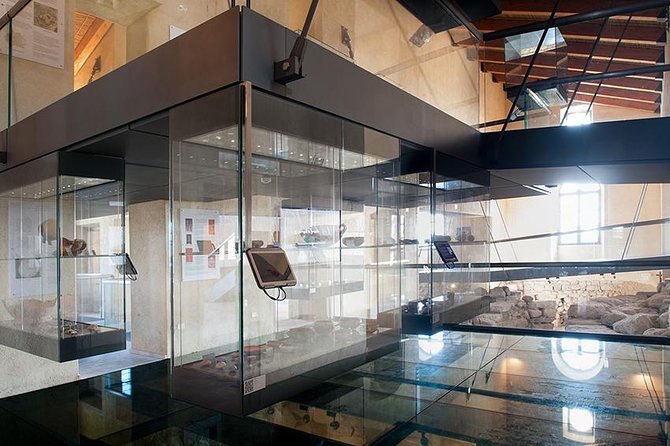
- Casa Zapata Museum opened in 2006 and is organized into archaeological, historical, and ethnographic sections
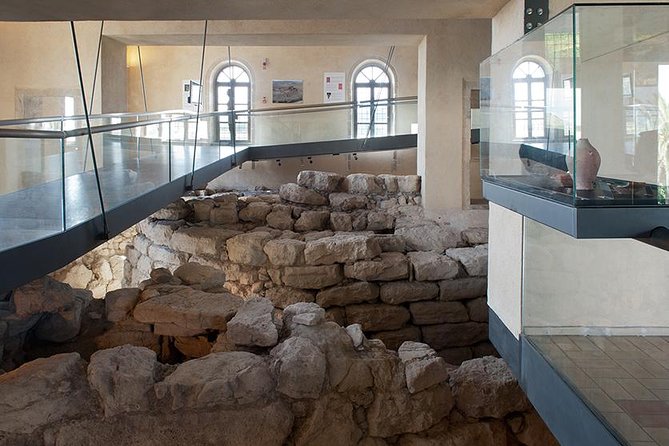
- A 17th-century building sits on top of Nuragic ruins (Nuraxi e Cresia)
- Local guide + admission included so you’re not stuck guessing what you’re looking at
- Air-conditioned shared minivan from central Cagliari at Piazza Yenne
- Small group size (maximum 8 travelers) helps keep the pace human
More of ancient Sardinia and its nuraghi
- Tour to the archaeological site of Nora – from Cagliari★ 5.0 · 80 reviews
- Tiscali mount guided hike★ 5.0 · 53 reviews
- Su Nuraxi of Barumini World Heritage UNESCO site Tour★ 5.0 · 36 reviews
- Nora Tour from Cagliari★ 5.0 · 24 reviews
Barumini Day Trip from Cagliari: How the 4 Hours Work
This is a focused, half-day style outing from Cagliari. You meet at Piazza Yenne (09124 Cagliari), with the start time listed as 9:30 am, and you return to the same meeting point. There are no hotel pick-ups, so you’ll want to be at the central drop-off spot early enough to find the group.
Expect a group max of 8 and a shared ride in an air-conditioned minivan. That matters in Sardinia. Even when the morning is fine, the air can heat up quickly, and you don’t want to spend the day sweltering between stops. The good news is the vehicle does the heavy lifting—then you get dropped near the Barumini sites so you can spend your time where the story actually is.
This tour also has a clean “two-stop” structure: Su Nuraxi di Barumini first, then Casa Zapata Museum. It’s not trying to cram in every attraction in southern Sardinia. Instead, it gives you a tight loop: see the monument, then understand what researchers found there and how that material was preserved.
Su Nuraxi di Barumini: What You’re Looking At (and Why It’s Different)
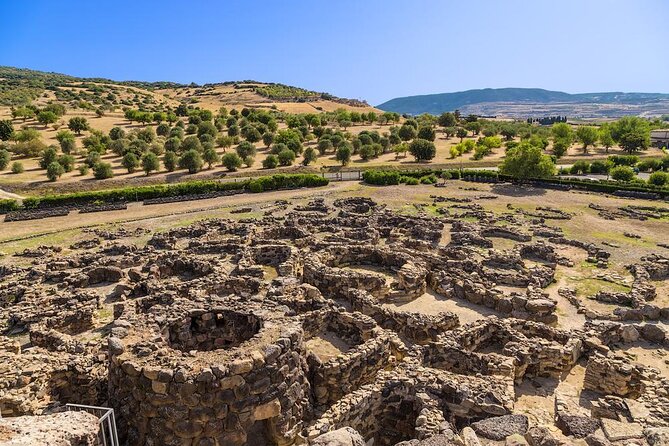
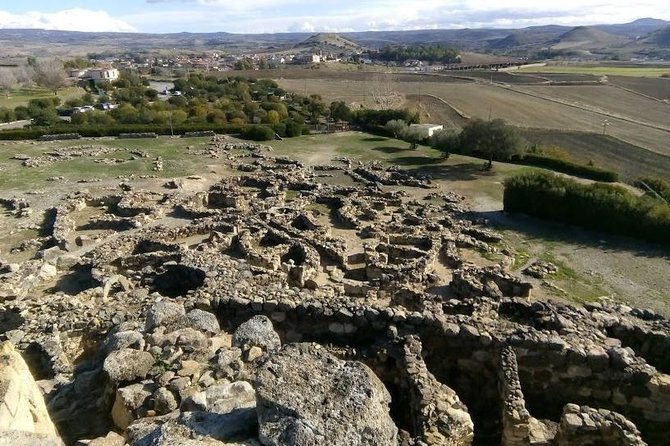
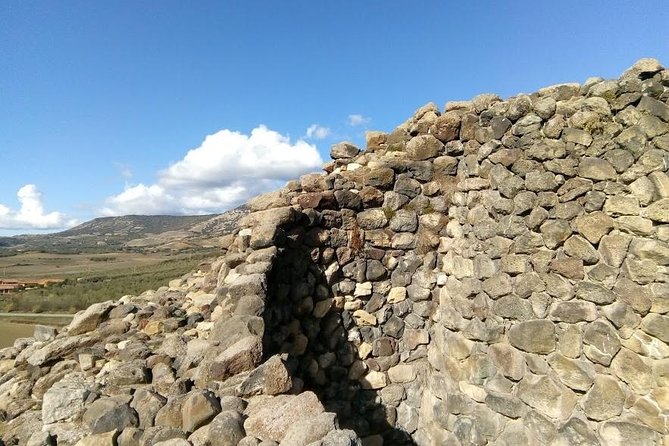
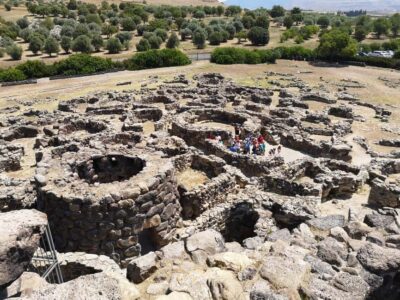
The Nuraghe complex at Su Nuraxi di Barumini dates back about 3,500 years. The basic idea is simple: the ancient people built a nuraghe—a tower-like stone structure—plus a small village of huts on the hill. What makes nuraghi so fascinating is that they sit somewhere between defensive and civil architecture. In other words, they weren’t only for war; they were part of daily life too.
One key point I love here is the way the site helps you think beyond “ruins as scenery.” You’re not just viewing stones. You’re seeing a monument type that’s described as a major landmark linking Sardinia to broader Mediterranean megalithic civilizations. The tour frames nuragic culture as connected to those older stone-building traditions, then asks you to hold onto the mystery where the evidence gets thin.
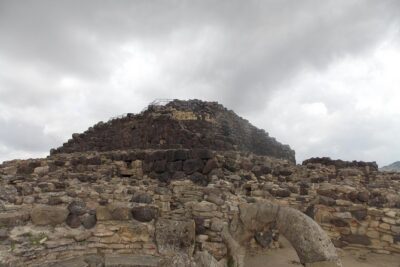
The star attraction is Su Nuraxi, described as the most complete and best preserved example of a nuraghe. It has been on the UNESCO World Heritage List since 1997. If you’re going to spend a few hours in this region, this is the kind of site you want: the one that’s preserved enough to explain the form and function, not only the idea.
What to focus on during the visit
Since a guide is included, let that do the work of turning archaeology into a story you can follow. When you’re at Su Nuraxi, I’d pay special attention to:
- how the tower form dominates the complex
- where the hut village would have been in relation to the nuraghe
- the way the site is presented as half defensive, half civic
The tour also highlights something that’s worth keeping in mind while you look around: some aspects of Nuragic culture remain mysterious. The wording used points to features that were hard to interpret, possibly because they don’t line up neatly with classical Greek expectations. That “still partly unknown” quality isn’t a flaw. It’s the reason the monument doesn’t feel like a closed chapter.
The Nuragic Story: Mycenaeans, Phoenicians, and the Missing Pieces
One of the most interesting parts of this outing is the cultural bridge the tour draws. It notes that the Nuragic civilization played an important role in the spread of Mycenaean culture and later Phoenician culture. That’s a big claim, and it’s exactly why the short guided format can be so valuable—you get the framework without having to piece it together yourself.
At the same time, the tour is honest about the limits. Some details are described as difficult to understand, partly because they don’t match what classical Greek writers were used to. So as you walk, you’re doing two things at once: enjoying what’s visible in front of you, and accepting that not every question has an answer.
This is the kind of experience that helps you travel smarter. If you’ve already visited Greek or Roman sites in Italy, this gives you a different set of “how did people connect?” questions. It’s not a replacement for Greek ruins. It’s a reminder that the Mediterranean didn’t develop in one straight line from Greece to Rome.




Casa Zapata Museum: Why It’s Not Just a Room of Finds
After Su Nuraxi, you move to Casa Zapata Museum, and this is where a lot of tours either succeed or fail. Here it succeeds, because it’s built around why the excavation mattered and what happened to the objects afterward.
Casa Zapata is organized into three sections:
- archaeological
- historical
- ethnographic
That structure matters for you. It’s one thing to see artifacts. It’s another to understand how those artifacts were interpreted (archaeology), how they fit into broader time periods (history), and how they connect to human culture (ethnography). Even on a short visit, having those three lenses keeps the museum from feeling like a storage room.
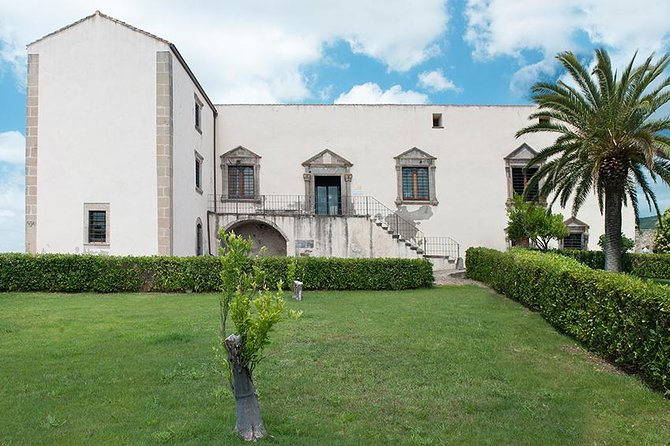
The standout detail is the building itself. The tour describes Casa Zapata as a 17th-century building that lies on top of the ruins of a Nuragic complex called Nuraxi e Cresia. So you’re walking inside something layered: a later home built over earlier stonework. It’s a physical reminder that the landscape kept being reused and re-understood.
Excavations and the professor behind the collection
The tour also explains how the museum came to be. Excavation work at Su Nuraxi in the 1950s, carried out by professor Giovanni Lilliu, led to a growing need for a place to keep and manage the materials that were discovered. That’s the stated reason Casa Zapata exists: it preserves, promotes, and enhances those assets.
For practical travelers, this turns the museum into more than a nice add-on. You’re getting the “where did the stuff go?” answer right after you see the monument where the stuff came from. It’s a satisfying chain.
Admission + Guide Included: The Real Advantage of This Format
This excursion includes admission tickets and a local guide. That’s not just a convenience. It’s the difference between:
- looking at stones and hoping the meaning sticks, versus
- having the meaning explained right as you stand where it happened.
The experience is listed as about 4 hours total, with admission included for the museum stop as part of the package. In plain terms, you get enough time to do the two main things without rushing through either one too aggressively.
I also liked the “small group” dynamic here. Maximum 8 travelers means questions don’t get swallowed. Even if your interest level is casual, you can still ask what you’re looking at and get an answer without the tour turning into a lecture you can’t pause.
Getting There: Piazza Yenne, No Hotel Pickup, and a Comfortable Ride
Logistics sound boring—until you’re standing in the wrong place at 9:00 am. For this one, you meet at Piazza Yenne in central Cagliari and you return there at the end. There are no hotel pick-ups, so plan to reach the meeting point on your own.
The tour uses a shared transfer by air-conditioned minivan, which is a real perk on summer days. The highlights even call out that comfort, and I agree with the thinking: if you can keep your body cool on the ride, you’ll enjoy the site visit more.
There’s also a mobile ticket involved, which helps you avoid paper chaos. And the meeting point is described as near public transportation, which is useful if you’re staying a few blocks from the center or using buses.
Price and Value: Is $118.29 Worth It?
The price is listed as $118.29 per person, for about 4 hours in Sardinia. The value case here is fairly clear, because the package includes:
- local guide
- round-trip shared transfer
- transport by air-conditioned minivan
- admission tickets, including Casa Zapata Museum admission
Meals are not included, so you’ll need to handle water and snacks on your own. Still, when you add up guide + admission + guided time in both locations, this is not a “pay to sit on a bus” kind of tour.
If you’re comparing options, use this test:
- If you want an explained UNESCO-level monument plus a museum that puts it in context, the included guide and admissions make the cost feel reasonable.
- If you’re the type who prefers wandering freely without guided interpretation, you might be able to do it independently for less. But you’d be giving up the through-line that connects Su Nuraxi to the museum collections and excavation story.
Who This Tour Suits Best
This is a great match if you want Sardinia beyond beaches and beyond the usual Greek and Roman stops. The whole point of the experience is to show you a different layer of the island—Nuragic culture—and connect it to the Mediterranean world that came after.
It also works for:
- travelers who like UNESCO sites but want more than a quick photo stop
- people who enjoy museums when they explain how objects were found and preserved
- anyone short on time in Cagliari who still wants a meaningful day trip
The tour is offered in English and runs with a local guide. It’s described as suitable for most travelers, and it’s small enough (max 8) to keep the experience manageable.
Should You Book Su Nuraxi and Casa Zapata?
I’d book this if you’re curious about pre-Roman Sardinia and you want a guided connection between the monument and the museum collection. The strongest reason is simple: the visit doesn’t stop at stones. It includes Casa Zapata for context, and the guide approach is described as competent and kind—exactly the kind of human touch that turns “interesting facts” into a real understanding.
Skip it (or consider a different style of outing) if you need meals included, or if you hate outdoor walking in the heat. Also, because it requires good weather, keep an eye on forecasts if your days in Cagliari are tight.
FAQ
Where do I meet for the tour, and is there a hotel pickup?
You meet at Piazza Yenne in Cagliari (09124). Hotel pick-ups are not included, and the tour ends back at the meeting point.
What language is the tour offered in?
The tour is offered in English.
What’s included in the ticket price?
The price includes a local guide, round-trip shared transfer, and transport by air-conditioned minivan. Admission tickets are also included.
Is admission to Casa Zapata Museum included?
Yes. Admission to the Casa Zapata Museum is included in the excursion.
How long is the experience, and how big is the group?
It lasts about 4 hours (approx.). The group size has a maximum of 8 travelers.
Are meals included?
No. Food and drinks are not included.
What happens if the weather is poor or I need to cancel?
The tour requires good weather. If it’s canceled due to poor weather, you’ll be offered a different date or a full refund. You can cancel up to 24 hours in advance for a full refund.
More Tour Reviews in Sardinia




More Nuraghi and Ancient Sites
New in from around Sardinia

Nuraghi & Ancient Sardinia, compared.
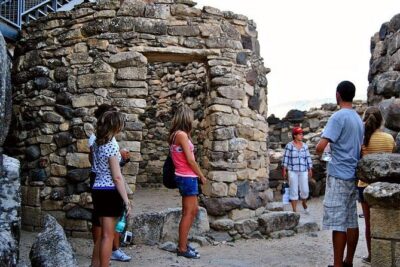 ★ 5.0SU NURAXI BARUMINI Unesco World Heritage SiteFrom $108129 reviews
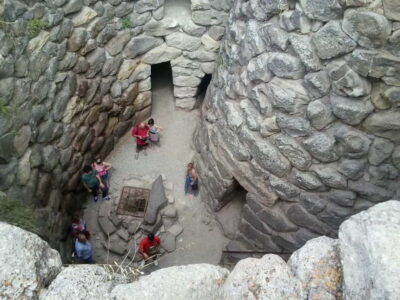 ★ 4.9Cagliari: Su Nuraxi di Barumini UNESCO Site Guided TourFrom $7992 reviews
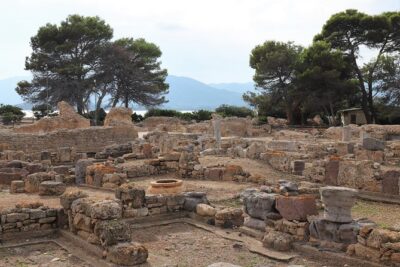 ★ 5.0Tour to the archaeological site of Nora – from CagliariFrom $9080 reviews
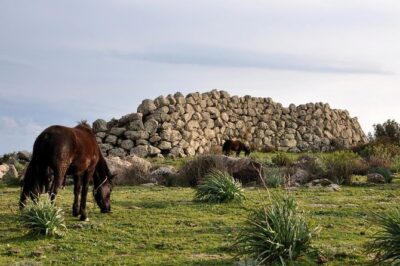 ★ 5.0Barumini Unesco Site and Giara of Gesturi Tour from CagliariFrom $10879 reviews
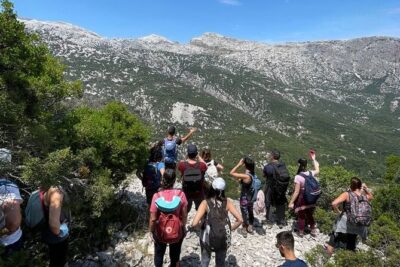 ★ 5.0Tiscali mount guided hikeFrom $7853 reviews
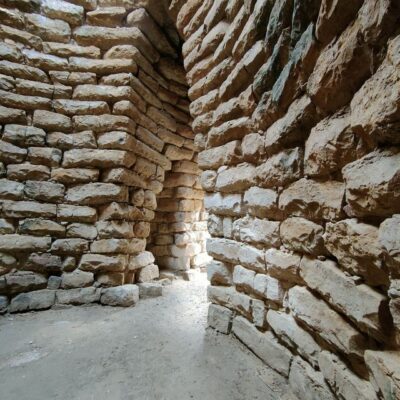 ★ 4.9The Nuraghe Tour: Day Trip from CagliariFrom $10038 reviews
 ★ 5.0Barumini Nuraghe Tour from CagliariFrom $10637 reviews
 ★ 5.0Su Nuraxi of Barumini World Heritage UNESCO site TourFrom $8336 reviews
Browse the lists this tour appears in