
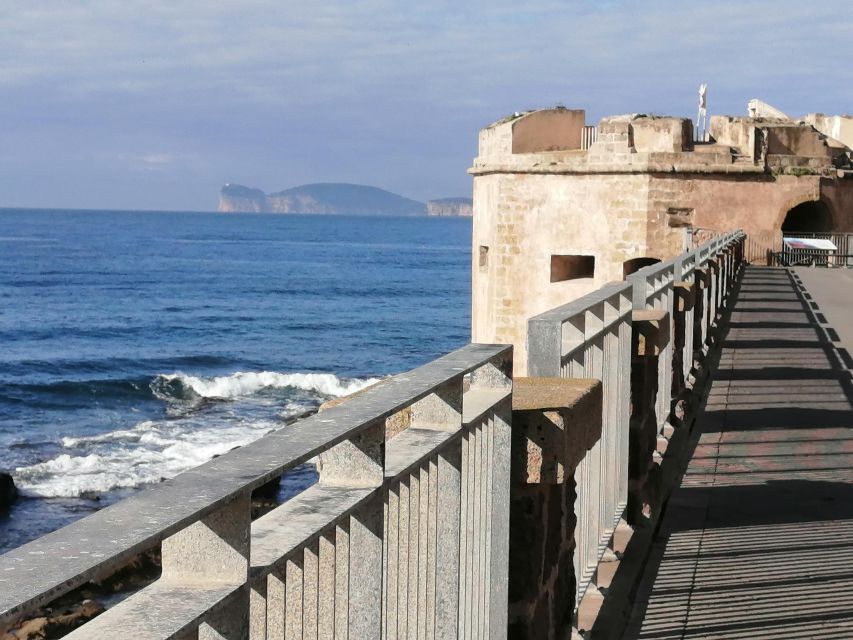
Reviewed · ALGHERO & THE CORAL COAST
Alghero: walking tours around the ancient city
One gate sets the tone. This Alghero walking tour maps the city’s past into the present, with Catalan language storytelling and local context for what you’re seeing right now. I love the way the guide ties language, architecture, and traditions together so the old town feels connected, not random.
I also like how it starts at Piazza Porta Terra and follows a clear timeline of who controlled the city and why. The one catch: it’s an on-foot route in older streets, so plan for good walking shoes and heat management, and it’s not set up for wheelchair users.
In This Review
- Key things you’ll notice on this Alghero ancient-city walk
- Entering Alghero’s story at Porta Terra
- Tracing pirates and kingdoms through the ancient center
- The Catalan heart of Alghero: traditions, architecture, religion
- How the Algherese dialect took shape (and why it still matters)
- What you actually get for around $29
- Pace, comfort, and who will enjoy this most
- The guide experience: what good narration sounds like
- Should you book this Alghero walking tour?
- FAQ
- How long is the Alghero walking tour?
- Where does the tour start?
- What language options are available?
- What is included in the price?
- Are museum and church entries included?
- Is food and drinks included?
- What should I bring for the walk?
- Is the tour wheelchair accessible?
Key things you’ll notice on this Alghero ancient-city walk
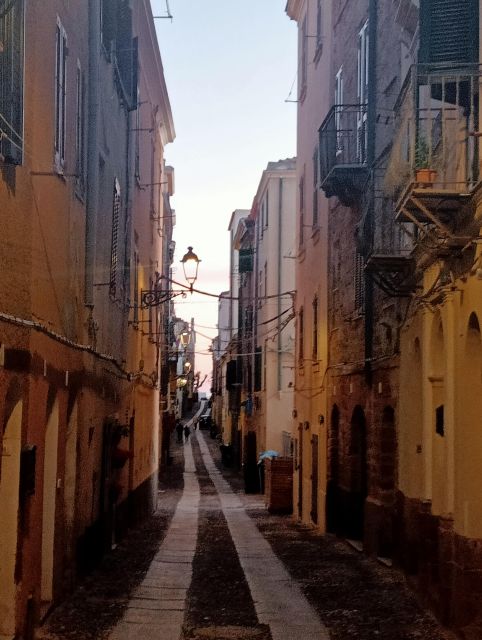
- Meeting at the Porta Terra tower, so you start at the city’s ancient entrance
- A local official guide explaining traditions, architecture, religion, and curiosities
- Catalan roots in plain language, including where the Algherese dialect comes from
- A guided timeline on foot, revisiting eras marked by pirates and different kingdoms
- Live multilingual narration, available in Catalan, English, German, Italian, and Spanish
- Practical value at about $29 per person, with guidance included and museum/church entries left out
Around Alghero and the Coral Coast
- Alghero: Sunset Sailing Aperitif Experience★ 4.9 · 367 reviews
- Alghero – Dolphin Watching and Guided Snorkeling (summer tour)★ 5.0 · 311 reviews
- Alghero: Wine and Olive Oil Tasting at a Local Farm★ 4.8 · 294 reviews
- Porto Conte: Half-day catamaran tour with aperitif★ 4.8 · 228 reviews
Entering Alghero’s story at Porta Terra
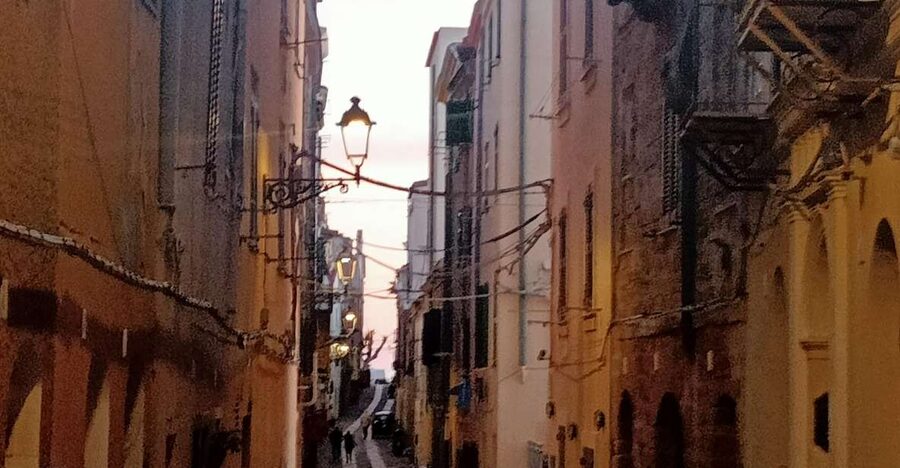
You start where the old city begins: inside the tower of Porta Terra, at Porta Terra Square (number 2). It’s a strong way to begin, because you’re not just walking around looking at pretty corners. You’re starting at the threshold that helped define Alghero’s identity.
From the first minutes, the guide sets expectations: you’ll retrace major stages of occupation, and you’ll hear what changed in daily life as power shifted. Even if you’ve only got a short stay in Sardinia, this is the kind of walk that gives you bearings fast. You leave with a mental map of the city’s layers.
Practical note: the tour is short—around 1 hour total in the listing details, while the guided portion is described as about 1.5 hours. Either way, it’s a compact route, so arrive ready to walk and ask questions early.
Tracing pirates and kingdoms through the ancient center
The walk is structured like a timeline you can follow with your feet. You’ll go back to the city’s foundation and then move forward through the big waves of occupation—described as a land attacked by pirates and later shaped by different kingdoms.
Why that matters: Alghero isn’t just “old.” It’s old with receipts. When you hear how the city was contested and governed, the architecture and even the street pattern start to make sense. You’re better at noticing details, because you know what each era tended to value—defense, trade, religious influence, or language power.
And there’s an added layer that makes this more than a history lecture: the guide also points out curiosities and everyday cultural elements, not only rulers and dates. That’s the difference between trivia and understanding. You should expect the guide to keep connecting cause and effect, like how occupation patterns can echo into culture and local customs.
The Catalan heart of Alghero: traditions, architecture, religion
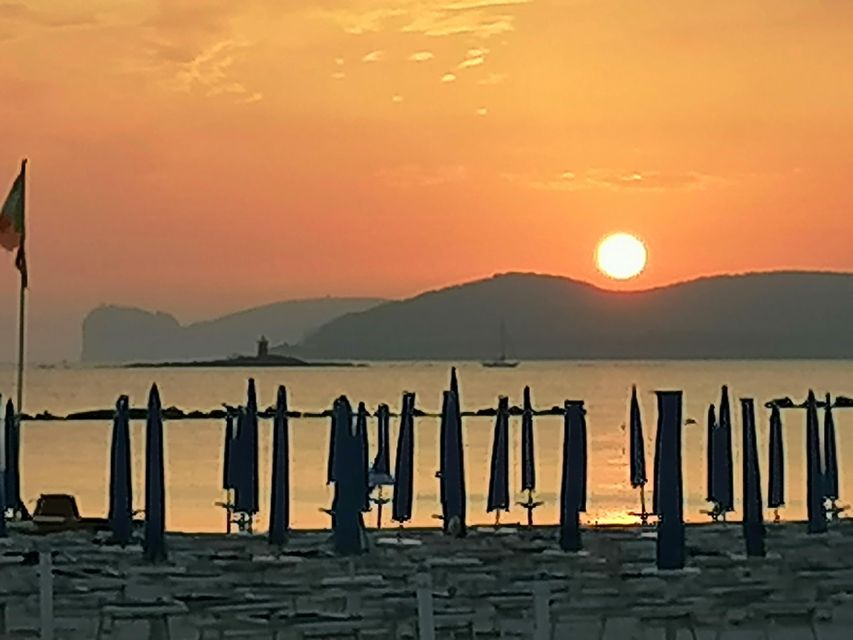
If you’re visiting Alghero, you’re probably already aware that it has a strong Catalan identity. This tour focuses on that in a practical way. You’ll get explanations of traditions, architecture, and religion, plus the smaller cultural details that make the Catalan character feel lived-in rather than labeled.
As you walk through the historical center, pay attention to what the guide asks you to look for. The goal isn’t to memorize buildings; it’s to understand why certain features exist and how people used them. When the guide connects language, religious life, and architecture, you start seeing the old town as a system—where one part shaped another.
A nice detail from the feedback is the emphasis on how culture and politics mix here. One theme that comes up clearly is the present-day challenge of preserving the Catalan language. The tour doesn’t treat language as museum material. It treats it as something community members actively protect, and that makes the whole walk feel more relevant.
How the Algherese dialect took shape (and why it still matters)
One of the most specific promises of this tour is an explanation of the origins of the language/dialect spoken in Alghero. That’s the heart of the experience. Instead of only hearing that Catalan is present, you learn where that linguistic identity comes from and why it formed the way it did.
Then the guide brings it forward to the present. The walk includes discussion of the issues around preserving the Catalan language, which helps you understand the emotion behind the topic. Language isn’t just words on signs. It’s identity, family memory, and local culture you can sense in conversation and community choices.
I also like that the tour invites questions. If language is your main interest, don’t save it for the end. Ask when you’re mid-walk and the guide can connect your questions to what you’re currently seeing.
Prefer to see Alghero at walking pace? A few more
What you actually get for around $29

The price is listed at $29 per person for a guided walking tour. What makes this good value is that the main product here is human interpretation: a local official guide translating the city’s layers into something you can walk and understand.
What’s included is simply the guided tour. What’s not included is anything you’d expect to add later on your own:
- Museum and church entries
- Food and drinks
That’s helpful for planning. You can treat the tour as your orientation and context session, and then decide later if you want to pay to enter specific places that match your interests. If you prefer not to spend time buying tickets during your walk, this format suits you.
Timing note: since the tour is short, think of it as a focused sampler. You’ll leave with themes and names of eras and topics. Then you can target museum visits and church stops based on what stuck with you most.
Pace, comfort, and who will enjoy this most
This is a walking tour around the historical city center, so your comfort matters more than usual. Bring comfortable shoes and water. Alghero can be warm, and you’ll want to keep your energy for the explanation-heavy parts.
It’s also not suitable for wheelchair users. That usually means uneven or older street surfaces and a route that isn’t designed around accessibility needs. If mobility is a concern, you might want a different format or a private, adjusted option—but from the details given here, assume standard walking conditions.
Who this tour fits best:
- You want a short, high-impact way to understand Alghero’s story in one sitting
- You care about Catalan culture, language, and why that identity is still active
- You enjoy guided interpretation more than wandering without context
- You like asking questions and getting answers tied to real places
If you’re the type who likes to pair a tour with independent exploration later, this works well. You get context first, then you choose where to spend your time.
The guide experience: what good narration sounds like
A tour lives or dies by the guide, and the pattern of praise in the feedback is consistent: people highlight how prepared the guides are and how they handle the political and cultural angle of Alghero.
Names that show up in the feedback include Andrea, Sonia, and Raffaele—and they’re praised for explaining things from multiple angles, including historical, artistic, and economic perspectives. You shouldn’t expect the same exact person every time, but it’s a good sign that the guiding style across recent tours has been both detailed and approachable.
Language matters here too. The tour is offered in Catalan, English, German, Italian, and Spanish. If you have even partial comfort with Catalan, it can add a special layer—people often feel it when the guide speaks the local language and connects the dialect story to daily life.
Should you book this Alghero walking tour?
Book it if you want a compact, guided way to understand Alghero’s identity, especially the Catalan roots and the language story. For the price, you’re buying interpretation: a local official guide walking you through occupation eras, traditions, architecture, religion, and the curiosities that make the old town make sense.
Don’t book it if you’re hoping for a heavy museum/church itinerary, since entries are not included. Also skip it if wheelchair accessibility is required, since it’s not designed for that.
If you’re spending limited time in Alghero and you want your first day to feel organized—this tour is a strong start. You’ll get the “why” behind what you see, and you’ll be much better at exploring on your own afterward.
FAQ
How long is the Alghero walking tour?
The duration is listed as 1 hour, and the guided portion is described as about 1.5 hours. Either way, it’s a short walk through the historical center.
Where does the tour start?
Meet at inside the Porta Terra tower, in Piazza Porta Terra (square number 2), Alghero.
What language options are available?
The live guide can speak Catalan, English, German, Italian, and Spanish.
What is included in the price?
You get the guided walking tour.
Are museum and church entries included?
No. Museum and church entries are not included.
Is food and drinks included?
No. Food and drinks are not included.
What should I bring for the walk?
Wear comfortable shoes and bring water.
Is the tour wheelchair accessible?
No, it’s not suitable for wheelchair users.
More Tours in Alghero



More Tour Reviews in Alghero


Alghero and the Coral Coast
New in from around Alghero

Alghero & the Coral Coast, compared.
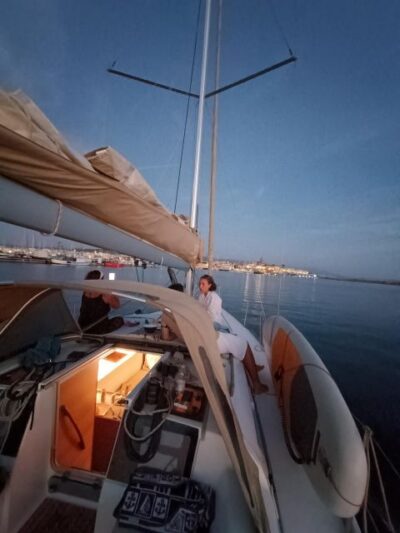 ★ 4.9Alghero: Sunset Sailing Aperitif ExperienceFrom $65367 reviews
 ★ 5.0Alghero – Dolphin Watching and Guided Snorkeling (summer tour)From $78311 reviews
 ★ 4.8Alghero: Wine and Olive Oil Tasting at a Local FarmFrom $43294 reviews
 ★ 4.8Porto Conte: Half-day catamaran tour with aperitifFrom $91228 reviews
 ★ 4.7Alghero: Guided Horseback Ride at Lake Baratz & Porto FerroFrom $98201 reviews
 ★ 4.7Alghero: Dolphin Watching Tour with Marine ResearcherFrom $59172 reviews
 ★ 4.9Alghero: Guided Quad Tour with Swim StopFrom $215152 reviews
 ★ 4.9Alghero: Sardinian Home-Cooking Class and MealFrom $123138 reviews
Browse the lists this tour appears in