
Reviewed · CHIA, TEULADA & THE SOUTHWEST
Trekking tour Nebida Masua and Porto Flavia
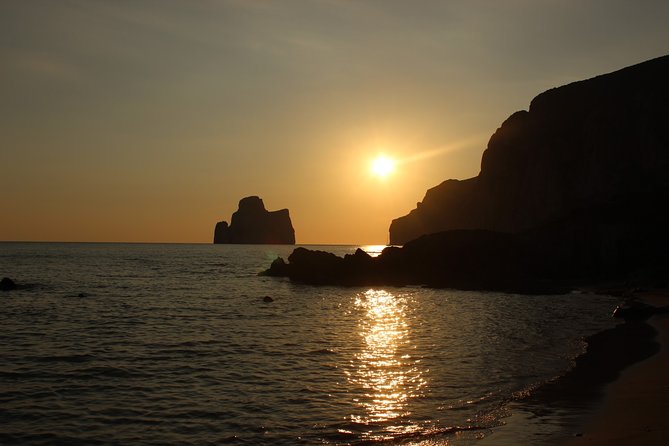
Miners’ paths, coves, and a miracle of engineering. This Nebida–Masua trekking tour pairs Michele Pinna’s mining-history storytelling with real footpaths above the sea, plus planned breaks to swim at five beaches along the way. It’s the kind of outing where the coast starts making sense, because the guide explains what you’re seeing and why it mattered.
One catch to plan for: trekking shoes aren’t included, and this runs in late afternoon/evening hours, so you’ll want to dress and pack for weather and lower light. Also, the Porto Flavia site needs its own ticket on top of what you pay for the trek.
In This Review
- Key highlights you’ll feel right away
- Nebida to Masua: footpaths over Sardinia’s old mining coast
- Your guide: mining history and industrial archaeology with Michele Pinna
- Stop 1 in Nebida: the Ex Villaggio Minerario del 1870
- What to watch for
- Possible drawback
- Stop 2: Laveria Lamarmora and the coast-facing industrial plant
- A tip that helps
- Stop 3 in Masua: the old village and adjacent mine
- What you’ll likely notice
- Practical note
- Porto Flavia: Cesare Vecelli’s engineering stop (and the ticket you’ll need)
- How to prepare for this stop
- Swimming at five beaches: fun breaks that change the pace
- Who benefits most from this format
- Price and value: what $83.08 covers, and what doesn’t
- Time, group size, and the meeting point that matters
- The weather reality: when the plan depends on conditions
- Who should book this Nebida Masua and Porto Flavia trek
- Should you book it?
- FAQ
- What’s the start and end point?
- When does this tour run?
- How long is the experience?
- What’s included in the price?
- Is the Porto Flavia ticket included?
- Do I need to bring trekking shoes?
- Is bottled water or meals included?
- Does the tour depend on weather?
Key highlights you’ll feel right away
- Michele Pinna’s mining-and-industrial stories that make old ruins click into place
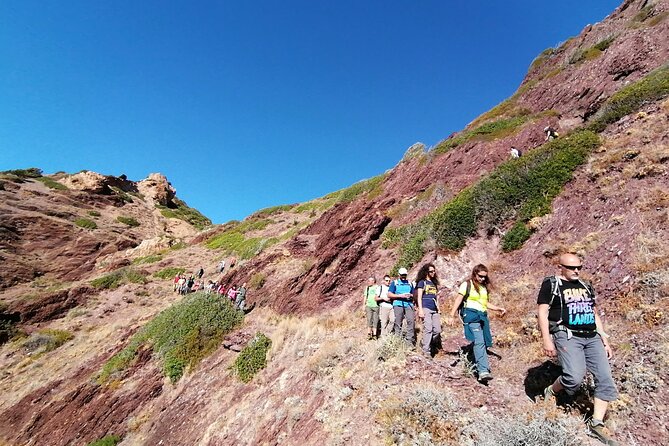
- Walks on miner footpaths and viewpoints cars can’t easily reach
- Five swimming stops built into the route, not tacked on at the end
- Nebida, Lamarmora, and Masua as free admission stops with a clear progression
- Porto Flavia (Cesare Vecelli) as the big engineering stop, with guided visit and separate ticket
The southwest beaches around Chia and Teulada
- Guided day by boat in Carloforte with snorkelling and aperitif★ 5.0 · 120 reviews
- Beach excursion to Chia and Tuerredda from Cagliari★ 5.0 · 91 reviews
- Cagliari: Quad Adventure Experience from Chia★ 5.0 · 76 reviews
- Chia Beaches Tour from Cagliari with van★ 5.0 · 20 reviews
Nebida to Masua: footpaths over Sardinia’s old mining coast
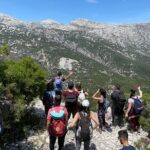
This trek is made for people who like their travel with texture. You’re not just looking at old buildings from a safe distance. You’re moving along the same kind of routes miners used to reach working areas and coastline coves. The payoff is that you see why these sites cling to this coast: access to sea routes, working terrain, and a dramatic setting that feels bigger than a typical museum stop.
Nebida and Masua sit within Sardinia’s mining belt, and the tour handles the “why” as much as the “what.” The guide’s mining history and industrial archaeology focus matters because it turns scattered ruins into a connected story. You’ll also get a route that tries to get away from the road crowd, reaching places not accessible by car and not visited as often as the easiest stops.
And yes, you’ll also get beach time. The plan includes swimming stops at five beaches along the way, which is a huge value add if you’re traveling in warm months. It also means your day isn’t only about walking; you’ll break up the trek with salt-air resets.
Your guide: mining history and industrial archaeology with Michele Pinna
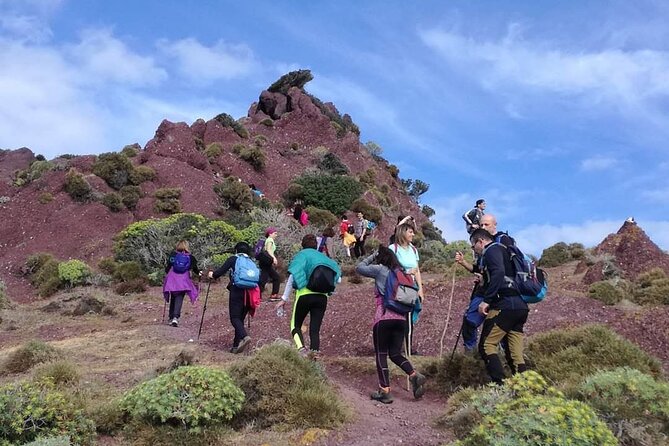
If you care about guided storytelling (and most people doing this route do), you’ll want to know who’s leading. The reviews consistently point to Michele Pinna as the key ingredient. He’s described as professional, passionate, and skilled at explaining both territory and history in a way that makes the places feel alive.
What I like about a guide like this is how practical the information tends to be. You’re not getting a lecture that floats above what you’re seeing. You get context that helps you read the site around you: what the structures were built for, how the coast supported the work, and what to notice as you move through each stop.
You’ll also get pacing that works for mixed experience levels. Some reviews mention he’s attentive with people who have less trekking experience. That doesn’t mean the route is a stroll, but it does suggest the tour is guided with care.
Stop 1 in Nebida: the Ex Villaggio Minerario del 1870
Nebida starts you in the Ex Villaggio Minerario del 1870, a former mining village area where the history is visible right away. This is where the tour’s tone sets: the coast isn’t just pretty, it’s functional and industrial. Even in a short stop, you’re meant to grasp the human scale of mining—workers lived here before anything became a postcard.
Because it’s an admission-free stop, you can spend your attention where it belongs: on the ruins, the setting, and the guide’s explanations. The time is brief (about 10 minutes), so don’t treat it like a long self-guided museum visit. Instead, use it like an intro chapter. You’ll get the background that makes the later structures easier to understand.
What to watch for
- How the village area connects to the coastline and the idea of access for work and transport
- Clues of how living spaces would have supported mining schedules
More footpaths and gorges in Sardinia

Possible drawback
If you’re the type who likes long, quiet photo time at the first stop, you might feel the pace is quick. The tour is built to move through multiple locations and keep the story flowing.
Stop 2: Laveria Lamarmora and the coast-facing industrial plant
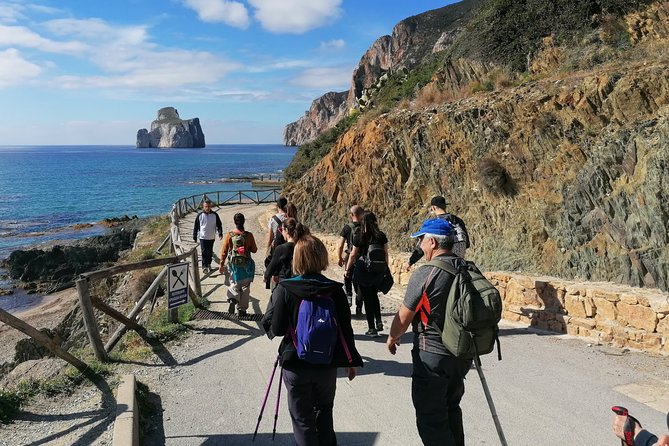
Next comes Laveria Lamarmora, described as a beautiful mining structure on the coast of Nebida. This is the kind of site that makes industrial archaeology interesting, not scary. The guide explains how it was built for mineral preparation before sale, which gives the structure a clear purpose instead of just a cool shape.
This stop is about 30 minutes, so it’s the tour’s first deeper pause. That matters because it’s where the mechanics of the mining operation start to show. When you understand the plant’s role, the rest of the route stops feeling like random ruins. You start seeing a chain: extraction, processing, and then movement toward markets.
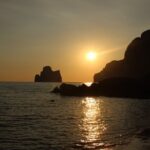
The structure’s placement on the coastline also adds atmosphere. You get the feeling of work happening right next to the sea, with weather and time affecting everything.
A tip that helps
Bring a little mental flexibility. If you see “industrial stuff” and think you’ll be bored, Lamarmora is exactly where the guide’s storytelling changes your mindset.
Stop 3 in Masua: the old village and adjacent mine
In Masua, you’ll visit an Ex villaggio minerario e miniera adiacente, another short but meaningful stop (about 10 minutes). This segment helps you connect Nebida’s processing and village context with the working side of the mine.
Masua is where the coastline walk begins to feel more like an actual route, not a sequence of separate attractions. You’re moving along paths that help you understand how miners might have traveled between areas and coves. It’s also where the tour’s promise about quieter, car-inaccessible spots becomes real in your legs and eyes.
If you love scenery, this is also where the coast starts to hit harder. Several reviews mention sudden breathtaking views and incredible coastal panorama. The timing of how you reach these viewpoints varies with conditions, but the overall feel is consistent: the view doesn’t arrive gradually. It tends to appear when you turn a corner or reach a higher edge of the path.
What you’ll likely notice
- The shift from village-focused context to mine-adjacent working context
- Coastal viewpoints that make the terrain feel more intentional
Practical note
Short stop length means you won’t get a deep linger. Treat it as part of the walk’s story, not a standalone site.
Porto Flavia: Cesare Vecelli’s engineering stop (and the ticket you’ll need)
Then you reach the showpiece: Porto Flavia, tied to Cesare Vecelli’s technique and ingenuity. The structure here is famous for its engineering approach, and this stop is built as a longer segment (about 1 hour). You’ll also get a guided tour, which matters because engineering sites can look confusing if you only see them as shapes.
Here’s the money detail you must plan for: Porto Flavia admission is not included. Your trek price covers the rest (and car transfers and safety support), but you should expect a separate ticket cost for this specific attraction.
That separation actually helps your budgeting strategy. You can decide how serious you want to be about the engineering portion. If you’re a design-and-tech travel person, you’ll likely be happy to pay extra for the guided visit. If you’re mainly into the walk and the mining villages, you might still find Porto Flavia worth it because it ties the whole mining story together into a working export idea.
How to prepare for this stop
- Plan to allocate attention like it’s the main attraction
- Expect the guided component to explain how it works, not just where to look
Swimming at five beaches: fun breaks that change the pace
The trek includes scheduled swimming stops at five beaches. That’s not just a nice bonus; it changes how the tour feels. Instead of one long grind, you get mini resets—walk, view, cool down, repeat.
This also affects what you should bring. Since trekking shoes aren’t included, you’ll likely want footwear that handles uneven ground and possible damp stretches. For the swim breaks, pack like you’ll use your time: a small towel and a plan for where wet clothes go can make the difference between happy and annoyed.
One more point: swimming stops work best when you go with the flow. Don’t think of them as a beach day with sunbathing hours. They’re a break woven into the trek rhythm.
Who benefits most from this format
If you like active travel—walking plus a real payoff—this is an excellent match. If you’re looking for a gentle, culture-only tour with zero chance of water, this setup might feel less aligned.
Price and value: what $83.08 covers, and what doesn’t
At $83.08 per person, this tour can be good value if you factor in what’s included and what’s not.
What you get:
- Car transfers
- Safety assistance
- Guided trekking and storytelling across the mining sites
- Free admission tickets for the Nebida (1870 village), Laveria Lamarmora, and Masua stops
What you should budget separately:
- Porto Flavia ticket (not included)
- Bottled water, and self lunch/dinner
- Trekking shoes (not included)
That price structure is pretty logical. The first three stops are admission-free, so a chunk of your cost goes toward guide time, transfers, and the experience quality of being taken on foot through harder-to-reach spots. Then Porto Flavia stands apart as a ticketed engineering attraction.
My practical advice: don’t compare this to a basic walking tour price. Compare it to the whole day. When an experience includes transfers, a capable guide, multiple sites, and built-in swimming breaks, $83.08 starts to look fair—especially with a small maximum group size of 20 travelers.
Time, group size, and the meeting point that matters
This runs within specific hours: Friday through Sunday, 5:00 PM to 9:00 PM, and the operating window listed is 05/01/2025 to 07/31/2026. That means you’ll be walking in late-day light. It can be beautiful for views, but it’s also why good preparation counts.
The meeting point is Giardino belvedere di Nebida, Frazione Nebida Settore A, 09016 Nebida SU, Italy, and the activity ends back at the same place. You’ll also have a mobile ticket, and the tour provider uses a safety-first approach (safety assistance is included).
Group size is capped at 20 travelers, which tends to help the guide keep control and attention on the group. It also aligns with why many people sound like they got a personal, careful experience rather than a rushed shuffle.
The weather reality: when the plan depends on conditions
This tour requires good weather. If it’s canceled due to poor weather, you’ll be offered a different date or a full refund. For an evening trek with paths near the coast, weather affects comfort and safety more than you might expect.
So I recommend you check conditions when you book and again right before you go. If rain hits, it can change footing and the feeling of the route. If it’s clear and warm enough for those swims, the experience gets a big upgrade.
Who should book this Nebida Masua and Porto Flavia trek
Book this if:
- You like guided history, but you want it connected to what you walk past
- You want mining and industrial archaeology explained in plain terms
- You want scenery that isn’t just distant views—you move through it
- You’ll enjoy swim breaks at real beaches along the route
- You prefer smaller groups and safety support
Skip it (or consider another option) if:
- You don’t want to walk on coastal paths and would rather sit most of the time
- You need guaranteed long visits at each site
- You’re not willing to pay extra for the Porto Flavia ticket
- You don’t want a plan that depends on weather
Also, this is listed as generally suitable for most travelers and service animals are allowed, which is helpful for planning.
Should you book it?
Yes, I’d book it if you want a coast-and-industry day that feels real, not staged. The combination of miners’ footpaths, the structured mining stops in Nebida/Lamarmora/Masua, and the engineering highlight at Porto Flavia creates a satisfying arc. The standout detail is the guide: Michele Pinna gets repeatedly praised for being prepared, communicative, and genuinely good at making the sites understandable.
Just go in with two clear expectations: you’ll need suitable footwear (bring it, since trekking shoes aren’t included), and Porto Flavia costs extra because that ticket isn’t part of the trek price. If those fit your style and budget, this is an excellent way to experience Sardinia beyond the usual sun-and-sea routine.
FAQ
What’s the start and end point?
The tour starts at Giardino belvedere di NebidaFrazione Nebida Settore A, 09016 Nebida SU, Italy, and it ends back at the same meeting point.
When does this tour run?
It operates Friday through Sunday from 5:00 PM to 9:00 PM, within the dates 05/01/2025 to 07/31/2026.
How long is the experience?
The duration is listed as approximately 3 to 30 minutes, and Porto Flavia is specifically listed as about 1 hour.
What’s included in the price?
Included are car transfers and safety assistance. The first three stops (Nebida, Laveria Lamarmora, and Masua) list admission as free.
Is the Porto Flavia ticket included?
No. Porto Flavia has admission ticket not included, and it’s available with ticket and a guided tour.
Do I need to bring trekking shoes?
Trekking shoes are not included, so you should plan to bring your own.
Is bottled water or meals included?
No. Bottled water and self lunch and dinner are not included.
Does the tour depend on weather?
Yes. The experience requires good weather, and if it’s canceled due to poor weather, you’ll be offered a different date or a full refund.
More Tours in Sardinia
More Tour Reviews in Sardinia

Chia and the Southwest Coast


New in from around Sardinia



Chia, Teulada & the Southwest, compared.
 ★ 5.04×4 Mountains And Beaches – Chia areaFrom $102330 reviews
 ★ 4.9Cagliari: Quad Adventure Experience from ChiaFrom $180187 reviews
 ★ 4.8From Cagliari: Chia and Tuerredda Full-Day Beach TourFrom $105129 reviews
 ★ 5.0Guided day by boat in Carloforte with snorkelling and aperitifFrom $151120 reviews
 ★ 5.0Beach excursion to Chia and Tuerredda from CagliariFrom $10791 reviews
★ 5.0Cagliari: Quad Adventure Experience from ChiaFrom $19176 reviews
★ 5.0Beach excursion to Chia and Tuerredda from CagliariFrom $10791 reviews
★ 5.0Cagliari: Quad Adventure Experience from ChiaFrom $19176 reviews
 ★ 4.7From Cagliari: 4×4 Mountains & Beaches of Chia areaFrom $9067 reviews
 ★ 4.7From Cagliari: Chia Beaches Tour with vanFrom $10046 reviews
Browse the lists this tour appears in