
Reviewed · ALGHERO & THE CORAL COAST
Alghero – Dolphin Watching (Spring & Autumn Tour)
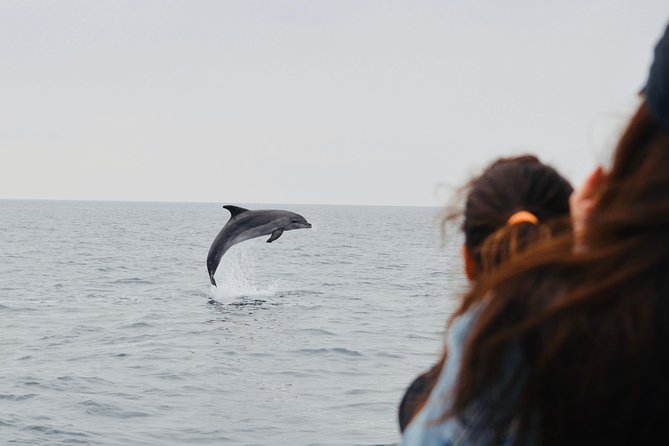
One of Sardinia’s best wildlife missions starts on a boat. This 3-hour dolphin search in Alghero pairs MareTerra NGO research with a certified, low-impact viewing approach, so you’re not just hoping for sightings—you’re learning how dolphins live. You’ll sail along the Capo Caccia–Isola Piana marine protected area while trained guides explain dolphin biology and conservation, and you’ll get a chance to hear dolphin sounds from scientists’ recordings.
What I like most is the mix of science and respect in plain language. First, you’re guided by a team that uses photo-identification (from dorsal fins) to recognize individuals and share details like age and health status. Second, the trip really leans into care: once dolphins are spotted, they follow a good code of conduct so you observe without pushing animals around. The one thing to watch is practical comfort—especially in cooler seasons, and because there may be limited shade on board.
In This Review
- Dolphins, Science, and Sardinia’s Capo Caccia Coast
- The 3 Hours at Sea: What Happens From Start to Finish
- Stop Point: Marine Protected Area Capo Caccia / Isola Piana
- The on-board briefing: biology + conservation
- The research techniques: photo-ID and bioacoustics
- The viewing approach: good code of conduct
- Meet the Team and the High-Impact Part: Respectful Dolphin Viewing
- The Best Part Even If Dolphins Are Tricky: Learning on the Water
- Price and Value: Is $60.34 for 3 Hours Worth It?
- Spring and Autumn Comfort: What to Bring for a Cooler Sea Session
- How Likely Are Dolphins? The 80% Chance Meets Real Sea Days
- Quick Logistics That Affect Your Day
- Should You Book the Alghero Dolphin Watching Tour?
- FAQ
- How long is the dolphin watching tour in Alghero?
- Where is the tour meeting point?
- Is the tour in English?
- What should I bring?
- Is the tour suitable for children?
- What happens if the tour can’t run due to weather or too few people?
Dolphins, Science, and Sardinia’s Capo Caccia Coast
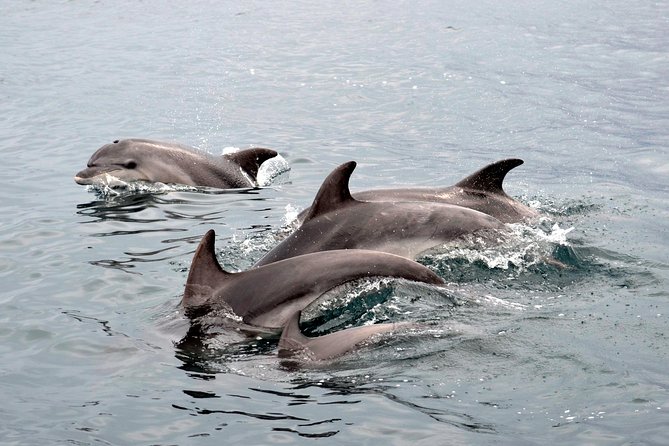
This is the kind of trip I’d pick when I want wildlife, but also want the humans to behave. Dolphins are wild, fast, and sometimes elusive. So the value here isn’t just the search—it’s the research backing and the viewing rules that help keep the interaction low stress for the animals.
The MareTerra NGO researcher is central to the experience. The operator shares that the chance of spotting dolphins is 80%, which is a strong number for this kind of tour. They also run a three-part story while you’re at sea: what dolphins do, how they’re doing (conservation status), and how researchers study them.
And the setting helps. You’re sailing within the Marine Protected Area Capo Caccia – Isola Piana, with views of a coast many people come to Sardinia for in the first place. Even when dolphins are being coy, you still get that long, open-water feeling, plus the chance to learn what you’re actually seeing.
One more small but important detail: the tour is designed as a group outing with a maximum of 12 travelers, so the guides can actually talk and manage the boat safely. That’s not a guarantee you’ll see dolphins, but it usually improves the experience when conditions shift.
Around Alghero and the Coral Coast
- Alghero: Sunset Sailing Aperitif Experience★ 4.9 · 367 reviews
- Alghero – Dolphin Watching and Guided Snorkeling (summer tour)★ 5.0 · 311 reviews
- Alghero: Wine and Olive Oil Tasting at a Local Farm★ 4.8 · 294 reviews
- Porto Conte: Half-day catamaran tour with aperitif★ 4.8 · 228 reviews
The 3 Hours at Sea: What Happens From Start to Finish
The tour runs about three hours, and it returns to the same place it starts. The meeting point is Via Giuseppe Garibaldi, 49, 07041 Alghero SS, Italy. You’ll want to arrive a little early so you can get settled and ready for the briefing.
Here’s how the time typically feels, chunk by chunk.
Stop Point: Marine Protected Area Capo Caccia / Isola Piana
Once you’re out on the water, the main action happens around the Area Marina Protetta – Capo Caccia / Isola Piana. This is not just a pretty route. The whole point is to be in waters where dolphin activity may be present, while staying within protected boundaries.
The on-board briefing: biology + conservation
During the navigation, guides give you a briefing focused on dolphin biology and behavior and their conservation status. This matters more than it sounds. If you understand how dolphins feed, travel, and communicate, the whole experience becomes less random and more readable. You’re not just scanning for fins—you’re learning what patterns could mean dolphins are nearby.
The research techniques: photo-ID and bioacoustics
When dolphins are sighted, the tour shifts into “here’s how the scientists see them” mode.
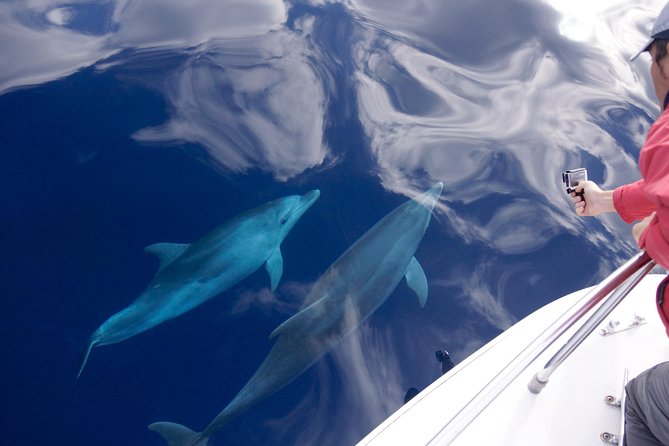
- Photo-identification: They can recognize individuals by features of the dorsal fins. From that, they share info such as each dolphin’s name, age, and health status.
- Dolphin sounds: You also listen to dolphin vocalizations through recordings collected by MareTerra scientists to study bioacoustics.
Even if you’re not a science person, this is one of the most satisfying parts because it turns a sighting into a story you can follow.
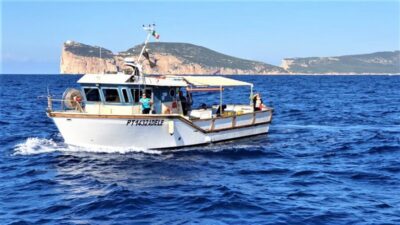
Out looking for dolphins off Alghero again
The viewing approach: good code of conduct
After dolphins are spotted, the guides explain and practice their approach according to a “good code of conduct” tied to their High Quality Whale Watching certification. In real terms, that means they prioritize animal well-being and minimize disturbance.
One review detail fits perfectly with this: when dolphins were near, the crew reportedly did not go chasing after them. That’s exactly the mindset you want. Dolphins don’t need a human performance; they need space to decide what they want to do.
Meet the Team and the High-Impact Part: Respectful Dolphin Viewing
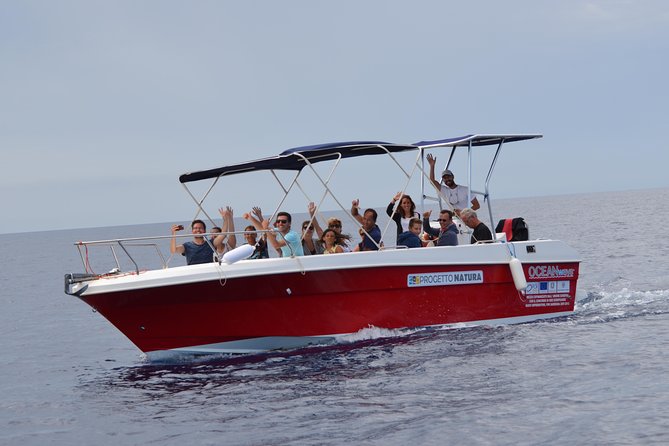
The biggest difference between a casual “look for dolphins” trip and a conservation-minded one is what happens after you find animals. Here, the operator takes the rules seriously: no aggressive pursuit, careful distances, and a focus on reducing stress.
You’ll likely hear plenty of passionate talk from the guide team. Names that come up include Fabio, along with the crew members Francesco and Gabriella. Another guide name you may hear is Fabrizio. Whatever the mix of staff on your day, the style is consistent: you’ll get information tied to behavior, not just facts.
This trip also leans into the idea that spotting dolphins isn’t the endpoint. It’s the start of a learning moment. The photo-ID technique is a good example. Instead of talking about dolphins as a single “group,” you’re encouraged to think of specific individuals in a wider population.
And that links back to conservation. The briefing covers conservation status, and the sound recordings add a research layer that shows why vocal communication matters to dolphins and to scientists trying to monitor them.
The Best Part Even If Dolphins Are Tricky: Learning on the Water
Let’s be honest: dolphin watching has a randomness factor. Even with a strong odds statement, you can still have a day where dolphins don’t show up as expected.
The good news is that this tour doesn’t feel empty when sightings are limited. The on-board briefing, the dolphin sounds, and the science-based explanation give the time structure. One experience report noted a day without dolphins but still described the trip as fantastic, which tracks with how this tour is built: the “why” is always happening, even if the “wow” arrives late.
That’s also why the three-hour duration is a sweet spot. You get enough time to search without feeling like you’re trapped on the water all day.
Price and Value: Is $60.34 for 3 Hours Worth It?
At $60.34 per person for about 3 hours, this is priced in the range you’d expect for a quality small-boat wildlife tour. The value isn’t just “you’re on a boat.” It’s what you get for the money:
- A capped group size (max 12) helps the experience feel organized and safer.
- Research involvement through MareTerra boosts credibility and adds real study tools like photo-ID.
- Certification and conduct rules matter. Many tours treat dolphin contact rules as a suggestion. Here, it’s tied to a formal standard for whale watching quality.
- Interactive content: dolphin sound playback plus individual identification info makes the trip more than spotting.
If you’re the type who loves nature, but also likes to come home with something more than photos, you’ll likely feel this is good value. If you only care about guaranteed sightings, then no dolphin tour can promise that. Your best move is to pick a day when the sea looks cooperative.
Spring and Autumn Comfort: What to Bring for a Cooler Sea Session
This tour runs in spring and autumn, so plan for weather swings. The operator’s advice is simple, and it’s the right kind of practical:
- Warm clothes
- A waterproof jacket
- Water
There’s also no toilet on board, so use facilities before you board. That one is easy to forget until you’re already out on the water.
Shade can be limited. One review specifically called out that there wasn’t much shade on the boat, and suggested bringing a seat cushion, especially if you’re smaller or want extra comfort. If you tend to feel cold, pack accordingly. If you burn easily, bring what you’d normally need for a breezy boat ride.
And yes, it’s a boat—so seat choice matters. Try to settle somewhere that gives you a good view and comfort at the same time.
How Likely Are Dolphins? The 80% Chance Meets Real Sea Days
The operator states a dolphin spotting chance of 80% thanks to the presence of the MareTerra researcher and their approach. That’s promising.
But you should also plan like a responsible adult: sea conditions matter. The tour depends on suitable sea conditions and requires a minimum number of people to run. If those conditions aren’t met, you’ll be offered a different date or a full refund.
Guides also reserve the right to end the excursion early if safety can’t be guaranteed or if weather forces changes to the plan. In those cases, the ticket cost could be reduced.
In other words: you’re not buying a lottery ticket. You’re joining a real field-style search with safety and welfare built in.
Quick Logistics That Affect Your Day
A few practical notes can make your morning smoother.
- You’ll get a mobile ticket.
- The tour is offered in English.
- Service animals are allowed.
- It’s suitable for kids from 5 years old.
- The meeting point is in central Alghero at Via Giuseppe Garibaldi, and it’s near public transportation.
A small timing tip: because it’s time on the water and the weather can shift, I’d treat this as a “be ready when they’re ready” activity, not something to pair with a rushed schedule right before or after.
Should You Book the Alghero Dolphin Watching Tour?
Book it if you want dolphins and you also want the science behind the sighting. The biggest reasons to choose this one are the individual identification via photo-ID, the dolphin sound playback, and the clearly stated animal-welfare approach under their certified whale watching framework.
Skip it or adjust expectations if you’re going only for guaranteed dolphin action. Even with strong odds, wildlife isn’t scheduled. But if you like learning, you’ll get value even when the dolphins are quiet.
Also, this fits well for families with kids from 5, and for adults who like structured explanations rather than just standing around holding a phone.
If you’re in Alghero during spring or autumn, this is a solid use of half a day—especially if you’ve been hoping to see Sardinia’s coastline and learn how marine researchers study dolphins in the wild.
FAQ
How long is the dolphin watching tour in Alghero?
It lasts about 3 hours (approximately) and returns to the meeting point.
Where is the tour meeting point?
The meeting point is Via Giuseppe Garibaldi, 49, 07041 Alghero SS, Italy, and the activity ends back at the same place.
Is the tour in English?
Yes, the tour is offered in English.
What should I bring?
Bring warm clothes, a waterproof jacket, and water. There is no toilet on board.
Is the tour suitable for children?
Yes, it is suitable for kids from 5 years old.
What happens if the tour can’t run due to weather or too few people?
If sea conditions aren’t suitable or the minimum number of travelers isn’t met, you can choose another date if available or receive a full refund.
More Tours in Alghero

More Tour Reviews in Alghero

Alghero and the Coral Coast
New in from around Alghero
Alghero & the Coral Coast, compared.
 ★ 4.9Alghero: Sunset Sailing Aperitif ExperienceFrom $65367 reviews
 ★ 5.0Alghero – Dolphin Watching and Guided Snorkeling (summer tour)From $78311 reviews
 ★ 4.8Alghero: Wine and Olive Oil Tasting at a Local FarmFrom $43294 reviews
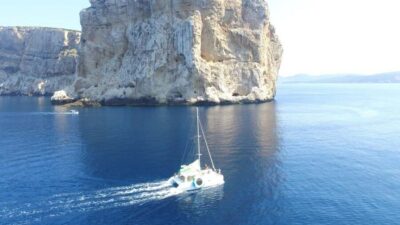 ★ 4.8Porto Conte: Half-day catamaran tour with aperitifFrom $91228 reviews
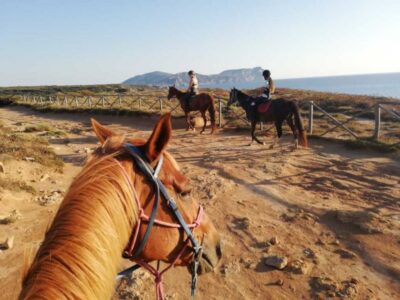 ★ 4.7Alghero: Guided Horseback Ride at Lake Baratz & Porto FerroFrom $98201 reviews
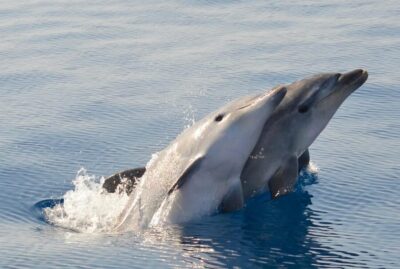 ★ 4.7Alghero: Dolphin Watching Tour with Marine ResearcherFrom $59172 reviews
 ★ 4.9Alghero: Guided Quad Tour with Swim StopFrom $215152 reviews
 ★ 4.9Alghero: Sardinian Home-Cooking Class and MealFrom $123138 reviews
Browse the lists this tour appears in