
Reviewed · ALGHERO & THE CORAL COAST
Alghero: private sightseeing & wine experience
Alghero rewards slow walking and good company, and this private tour nails both. I love the way you get real context fast in the old town, and then you switch gears to the winery where you’ll follow the wine story from vine to bottles. One thing to consider: it’s a short, structured outing, so if you want to linger in every church or photo stop, build in extra time on your own.
This is set up for an easy day. You get pickup and a round-trip transfer, so you can focus on people-watching, sea views, and learning why Alghero looks and feels the way it does.
The tour runs about 2 hours 40 minutes to 3 hours 20 minutes. It ends with tastings—3 wines plus a typical Sardinian aperitif—so you leave with something memorable beyond photos and postcards.
In This Review
- Key points worth knowing
- Why Alghero clicks on a private city-and-wine format
- From Porto di Alghero to Piazza Civica: getting bearings quickly
- Quartiere Ebraico and Santa Maria: layers you can actually see
- Bastions, Lungomare, and Porta Terra: sea walls with a story
- Inside the historic cellar: wine production from vine to bottle
- The wine guide matters: Kevin and Lori’s two-part value
- Choosing the Archaeology option with Nuraghe Palmavera
- Price and logistics: what you get for $144.05 per person
- Practical tips to make the day smoother
- Should you book this Alghero sightseeing and wine experience?
- FAQ
- How long is the Alghero private sightseeing and wine tour?
- What is the group size for this tour?
- Do I get pickup and round-trip transportation?
- What languages is the tour offered in?
- What happens during the wine part of the tour?
- What is the archaeology option?
- Does the tour include admission tickets for the city stops?
- What should I do if the weather is poor?
- Is a mobile ticket used?
- What is the cancellation policy?
Key points worth knowing
Private group, max 4 people for a more personal pace and questions
Kevin Sunch as your guide (English and Italian are available)
Old Alghero highlights on foot from Porto di Alghero to the cathedral and fortifications
Wine cellar behind-the-scenes with a vine-to-bottle explanation
3 wine tastings plus a Sardinian aperitif to end the experience on a satisfying note
Optional archaeology at Nuraghe Palmavera instead of the city walk
Around Alghero and the Coral Coast
- Alghero: Sunset Sailing Aperitif Experience★ 4.9 · 367 reviews
- Alghero – Dolphin Watching and Guided Snorkeling (summer tour)★ 5.0 · 311 reviews
- Alghero: Wine and Olive Oil Tasting at a Local Farm★ 4.8 · 294 reviews
- Porto Conte: Half-day catamaran tour with aperitif★ 4.8 · 228 reviews
Why Alghero clicks on a private city-and-wine format
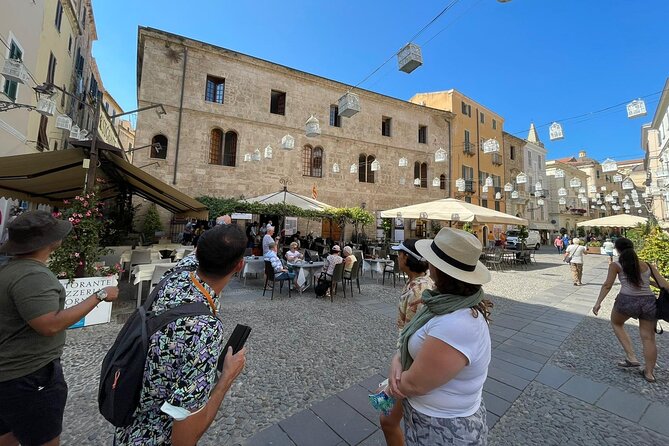
Alghero is one of those places where the details do the work. You’re walking through layers—Spanish-era corners, medieval squares, a Jewish quarter that once held one of the two Sardinian communities of the time, and the long sea walls that frame the coastline.
What I like about this format is that it solves two common problems at once. First, the city can be pretty, but without guidance it’s easy to miss how the pieces connect. Second, a standalone wine tasting is fun, but it’s not always clear why local wine traditions developed the way they did. Here, the day flips from streets to wine production in a logical, learn-as-you-go way.
The fact that it’s private (max 4) matters too. You can ask questions as you go, not just after you’re back at the meeting point. And you’re not dealing with the classic “one slow person ruins the group’s schedule” issue.
From Porto di Alghero to Piazza Civica: getting bearings quickly
You start at Porto di Alghero, the port area that’s very much a working-tourism blend—small boats, pleasure craft, and yachts along a scene that’s among the most beautiful in Sardinia. It’s a great opener because it sets the tone: the sea is part of the city’s identity, not a background postcard.
Then you move into Piazza Civica, the square tied to the city’s aristocratic past. This spot is built around the 13th century and served as a meeting place for the bourgeoisie. You’ll also hear about Palazzo de Ferrera, where Charles V stayed back in 1541—one of those details that makes you look at old walls and buildings as political decisions, not just architecture.
Practical tip: you’ll be walking at a comfortable pace, but it’s still a walking tour. Comfortable shoes help, especially if you’re in Alghero in warm weather and plan to keep exploring after.
Quartiere Ebraico and Santa Maria: layers you can actually see
This part of the walk gives you a real sense of how migration and power shaped Alghero. In the Quartiere Ebraico, you’re stepping through the old Jewish quarter of the city. These were Catalan Jews who came to Alghero since the 14th century. At the time, Sardinia’s two main communities were in Cagliari and Alghero—so this neighborhood wasn’t a small footnote.
Then you connect the story to a turning point: the community’s life in this area ended in 1492, linked to the Decredo de l’Alhambra (an anti-Jewish edict). Even if you’re not a history person, the impact lands because the neighborhood itself feels like it has memory.
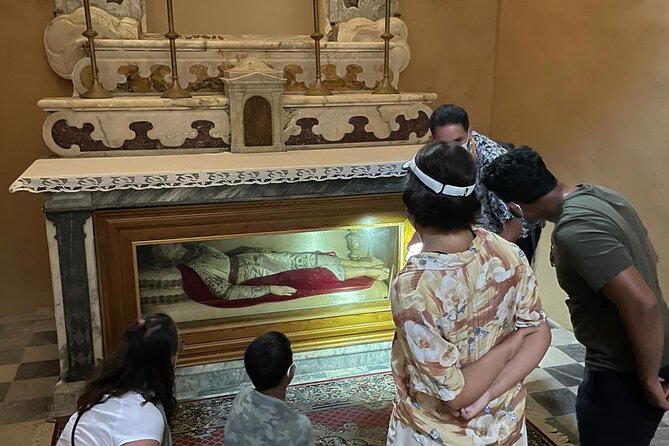
Next is Cattedrale di Santa Maria, a cathedral built over centuries. The first buildings date to around 1560–1560/70, and the church took roughly three centuries to complete due to economic problems. The result is a mix of styles you can spot as you move through or look toward different parts—Gothic, Renaissance, Rococo, and Neoclassical elements all show up.
Why this works on a short tour: you don’t just stop at buildings—you learn how construction timelines and local constraints shape what you’re seeing today.
Bastions, Lungomare, and Porta Terra: sea walls with a story
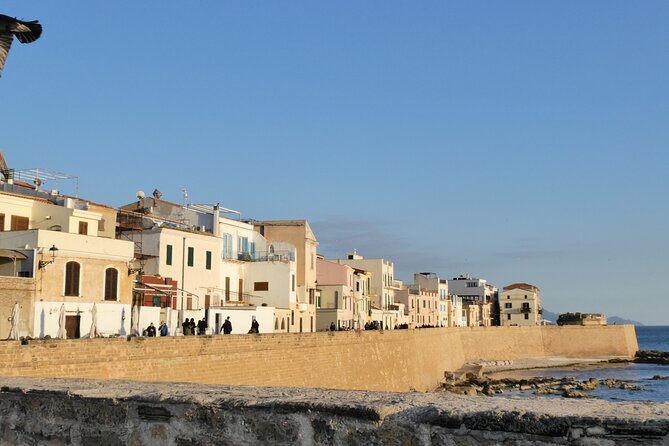
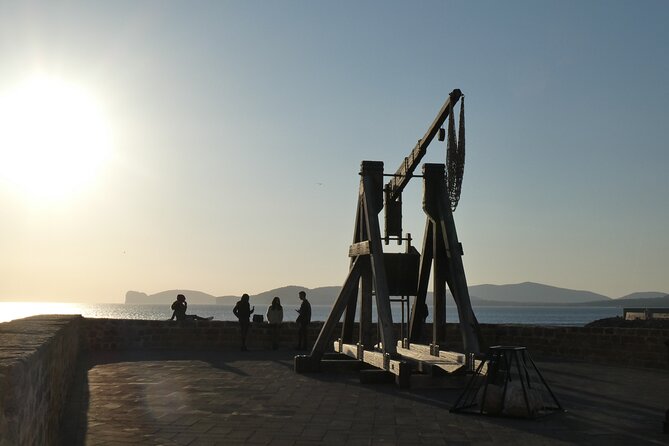
One of the best payoffs on this route is the Affacci a mare promenade: Bastioni and Lungomare. This is where you get your postcard views, but also your “wait, how old are these walls?” moment.
The fortifications were built around 1200 under Genoese domination, and they were enlarged during the Spanish period toward the 16th century. That kind of timeline explains why the city feels both medieval and Mediterranean—built for defense, but adapted for living and trading.
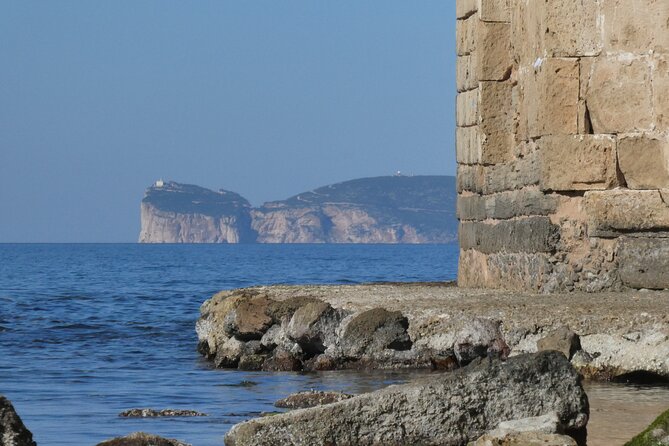
Then you close this city loop at Torre di Porta Terra, built around the 14th century. It’s nicknamed the Tower of the Jews because the Jewish community helped finance its construction. That detail adds meaning to what could be a quick photo stop. You’re seeing a structure that ties directly back to the neighborhood you walked through earlier.
If you like your sightseeing with human-scale connections—who funded what, who lived where, who built what—this last stretch tends to stick.
Rather keep it private in Alghero? A few more
Inside the historic cellar: wine production from vine to bottle
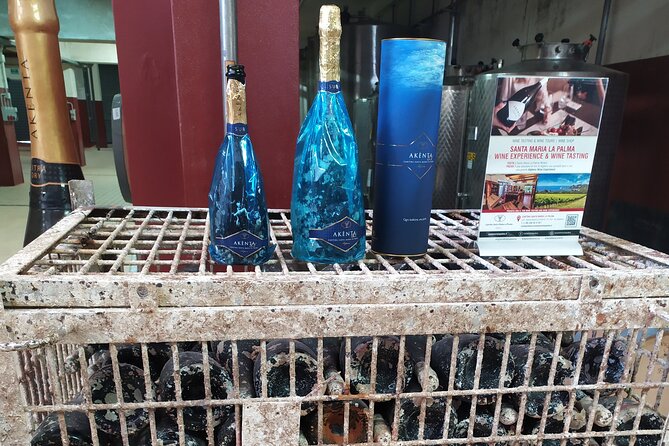
After the walking portion, the day shifts from city streets to a historic cellar setting. The pitch here is simple and worth paying attention to: you’ll learn the behind-the-scenes steps in the wine production chain, from vine to bottles.
This isn’t just tasting by instinct. You’re guided through the process so when you pour the wine later, you understand what you’re tasting. It makes the tasting more fun because you have something to listen for in the glass—how production choices can affect flavor, not just the label.
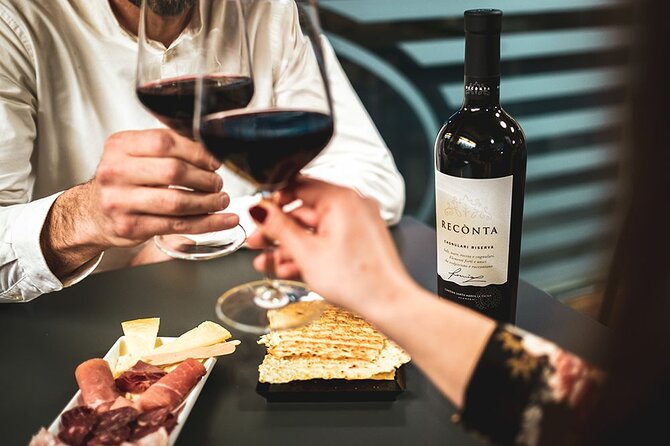
At the end, you taste 3 wines, then finish with a typical Sardinian aperitif. That pairing style is a good reality check too: wine in Sardinia isn’t only about formal tastings. It’s part of the rhythm of an evening out.
A nice bonus from how Kevin guides: he tends to share practical ideas for what to do next in Sardinia—restaurant recommendations and must-do stops—so the wine experience doesn’t end when the tour ends.
The wine guide matters: Kevin and Lori’s two-part value
Your main guide is Kevin Sunch. The tour is offered in English and Italian, and Kevin is from Sardinia, which usually means better storytelling about local culture—not just general facts.
In the cellar portion, you may meet the winery guide Lori. One of the most useful things about having a dedicated cellar guide is the way it grounds the tasting in real production details, not only travel explanations.
In practical terms, that means you’ll get two layers of value:
- Kevin connects what you saw in Alghero to a broader sense of local life.
- The cellar guide explains what happens after the grapes are grown—so your tasting has context.
Choosing the Archaeology option with Nuraghe Palmavera
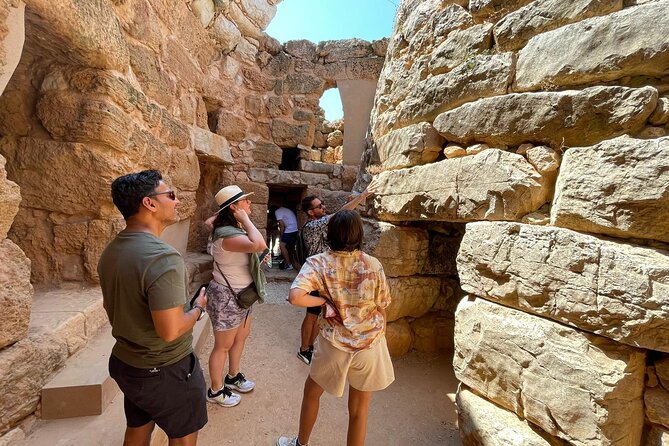
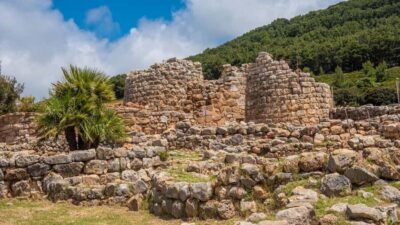
If you opt for the Archaeology choice, the schedule shifts. Instead of the city walk, you visit Nuraghe Palmavera, described as a village dating to the 15th century BC. You then always visit the cellar afterward for the wine experience.
This is a smart option if you want your day to feel more “Sardinia-first” rather than “Alghero-and-a-bit-more.” Nuraghe Palmavera is ancient and very different from the rest of the experience, so it changes the flavor of the whole outing.
One of the advantages of doing it with a guide is that archaeology sites can be confusing when you’re standing in the middle of stone layouts that don’t automatically explain themselves. With a good guide, the site becomes understandable in layers—what you’re looking at and how the living spaces would have worked.
Also, doing archaeology plus wine in the same half-day is a good use of time. You get something rare and ancient, then you end with something enjoyable and social.
Price and logistics: what you get for $144.05 per person
The price is $144.05 per person, and the tour typically lasts just under 3 hours. On paper, that can sound steep if you’re comparing it to a basic walking tour. But in real terms, the value comes from three things bundled together:
1) Private guiding for a small group (max 4).
2) Round-trip transfer included, which saves you time and hassle.
3) Wine experience included, including a cellar visit and tasting 3 wines plus a Sardinian aperitif.
So you’re not paying for “drinks only” or “walking only.” You’re paying for a connected story: the city’s identity, then the wine-making chain, then the tasting.
If you’re traveling as a couple or small group, this tends to feel even better. A private format means you spend less time coordinating and more time actually enjoying the day.
Practical tips to make the day smoother
A few things will help you get the most out of it:
- Wear walking shoes. You’ll cover old town streets and promenade areas.
- Plan for good weather. This tour requires it. If weather forces a change, you’ll be offered a different date or a full refund.
- Bring your appetite. You’ll end with 3 wines and an aperitif. If you’ve been sampling espresso and pastries all morning, pace yourself.
- Use the mobile ticket. It’s part of the experience setup, so have it ready on your phone.
- Expect a structured route. It’s short on purpose. If you want extra time at any one stop, add that yourself afterward.
One last note: service animals are allowed. If that matters to you, this is reassuring.
Should you book this Alghero sightseeing and wine experience?
I’d book it if you want a tight, high-value Alghero day that’s not just pretty streets. The sweet spot is when you care about meaning: why buildings look the way they do, what the Jewish quarter represents, and how Sardinian wine culture fits into real production steps you can see.
I’d skip it if your idea of a great trip is spending hours unguided, wandering without structure, or if you want a very relaxed pace with lots of optional detours. This is guided and scheduled, built for efficiency and good storytelling.
And if you can choose between options, think like this:
- Choose the city walk + wine if you want Alghero’s layers in one afternoon.
- Choose Nuraghe Palmavera + wine if you want ancient Sardinia up front, then a satisfying tasting finish.
FAQ
How long is the Alghero private sightseeing and wine tour?
It runs about 2 hours 40 minutes to 3 hours 20 minutes.
What is the group size for this tour?
It’s private for your group with a maximum of 4 people.
Do I get pickup and round-trip transportation?
Yes, the transfer (round trip) is included in the price, so you don’t have to worry about driving.
What languages is the tour offered in?
The tour is available in English and Italian.
What happens during the wine part of the tour?
You visit a historic cellar, learn about the wine production chain from vine to bottles, and end with tastings of 3 wines plus a typical Sardinian aperitif.
What is the archaeology option?
If you choose the Archaeology option, you’ll visit Nuraghe Palmavera (a village from the 15th century BC) instead of the city, and you’ll still visit the cellar for the wine experience.
Does the tour include admission tickets for the city stops?
The listed city stops have free admission tickets.
What should I do if the weather is poor?
This experience requires good weather. If it’s canceled due to poor weather, you’ll be offered a different date or a full refund.
Is a mobile ticket used?
Yes, a mobile ticket is included.
What is the cancellation policy?
You can cancel for free up to 24 hours in advance of the experience for a full refund. If you cancel less than 24 hours before the start time, the amount paid is not refunded.
Alghero to Yourselves
More Tour Reviews in Alghero


Alghero and the Coral Coast

New in from around Alghero
Alghero & the Coral Coast, compared.
 ★ 4.9Alghero: Sunset Sailing Aperitif ExperienceFrom $65367 reviews
 ★ 5.0Alghero – Dolphin Watching and Guided Snorkeling (summer tour)From $78311 reviews
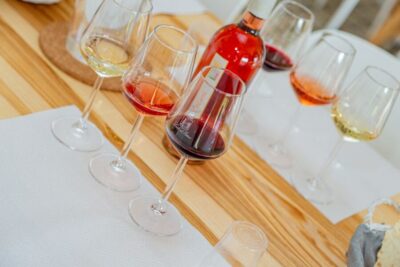 ★ 4.8Alghero: Wine and Olive Oil Tasting at a Local FarmFrom $43294 reviews
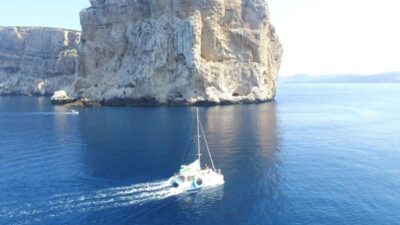 ★ 4.8Porto Conte: Half-day catamaran tour with aperitifFrom $91228 reviews
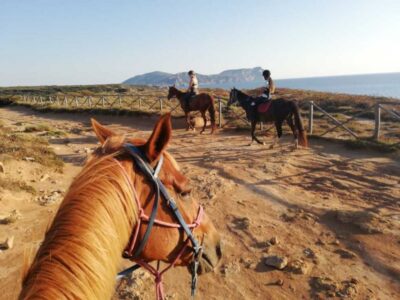 ★ 4.7Alghero: Guided Horseback Ride at Lake Baratz & Porto FerroFrom $98201 reviews
 ★ 4.7Alghero: Dolphin Watching Tour with Marine ResearcherFrom $59172 reviews
 ★ 4.9Alghero: Guided Quad Tour with Swim StopFrom $215152 reviews
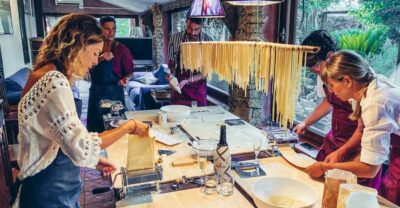 ★ 4.9Alghero: Sardinian Home-Cooking Class and MealFrom $123138 reviews
Browse the lists this tour appears in