
Reviewed · ALGHERO & THE CORAL COAST
Alghero: Anghelu Ruju Necropolis with Audio Guides
Fairy-house tombs sound soft, but they aren’t. Anghelu Ruju’s domus de janas necropolis is a moving walk through Sardinia’s burial world, with audio guides that turn the stones into stories.
I like that this visit is built for self-guided learning: at the ticket office you get a QR code with a password and a site map so you can move independently and hit the right listening stops. I also really value the multilingual audio set-up (Italian, English, French, German, Spanish), because it keeps the experience practical even if your group has mixed language skills.
One thing to watch: on a self-guided site, wayfinding matters. Some people have found the navigation a bit tricky if the route or numbered tombs aren’t obvious in the moment, so plan to use the map and take your time at the first junctions.
In This Review
- Key things I think you’ll love
- Anghelu Ruju Necropolis: What you’re really seeing in 45 minutes
- Ticket office setup: QR password, multilingual audio, and the map you must return
- Finding your way among the domus de janas tombs
- What to look for inside the tomb “houses”
- Simple vs. monumental
- The symbols: bull’s heads and ritual marks you’ll start seeing everywhere
- Burial beliefs and nature: why this cemetery feels different
- Pacing and stops: how to use the 45-minute structure well
- Timing in Alghero: choose your hour slot and plan the light
- Price and value: about $10 with audio, no live guide
- Practical tips: shoes, toilets, pets, and what to bring
- The one possible snag: navigation, signage, and the numbered-tomb problem
- Who should book Anghelu Ruju with audio guides?
- Should you book this tour?
- FAQ
- How long is the Anghelu Ruju necropolis visit with audio guides?
- What does the ticket include?
- Is there a live guide during the visit?
- What languages are available for the audio guides?
- What are the available visiting hours?
- What should I bring to enjoy the audio tracks?
- Is there a toilet on site?
- Are pets allowed?
Key things I think you’ll love
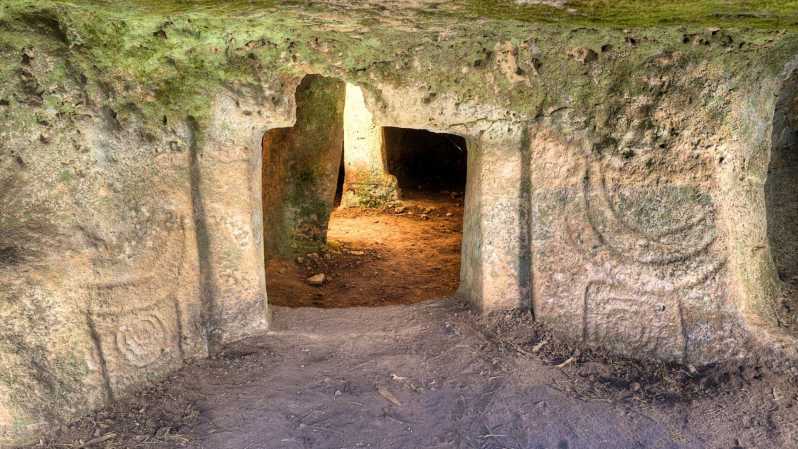
- Domus de janas (fairy houses) tomb architecture: from simple chambers to more monumental examples
- Audio stops tied to a printed route map, so you’re not wandering blind
- Ritual symbols like bull’s heads and other marks linked to burial belief
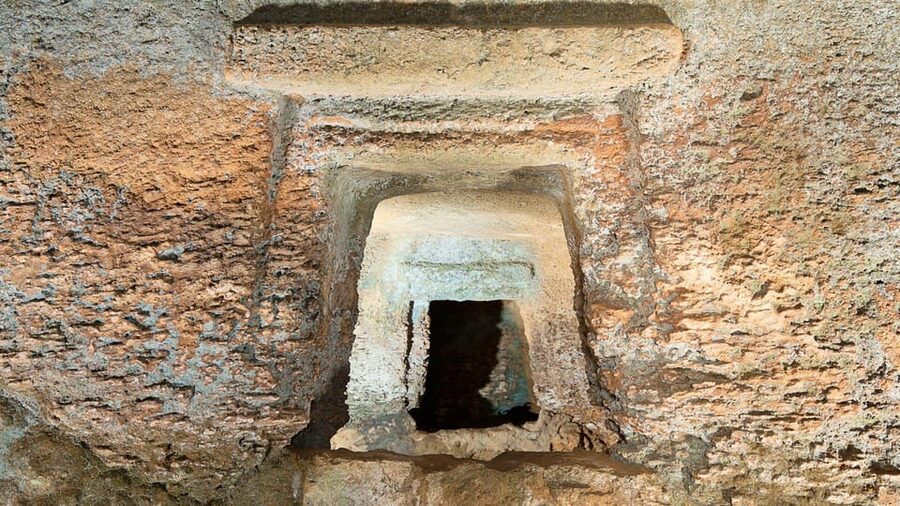
- Interior details made to look like real homes: steps, pillars, cornices, and even false doors/windows
- A short, focused visit (about 45 minutes), which makes it easy to slot into a day in Alghero
Around Alghero and the Coral Coast
- Alghero: Sunset Sailing Aperitif Experience★ 4.9 · 367 reviews
- Alghero – Dolphin Watching and Guided Snorkeling (summer tour)★ 5.0 · 311 reviews
- Alghero: Wine and Olive Oil Tasting at a Local Farm★ 4.8 · 294 reviews
- Porto Conte: Half-day catamaran tour with aperitif★ 4.8 · 228 reviews
Anghelu Ruju Necropolis: What you’re really seeing in 45 minutes
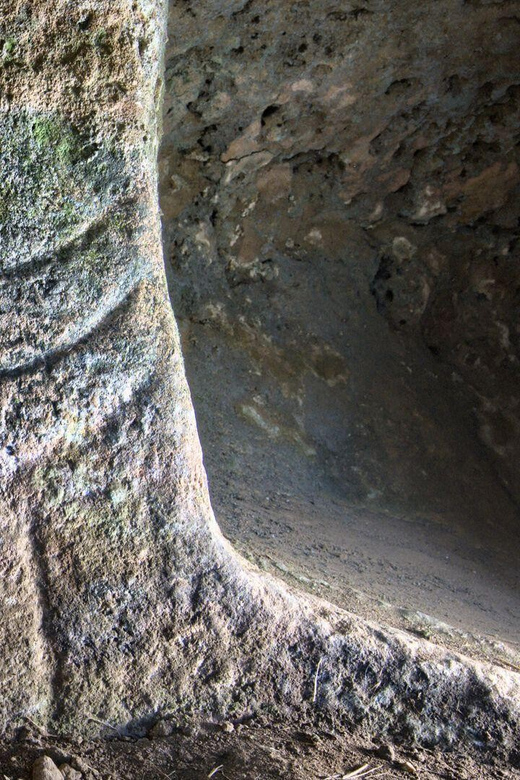
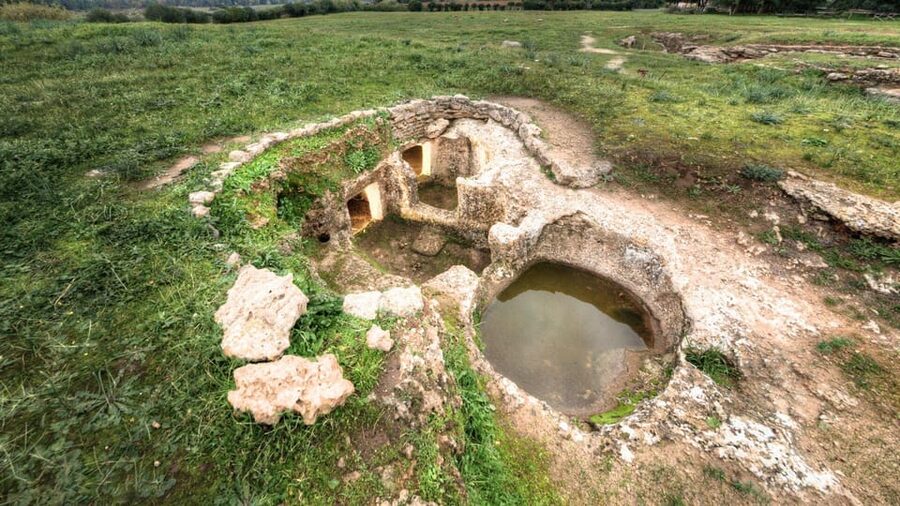
Anghelu Ruju is one of north-west Sardinia’s major prehistoric cemetery sites, and it dates back to the Neolithic and Copper Age. What makes it fascinating is the tomb type itself: these are hypogea carved underground, known as domus de janas, or fairy houses.
Don’t think of them as one tomb. You’re moving through a cemetery with multiple tombs, ranging from the plain to the more elaborate. That range matters because it gives you a sense that burial practices and craftsmanship changed over time, not just one moment in the distant past.
And because it’s a burial site, you’re also seeing how people treated death as part of life and nature. The decorations and symbolic marks aren’t random; they point toward reverence for the dead and a belief system tied to the land.
Ticket office setup: QR password, multilingual audio, and the map you must return
This is a self-guided experience with audio, not a live guided tour. When you arrive, the ticket office staff give you what you need right away: a multilingual audio guide, plus a QR code with a password so you can download the tracks to your phone.
You’ll also receive a detailed map. This isn’t just a “walk here” sketch. It’s designed to show the route, the numbered/audio points, and where you should pause to match each track to a specific stop.
Two practical notes that affect how smoothly your visit goes:
1) You’ll want to keep the map in your hand until you finish.
2) You must return the map at the ticket office when you leave.
If you’re the type who likes to walk fast without checking notes, this kind of site can feel slower than it looks. The workaround is simple: slow down for the first few stops so the audio route clicks into place.
Finding your way among the domus de janas tombs
Your walk is organized around listening points. The audio tracks match parts of the cemetery, so you’re not just hearing background facts while you stroll—you’re learning as you face the carved spaces.
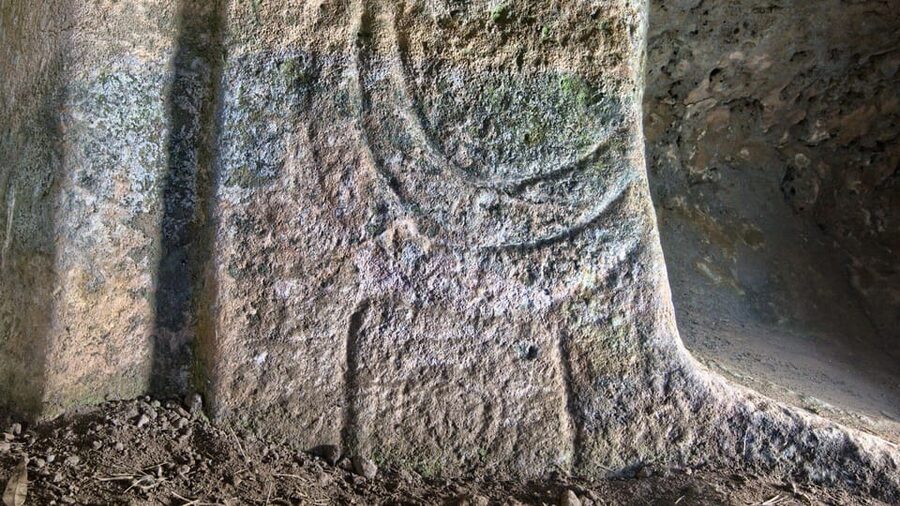
The necropolis is famous for tomb architecture that imitates home-like elements. As you move from tomb to tomb, pay attention to how the carvings create structure and separation inside the rock. The idea is that these underground rooms weren’t treated as empty storage spaces; they were designed environments for the people buried there.
What to look for inside the tomb “houses”
When the track prompts you to notice details, these are the features mentioned for the domus de janas style:
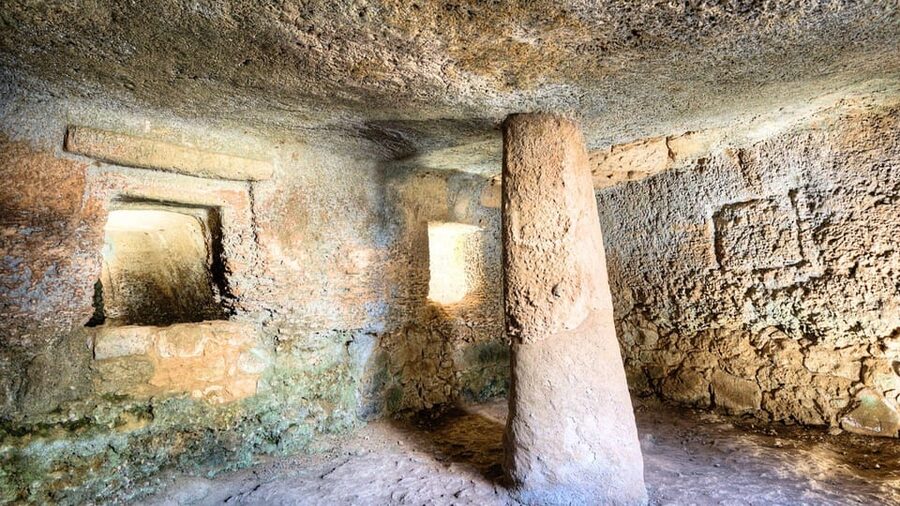
- Steps and built-in transitions
- Pillars and supports carved from stone
- Cornices and edges that create visual framing
- False lintels (fake structural elements)
- False doors and false windows
It sounds almost theatrical at first. But the logic makes sense: early Mediterranean burial beliefs often carried the idea that the dead still belonged to a world of rituals and daily needs. These carvings are a way to give that world form.
More of ancient Sardinia and its nuraghi
Simple vs. monumental
The necropolis includes tombs described as starting from the simpler and moving toward the monumental. In practice, that means the more complex tombs tend to show more architectural work in the rock and more “layered” design. Give yourself time to compare rather than rushing straight to the biggest-looking openings.
The symbols: bull’s heads and ritual marks you’ll start seeing everywhere
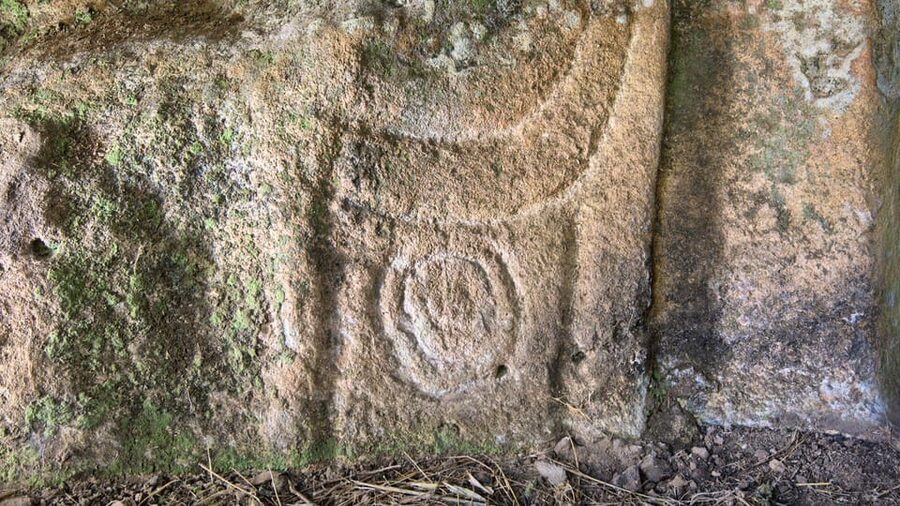
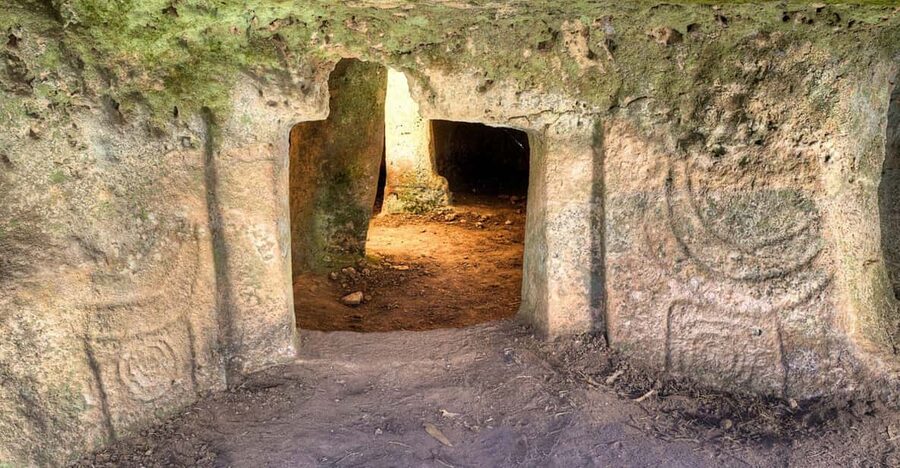
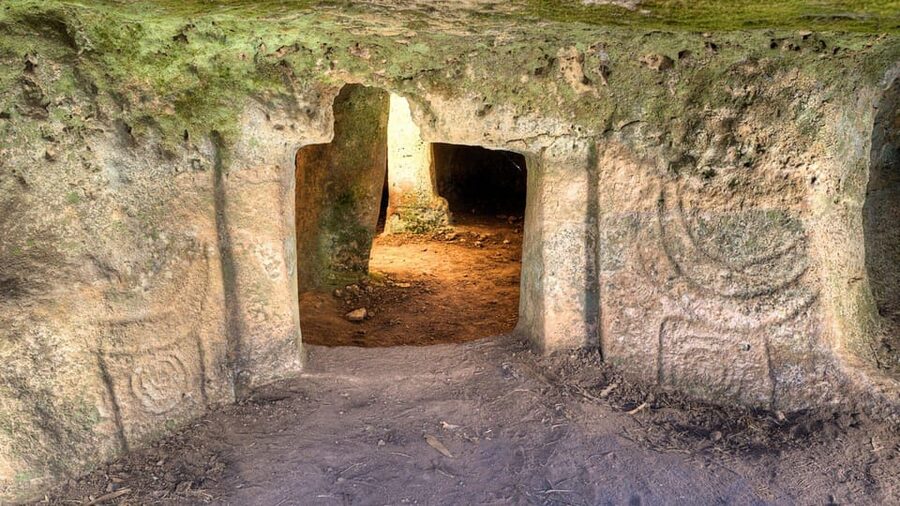
One of the best reasons to use the audio guides here is symbol spotting. The necropolis includes magical-ritual symbols and enigmatic marks linked to propitiatory rites—basically signs used to support the burial process and the beliefs around it.
A star example is the bull’s head motif. When you hear the track explain how these images fit into the belief system, you’ll likely notice that the decorations aren’t isolated. They tend to reinforce the tomb as a sacred space.
You might also encounter other enigmatic symbols typical of this period in the Mediterranean region. Even when you can’t decode every mark, the audio helps you understand their function: signaling reverence, guiding ritual behavior, and marking the tomb as a place where the living related to the dead.
Burial beliefs and nature: why this cemetery feels different
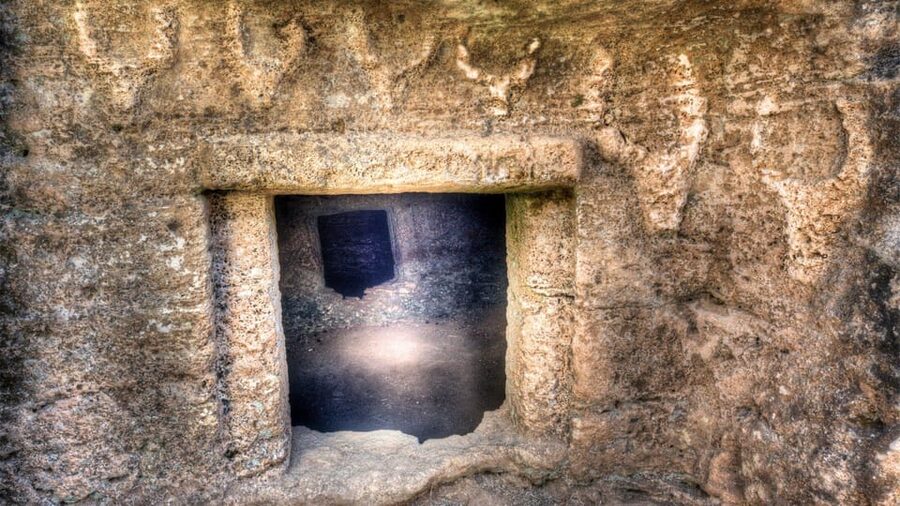
This site is described as a place where the cult of the dead merges with respect for nature. That’s not just poetic wording. It helps you frame what you’re looking at: underground spaces cut into a landscape that mattered spiritually, not just physically.
If you let the audio tracks do their job, you get a clearer picture of how these communities might have understood the relationship between land and life and death. You’re not seeing ruins in the modern sense. You’re seeing places built to support ritual continuity—human beliefs that lasted long enough to carve a whole cemetery.
And because the domus de janas are tied to the last resting place of Sardinian people in that era, the emotional tone of the visit can shift. You start to read the site as a cultural statement, not just a fossil of architecture.
Pacing and stops: how to use the 45-minute structure well
Forty-five minutes is short. That’s great for keeping this from eating your whole day, but it also means you can’t treat it like a slow museum crawl.
Here’s the smartest way to use the structure:
- Start downloading your audio quickly so you don’t lose your first listening points.
- Follow the route on the map and match your stops to the audio track points.
- When a track tells you to look at interior details, pause rather than continuing forward.
Also bring your own headphones. The experience notes specifically that you’ll want to use your phone’s headphones to enjoy the tracks comfortably along the way. It sounds obvious, but in practice, it’s the difference between a calm educational walk and a stressful hunt for sound.
Timing in Alghero: choose your hour slot and plan the light
The experience runs on an hourly schedule. Hours are:
- November to March: 10:00 am to 2:00 pm
- April to October: 10:00 am to 6:00 pm
Since you’re walking outdoors between tombs and listening inside/near openings, daylight helps. In warmer months, you’ll also want to protect yourself from sun—this is why the basic packing list includes a hat and sunscreen.
If you’re visiting in peak summer, I’d aim for earlier hours so the ground and the carvings feel easier to take in. You’ll still get the full story in 45 minutes, but you’ll do it with more comfort.
Price and value: about $10 with audio, no live guide
At around $10 per person, this is priced like a compact, self-guided cultural stop—and that’s exactly what it is. What you’re paying for is entrance to the Necropolis of Anghelu Ruju plus a multilingual audio guide system.
Because there’s no live guide included, the value depends on what you want:
- If you like learning at your own pace, audio + a map is a strong deal.
- If you want human interaction—questions answered on the spot, deeper interpretation, or faster problem-solving—then this format may feel limited.
That said, the design is smart. You still get structured learning points, in multiple languages, and you don’t have to coordinate a group or wait for someone else to catch up. For solo visitors or small groups, that’s a real time-saver.
Practical tips: shoes, toilets, pets, and what to bring
This visit is easiest on the feet. Wear comfortable shoes—you’ll be walking on uneven ground and moving between carved openings.
Bring:
- A hat and sunscreen
- Comfortable clothes
- Your phone headphones
- Your phone with enough battery for the downloaded audio tracks
There’s one toilet available for men, women, and disabled. Also note the pet policy: pets are allowed with a muzzle and leash, and if they’re small dogs a leash is sufficient.
The one possible snag: navigation, signage, and the numbered-tomb problem
Because the experience relies on your map and the audio track points, navigation can make or break the vibe.
Some visitors have run into trouble if the tomb number they’re directed to isn’t obvious on the ground. If that worries you, do this early:
- Spend extra time at the first listening stop to confirm you’re on the correct route.
- Use the map to match the route numbers, not just your sense of direction.
- Don’t be afraid to step back and re-check—losing a track point costs you the “story” of that tomb.
In other words: this is doable, but it’s not totally hands-off. The best outcome comes when you treat the map as part of the tour, not paperwork.
Who should book Anghelu Ruju with audio guides?
I think this fits best if you:
- Want a short, focused archaeology stop without committing to a long tour
- Enjoy self-paced learning with structured audio
- Like architecture and symbolism, especially when the audio tells you what to look for
You might want a different format (or at least extra preparation) if you:
- Prefer a live guide for explanations and on-the-spot questions
- Get frustrated when you have to follow a numbered route on your own
- Don’t like using a smartphone for audio during walking
If you fall in the first group, you’ll likely enjoy how quickly the site’s details add up: domus de janas style, home-like carvings, and ritual symbols you can actually spot for yourself.
Should you book this tour?
Book it if you want a practical, low-cost way to understand Anghelu Ruju’s domus de janas and you’re comfortable using a map plus phone audio. In about 45 minutes, you’ll get a structured look at Neolithic and Copper Age burial architecture, with multilingual tracks that point out the key symbols and carved home-like features.
Skip it (or choose a different guide style) if you strongly dislike self-navigation or you’ll feel stressed if tomb numbers aren’t immediately obvious. In that case, audio can still help, but the lack of a live guide may leave you wanting more.
FAQ
How long is the Anghelu Ruju necropolis visit with audio guides?
The experience lasts about 45 minutes.
What does the ticket include?
You get entrance to the Necropolis of Anghelu Ruju and an audio guide.
Is there a live guide during the visit?
No. The audio guide is provided, and a guide is not included.
What languages are available for the audio guides?
Audio guides are available in Italian, English, French, German, and Spanish.
What are the available visiting hours?
From November to March, it runs 10:00 am to 2:00 pm. From April to October, it runs 10:00 am to 6:00 pm.
What should I bring to enjoy the audio tracks?
Bring comfortable shoes, a hat, sunscreen, comfortable clothes, and your phone headphones.
Is there a toilet on site?
Yes. There is one toilet for men, women, and disabled.
Are pets allowed?
Pets are allowed with a muzzle and leash. For small dogs, a leash is sufficient.
More Tour Reviews in Alghero





More Nuraghi and Ancient Sites
Alghero and the Coral Coast

New in from around Alghero





Alghero & the Coral Coast, compared.
 ★ 4.9Alghero: Sunset Sailing Aperitif ExperienceFrom $65367 reviews
 ★ 5.0Alghero – Dolphin Watching and Guided Snorkeling (summer tour)From $78311 reviews
 ★ 4.8Alghero: Wine and Olive Oil Tasting at a Local FarmFrom $43294 reviews
 ★ 4.8Porto Conte: Half-day catamaran tour with aperitifFrom $91228 reviews
 ★ 4.7Alghero: Guided Horseback Ride at Lake Baratz & Porto FerroFrom $98201 reviews
 ★ 4.7Alghero: Dolphin Watching Tour with Marine ResearcherFrom $59172 reviews
 ★ 4.9Alghero: Guided Quad Tour with Swim StopFrom $215152 reviews
 ★ 4.9Alghero: Sardinian Home-Cooking Class and MealFrom $123138 reviews
Browse the lists this tour appears in