
Reviewed · HISTORICAL TOURS
3 Hours Guided Tour of the Historic Districts of Cagliari
Four neighborhoods, three hours, big context.
This 3-hour guided tour is a smart way to understand how Cagliari grew, because you move district by district and get dates and building details along the way. I love the clear focus on visible landmarks, like the Pisan and Spanish fortifications in Quartiere Castello and the long list of church histories across the city. I also like the pace: it’s broken into manageable chunks that let you read the streets, not just rush past them. One drawback to keep in mind is the walking: the schedule assumes moderate physical fitness, and you’ll be on narrow medieval streets.
If you land with guides like Valentina or Majid, the experience leans into story and practical context, not just names. The tour also includes historical photographs to help you place what you’re seeing, which is handy when buildings date back to multiple eras. The group size is kept small (max 15 travelers), so questions don’t get lost, and language is not a problem since it’s offered in English.
You’ll start and finish back at Piazza Giacomo Matteotti, with about 45 minutes per district. Admissions for the listed sights are noted as free where applicable, and the itinerary includes an external look at the Elephant statue from the early 14th century. Plan for good weather because this one depends on it.
In This Review
- Key things to know before you go
- Cagliari’s four districts in three focused hours
- Quartiere Castello: fortifications, San Pancrazio tower, and the Cathedral era shifts
- Villanova: flower streets and two church squares with centuries of continuity
- Stampace and Via Roma: churches you can spot close together, plus a city hall built for a new image
- Marina: narrow longitudinal streets, Roman-age context, and two different church stories
- What the guides add: empires, naming details, and culture pointers
- Timing, walking, and group size: why 3 hours feels right
- Price check: how $72.01 buys real value in Cagliari
- Who this tour suits best (and who should choose something else)
- Should you book this 3-hour historic district tour?
- FAQ
- How long is the guided tour of Cagliari’s historic districts?
- Where do I meet the guide?
- Is the tour offered in English?
- How big is the group?
- Are museum tickets included?
- What kind of walking and conditions should I expect?
Key things to know before you go
- Small group (max 15): easier questions and a tour that stays under control.
- District-by-district focus: Castello, Villanova, Stampace, and Marina each get about 45 minutes.
- English guided experience + LIS option: English is standard, and a sign-language option is listed (LIS).
- Historical photos included: you’ll use them to connect eras to street-level details.
- Free admission tickets for included stops: museum time isn’t part of the plan.
- Moderate walking on narrow streets: bring comfy shoes and expect uneven, old-city ground.
Rather have a local along? More guided Sardinia days
- One day guided boat tour along the Baunei coast.★ 4.5 · 320 reviews
- Cagliari: Guided Segway Tour★ 4.9 · 314 reviews
- Gorropu canyon guided hike★ 5.0 · 144 reviews
- Guided day by boat in Carloforte with snorkelling and aperitif★ 5.0 · 120 reviews
Cagliari’s four districts in three focused hours
This tour is basically a fast-but-not-rushed orientation to Cagliari. You’re not trying to see everything; you’re trying to understand the city by walking through the neighborhoods that shaped it. That’s why the itinerary is split into four historic districts, and why each stop is a targeted block of time.
The timing matters. About 45 minutes per area keeps you moving, but it’s long enough to notice patterns: fortifications changing into religious landmarks, major streets showing “modern” urban planning, and coastal-adjacent streets revealing older layers. It also helps if you’re on a tight schedule. In one afternoon you can leave with a mental map of where things are and what they mean.
And yes, it’s a guided walk. You’ll be on streets that are typically medieval in feel—tight, winding, and full of “wait, that building is older than I thought” moments. The tour lists moderate physical fitness, so I’d treat that as a gentle warning: if you expect a mostly flat, low-walking experience, this isn’t it.
Quartiere Castello: fortifications, San Pancrazio tower, and the Cathedral era shifts
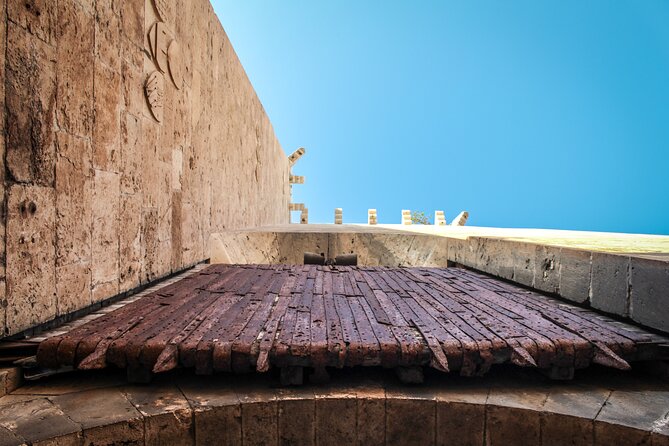
Quartiere Castello is where you start because it gives you the city’s defensive backbone. The tour focuses on the Pisan and Spanish fortifications, which is a strong clue that Cagliari didn’t develop in isolation. Different powers left their marks in stone, and you’ll see those influences without needing museum time.
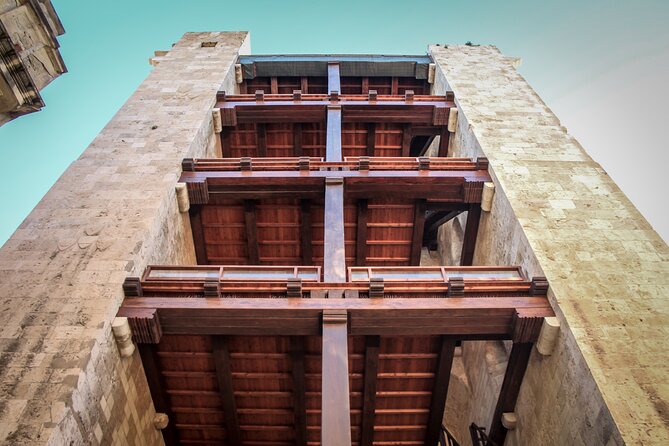
From there, you’ll move through key visual anchors, including the tower of San Pancrazio and an external look at the Elephant (noted as early 14th century). External visits matter here because you’re still able to see the landmark in context, even if you’re not getting inside it. The guide’s job is to connect what you’re standing near to the larger story of why it exists.
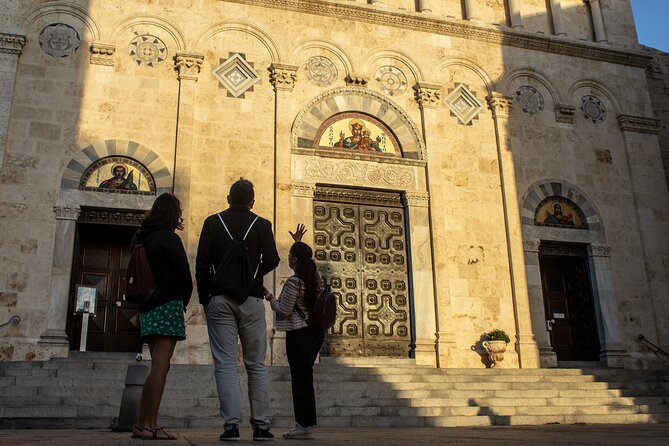
Then comes the big religious-and-architectural centerpiece: the Cathedral of Sante Maria e Cecilia, described as spanning the 13th to 20th centuries. That range is the whole point of Castello. Instead of a single-era “theme,” you get a building that accumulated layers over time—exactly what makes historic cities feel real.
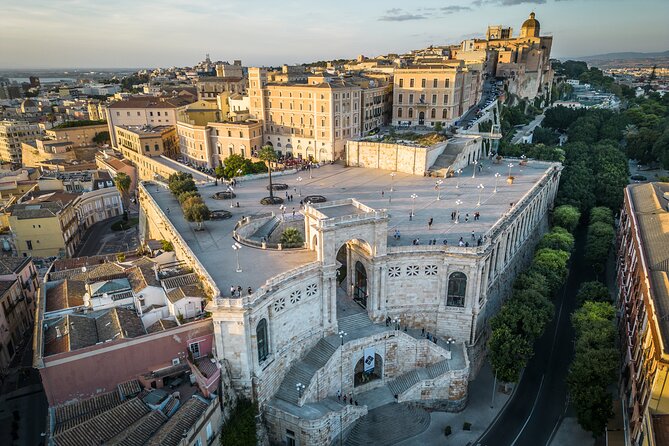
The stop also includes the basilica and the Bastion of Santa Croce from the 16th century. Bastions aren’t just dramatic; they’re practical. Seeing one helps you grasp how the city’s edges were shaped for protection, not for postcards.
Finally, you’ll walk the narrow medieval streets together, which is where all the facts start to stick. You’re not just collecting dates; you’re learning how Cagliari’s topography and street layout work.
Villanova: flower streets and two church squares with centuries of continuity
Villanova is a change of mood. You’re still in historic Cagliari, but the emphasis shifts to daily life and community religious traditions. The tour highlights the neighborhood’s square-and-church rhythm, where public space and faith architecture sit close together.
You’ll see the square and the church of San Giacomo from the 14th century, then move to the square and the church of San Domenico from the 15th century. Even without going inside, the pair of churches helps you understand how time shows up in the streets: one landmark anchors the earlier story, and the other shows later continuation.
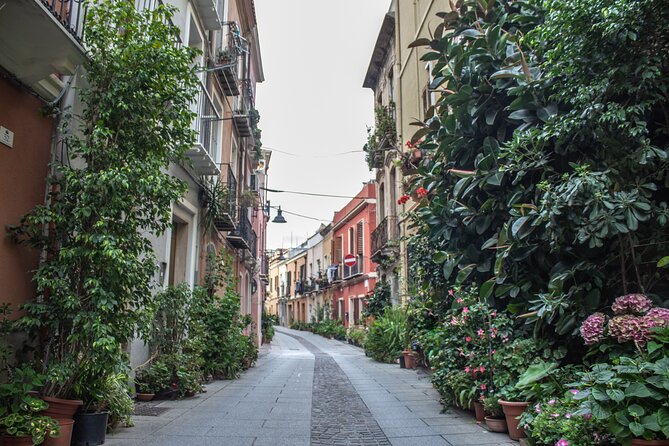
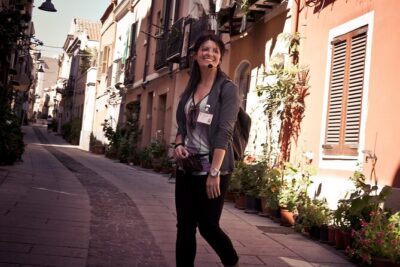
There’s also a seasonal-feeling detail that you’ll notice as you walk: the streets are described as decorated with flowers. That matters because it’s not only about buildings. It’s about how the neighborhood expresses identity in small, repeated ways.
One practical note: each district block is about 45 minutes, so you’ll get enough time to look closely and listen—without the tour turning into a long lecture. Villanova is the kind of stop where you’ll start thinking about Cagliari as lived-in, not just old.
Stampace and Via Roma: churches you can spot close together, plus a city hall built for a new image
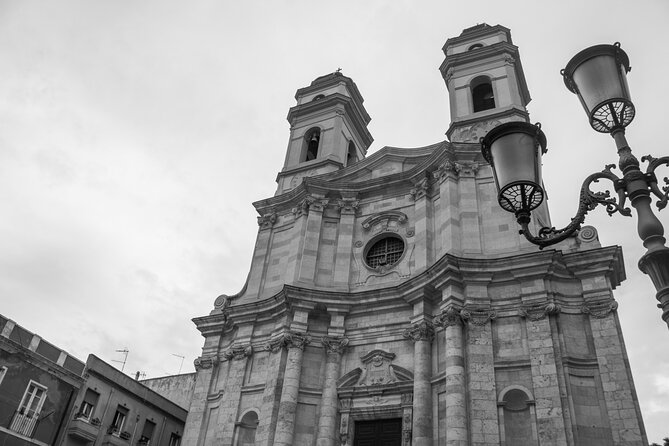
Stampace is where the tour shows you a cluster of beloved local churches packed close by. Along the way, you’ll encounter Sant’Anna (dated 18th to 20th century), San Michele (17th to 18th century), and Sant’Efisio (16th century). The key here is proximity: these landmarks aren’t scattered across the city like separate attractions. They’re connected by walkable space, which makes the neighborhood feel cohesive.
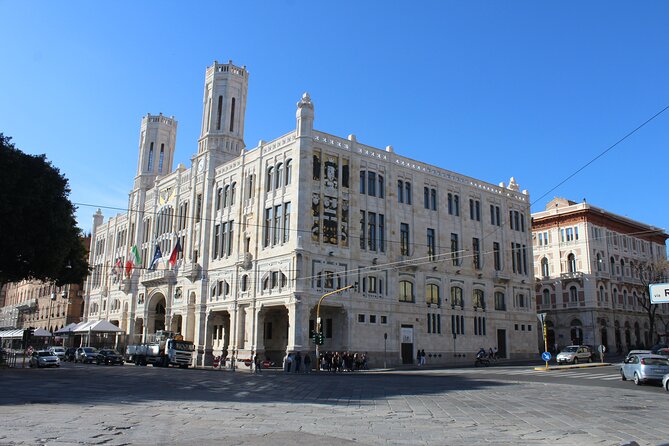
The tour also calls your attention to a modern civic landmark: the Town Hall on via Roma, described as built between the end of the 19th and the beginning of the 20th century. It’s framed as part of an effort to give Cagliari a more European urban imprint. That’s a useful lens for you as a visitor. You can compare old defense-and-medieval planning with the later “city-building” mindset you see along a major artery.
If you like urban clues—how a city’s main street changes character as time passes—Stampace delivers. And because you’re moving between three churches plus a civic building, you’ll end the district with more than a few photos. You’ll understand why locals might group this area in their daily mental map.
Further back into Sardinia history
Marina: narrow longitudinal streets, Roman-age context, and two different church stories
Marina is the district that feels most “connected” across time. The tour describes the area as having narrow streets that longitudinally cross the district, and it notes that the neighborhood has been populated since Roman age by people from different regions and states. That’s a big idea, delivered in simple street-level terms: Marina isn’t just old; it’s old and mixed.
You’ll see the remains of the church of Santa Lucia (dated 12th to 17th century). “Remains” is an important word in the tour description. It prepares you for something less polished and more archaeological in feel. This kind of sight is great for helping you picture how cities evolve: old religious sites can fade, rebuild, or transform as communities move and priorities change.
Then you’ll go to Sant’Eulalia (dated 14th to 20th century). That wide date range again reinforces the tour’s theme: Cagliari is layered. You’re not looking at a frozen moment. You’re watching time accumulate.
If you like walking tours that end with a sense of how daily life long ago shaped who lives there now, Marina is a strong final chapter. And because you’ll see churches both intact and in fragmentary form, your brain tends to lock onto what survives and what doesn’t.
What the guides add: empires, naming details, and culture pointers
The big reason this tour earns a strong rating is the way guides connect buildings to power and movement. You’ll hear how different empires and city-states controlled Sardinia over time, and how that produced the blend you see in Cagliari’s culture and architecture. The tour doesn’t treat the city as one straight line of Italian history.
A guide like Valentina is specifically praised for explaining the connections clearly and for being very well-spoken in English. Another name you’ll see mentioned is Majid, praised for being attentive to the group’s experience. Even if you don’t know who you’ll get, this is a good sign that the tour style is people-focused, not just script-focused.
You’ll also get practical culture pointers along the way. Some guides fold in restaurant suggestions and where to return later, which is exactly what I want from a first-orientation walk. It turns the tour into more than photos; it gives you the next steps.
And there’s that extra tool you get: historical photographs. When you’re standing in front of a tower, bastion, or cathedral with multiple centuries involved, photos help you visualize what changed, even if you can’t see every stage from street level.
Timing, walking, and group size: why 3 hours feels right
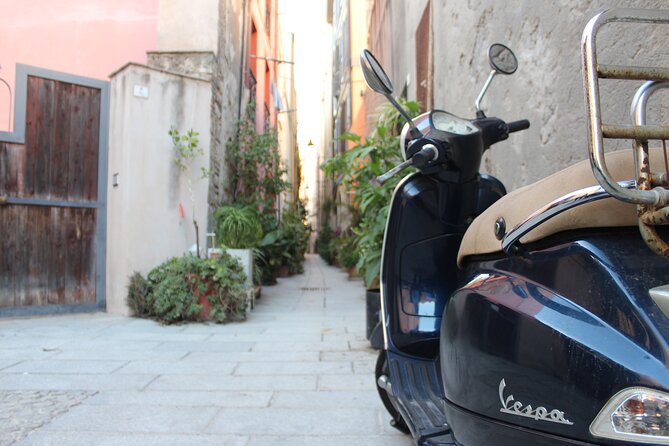
At roughly 3 hours, this tour fits nicely into a travel day without draining it. Each district is scheduled for about 45 minutes, which keeps your attention from fading and gives you time to ask questions before moving on.
The tour also limits size to up to 15 travelers. That matters because you can actually hear explanations and keep up. Small-group walking tours often feel like a conversation with a local who knows where to look. That’s especially helpful in old quarters where the streets can twist and turn.
Wear comfortable shoes. The tour is in historic streets, including medieval lanes, so expect uneven ground and tight turns. The physical fitness requirement is listed as moderate, so if you’re dealing with mobility constraints, you might find it slower and more tiring than a casual stroll.
Weather is another real factor. The tour notes that it requires good weather, and you’ll be offered a different date or a full refund if it’s canceled for poor conditions. That’s not just fine print; old-city walking is easier when the ground is dry and visibility is good.
Price check: how $72.01 buys real value in Cagliari
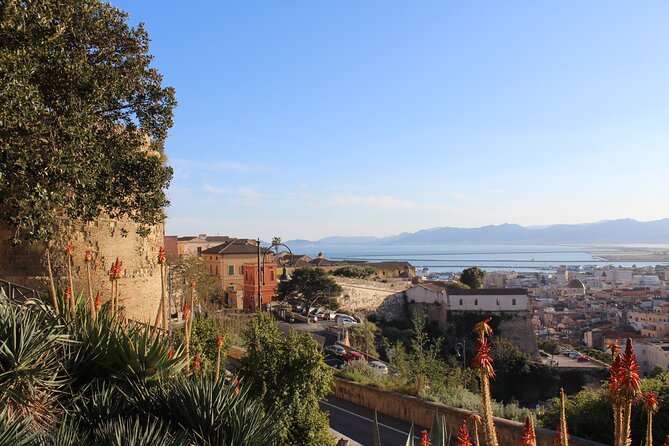
$72.01 per person for a 3-hour guided walk can sound steep until you break down what you actually get.
First, you’re paying for a guide who explains multiple centuries and multiple political influences while you move through four districts. That’s hard to recreate on your own without either a lot of reading or a good app. Second, the tour includes historical photographs, which are a small add-on but often make the difference between confused sightseeing and real understanding.
Third, the pace is set. You don’t have to plan routes between landmarks, and you don’t have to guess which streets and buildings connect. If you’re new to Cagliari, that planning effort is worth money.
Finally, the tour format stays focused: it’s not a museum day. Museums aren’t included in the itinerary, and that actually helps keep costs reasonable while still giving you context. You end the tour with orientation and ideas for what to return to later.
If you’re traveling in a small group, consider how much you’d pay for one guide to cover these districts on your own. This tour is built for exactly that job: guiding your eyes and your understanding as you walk.
Who this tour suits best (and who should choose something else)
This tour fits you if you want a first-time orientation to Cagliari’s historic center. It’s also ideal if you like architecture and church landmarks but you’d rather have someone connect the dots for you than research every date on your own.
It’s also a good match for families who can handle walking. One schedule includes a family setting with a child and an infant, which signals the tour can be flexible with real-world needs (within reason). Still, remember it’s a guided walk through narrow streets, so consider your own comfort with that.
Choose something else if you only want a strict list of indoor museum highlights, or if you’re hoping for minimal walking and mostly seated time. This isn’t built for that. It’s built for streets, views, and explanations on the move.
Should you book this 3-hour historic district tour?
Book it if you want the fastest path to understanding Cagliari’s layout, with Castello, Villanova, Stampace, and Marina tied together into one clear story. I’d also book it if you care about learning the “why” behind what you’re seeing: fortifications, church dates, and how a major street like via Roma reflects later planning.
Skip it if your travel style is more “slow and deep” than “quick orientation,” or if your mobility needs make walking narrow historic streets difficult. Also skip if weather in your dates is likely to be a mess, since the tour depends on good conditions.
If you’re on a tight schedule, this tour is a smart value. You pay for a guided walkthrough that sets you up for the rest of your trip—where to go next, what to look for, and how not to feel lost in Cagliari’s old quarters.
FAQ
How long is the guided tour of Cagliari’s historic districts?
The tour lasts about 3 hours.
Where do I meet the guide?
You meet at Piazza Giacomo Matteotti, Cagliari CA, Italy, and the tour ends back at the same meeting point.
Is the tour offered in English?
Yes, the tour is offered in English. A guided tour in Italian Sign Language (LIS) is also listed.
How big is the group?
The tour has a maximum of 15 travelers.
Are museum tickets included?
Museum admission is not included. The itinerary notes free admission tickets for the stops it covers, but any additional museum visits are not part of the plan.
What kind of walking and conditions should I expect?
The tour is intended for travelers with moderate physical fitness and it requires good weather.
A Sardinia Local Shows You Round




More Tours in Sardinia





More Tour Reviews in Sardinia


New in from around Sardinia



Historical Tours, compared.
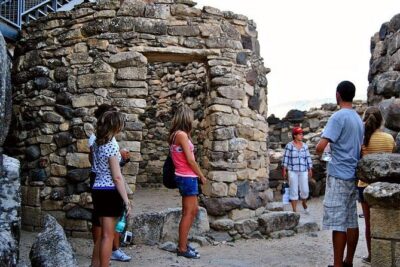 ★ 5.0SU NURAXI BARUMINI Unesco World Heritage SiteFrom $108129 reviews
 ★ 4.8Alghero: Historic Center Walking Tour with A Local GuideFrom $35120 reviews
 ★ 5.03 Hours Guided Tour of the Historical CagliariFrom $7179 reviews
 ★ 5.0Su Nuraxi of Barumini World Heritage UNESCO site TourFrom $8336 reviews
 ★ 4.5Experience Sardinia:North Coast Tour Between Sea and HistoryFrom $13215 reviews
Browse the lists this tour appears in