
Reviewed · OLBIA & GOLFO ARANCI TOURS
Olbia : Tuk-Tuk Tour – Ancient Treasures of Sardinia + pickup
Ancient Sardinia rolls by tuk-tuk. In about 2.5 hours, you zip through Olbia in a private tuk-tuk and get a guided look at Christianity, Nuragic rituals, and Roman waterworks. You’ll see a tight cluster of sites that most people would struggle to reach without a car.
I especially like the audio system with speakers plus a driver who handles the moving parts, so you can focus on what matters at each stop. I also like the quick pacing: short visits to several major monuments, without wasting your day back-and-forth.
One thing to consider is the time: many stops are around 10–25 minutes, and you might spend less time than you’d like if you want deep, lingering archaeology in each place. Also, bring your own water since it’s not included.
In This Review
- Key Highlights You’ll Actually Feel During the Tour
- Why a Tuk-Tuk Tour Works So Well in Olbia
- Pickup, Mobile Tickets, and Getting to the Right Starting Spot
- The Audio Setup: How It Changes What You Remember
- Stop 1: Basilica of San Simplicio and the Necropolis Connection
- Stop 2: Pozzo Sacro Sa Testa and Nuragic Water Rituals
- Stop 3: Acquedotto Romano and Olbia’s Best-Preserved Roman Site
- Stop 4: Tomba dei Giganti Su Monte ’e S’Abe and the “Bull Head” Idea
- Stop 5: Castello di Pedres and the Medieval Timeline
- The Final Stops That Round Out the Day
- Price and Value: What $180.21 Buys You in Real Life
- What I’d Watch For Before You Book
- Who This Tour Fits Best
- Should You Book This Tuk-Tuk Tour of Olbia?
- FAQ
- How long is the Olbia tuk-tuk tour?
- Is the tour private?
- Do I need to buy tickets for every stop?
- Is pickup available from hotels or apartments?
- What about cruise passengers—where do I meet the tour?
- Is the tour offered in English?
- Does the tour include an audio guide?
- What should I bring for church visits?
Key Highlights You’ll Actually Feel During the Tour
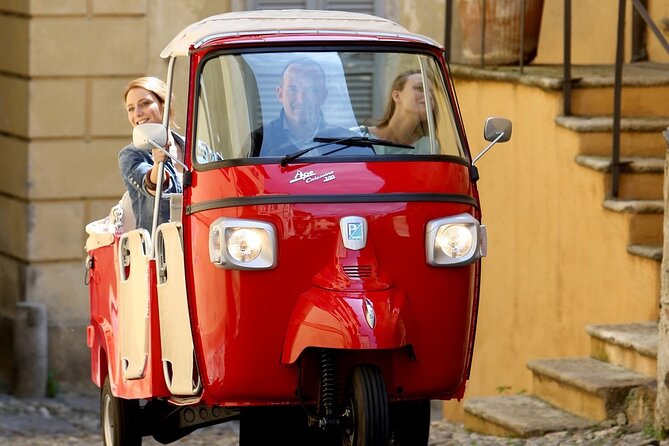
- Private tuk-tuk with a Pro Driver, so you’re not navigating or parking
- Clear audio guidance through a speaker system while you’re moving between sites
- Most admissions included, which makes the $180.21 price feel more reasonable in practice
- A smart mix of eras: early Christian, Nuragic, Roman, and medieval/Aragonese influence
- Multiple stops close together, including the historic center and a major green space (so it doesn’t feel like a single-note ruin crawl)
What else is on around Olbia and Golfo Aranci
- Olbia: Dolphin Watching & Snorkeling Boat Tour near Figarolo★ 4.9 · 670 reviews
- Olbia: Tavolara and Molara Snorkeling Boat Tour★ 4.7 · 667 reviews
- Olbia: Gallura Winery Guided Tour with Tasting★ 4.7 · 451 reviews
- Olbia: Dolphin Watching and Snorkeling Boat Tour★ 4.9 · 358 reviews
Why a Tuk-Tuk Tour Works So Well in Olbia
Olbia’s not huge, but the monuments that tell the big story of Sardinia are scattered. A tuk-tuk tour is a practical solution. You get transport built in, plus a plan that strings the sights together so you’re not burning time between them.
This tour is also a good format for the way people actually enjoy archaeology. You see enough detail to spark questions, then you can decide what to research later. And because you’ll have audio guidance, you’re not stuck squinting at stones with no clue what you’re looking at.
The private setup matters, too. You control the feel of the tour more than you would on a big group bus. It’s easier to ask something, react to what you just saw, and stay interested when the day is hot and your attention span is doing its own weather report.
Pickup, Mobile Tickets, and Getting to the Right Starting Spot
Your meeting point is Smeralda 360 at Molo Brin, in Olbia. The tour ends back there, so you’re not scrambling for transit at the end.
If you’re arriving by cruise, plan around a real-world rhythm: you’ll use the free shuttle bus from the ship to the Maritime Station, then find the Smeralda 360 representative outside the main entrance with a sign. Arrive about 10 minutes early. That tiny buffer helps when cruise timing gets messy.
If you booked a pickup from a hotel or apartment, note that this is a surcharge option, not the included default. For city-center pickup, the tour indicates it’s free, and you can upgrade if your lodging is elsewhere. In plain terms: check where your starting address lands, and don’t assume the driver will be able to pull up right at your door.
The Audio Setup: How It Changes What You Remember
This tour includes a clear audio system with speakers. That’s a big deal on a moving vehicle. You’re not relying on reading tiny plaques at each stop, and you’re not stuck guessing what the guide is pointing out.
In practice, it means your brain gets a storyline as you travel. When you arrive at a site, you’re not starting from zero. You already know what era you’re about to see, and what detail is worth your attention.
I also think the audio format is useful for pacing. When each stop is only 10–25 minutes, audio helps you get the key takeaways fast. You still have time to look around, but you’re less likely to leave with the feeling that you only saw pretty rocks.
Stop 1: Basilica of San Simplicio and the Necropolis Connection
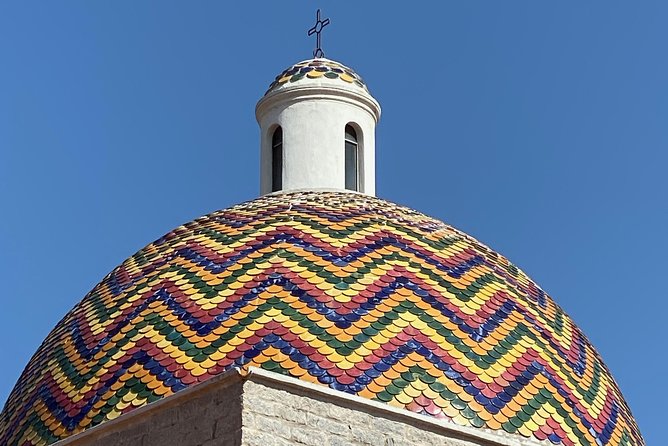
Your first major stop is the Diocesan Museum System connected to the Basilica of San Simplicio in Olbia. This is described as the most important and ancient religious monument in northeastern Sardinia. It’s dedicated to St. Simplicio, protobishop of the city, who is described as a martyr under Emperor Diocletian.
A few details make this stop more than a quick photo stop. It was a cathedral until 1839, then became a parish church in 1955, and it later received the title of minor basilica in 1993 from Pope John Paul II. So you’re not just looking at an old church. You’re seeing how the site’s role changed over time.
The itinerary also includes a necropolis located under the basilica. Even if you don’t spend a long time there, that “above and below” structure is memorable. It gives you a sense that this place has kept meaning through many layers of Olbia’s story.
Practical note: a cardigan for entrance to churches is listed as not included. If it’s warm outside, you might still want a light layer. Churches can feel cool and drafty, and having something on hand makes the visit smoother.



Stop 2: Pozzo Sacro Sa Testa and Nuragic Water Rituals
Next you’ll visit Pozzo Sacro Sa Testa, a sacred well tied to the Nuragic civilization in Gallura. This is one of those sites that changes how you picture “ancient religion.” Here, the focus is the cult of water and ritual.
The time at this stop is around 15 minutes. That’s short, but sacred wells often need context. The important thing is not only the structure itself, but what it represented to the people who used it. With audio guidance, you’ll get the meaning behind the shape, and you’re more likely to understand why this monument is singled out as characteristic.
I like this stop because it shifts you away from the Christian storyline you start with. It reminds you Sardinia wasn’t “waiting” for later civilizations. The island had its own major cultural systems long before Rome.
If you’re someone who gets bored by ruins unless there’s a story, this well tends to work. It’s specific and concept-driven: water mattered, and rituals made that resource sacred.
Stop 3: Acquedotto Romano and Olbia’s Best-Preserved Roman Site
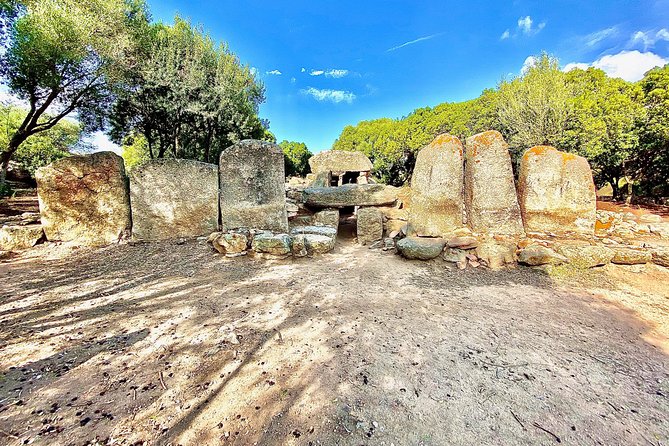
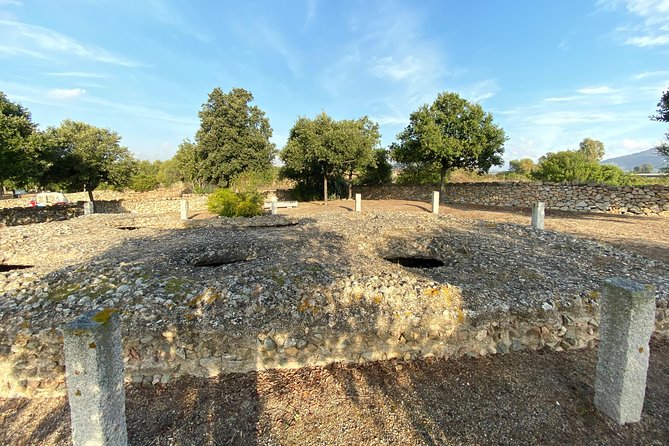
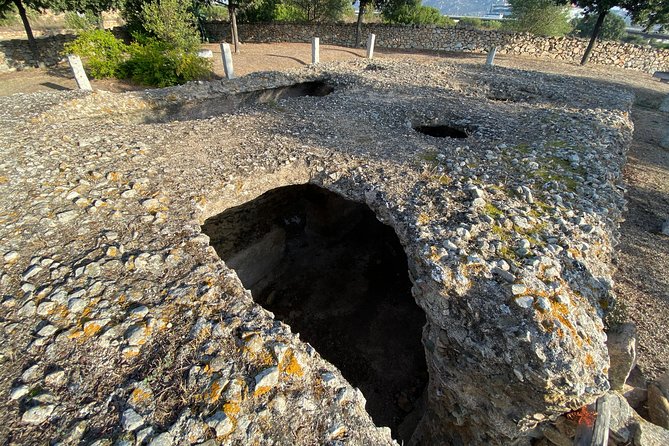
Then comes the Roman aqueduct: Acquedotto Romano. The tour describes it as built by the Romans between the 1st and 2nd centuries AD. It collected water from springs on Mount Cabu Abas.
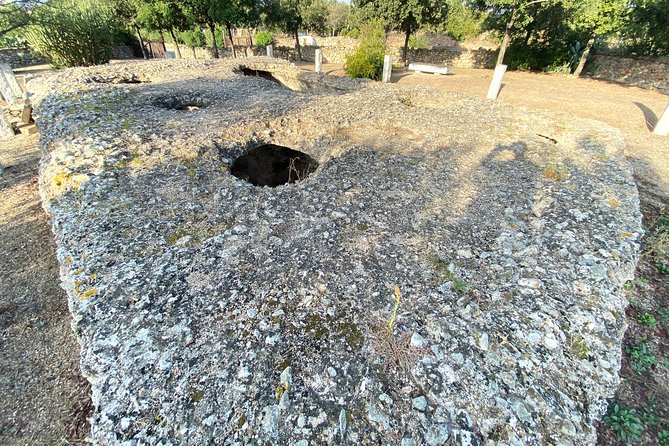
This stop is a strong choice for anyone who likes practical engineering. You’ll see details like the settling tank carved into the stone, with six ventilation holes, plus smaller tanks and inlet/outlet wells. The arches still show water transport channels, which helps you visualize how the system moved water.
You also get included admission here. That matters for value. When admissions are part of the package, you’re less likely to feel like you’re paying twice for the same experience.
Time here is also about 15 minutes. You won’t become a Roman infrastructure expert in one visit, but you can absolutely walk away impressed. Roman waterworks are built to last, and this one is described as the best preserved archaeological site of the Roman age in Sardinia. That kind of survival is rare and worth seeing.
Stop 4: Tomba dei Giganti Su Monte ’e S’Abe and the “Bull Head” Idea
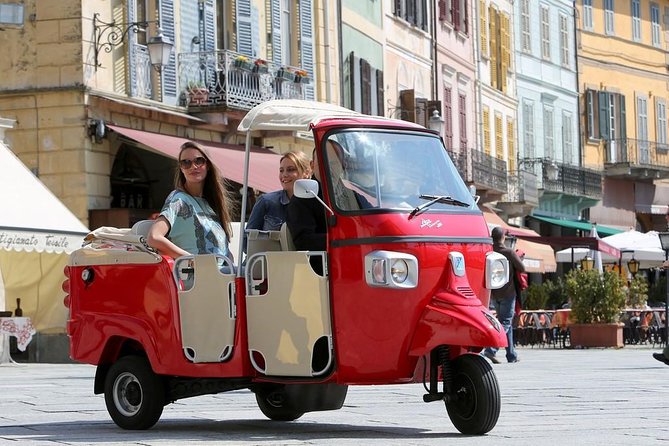
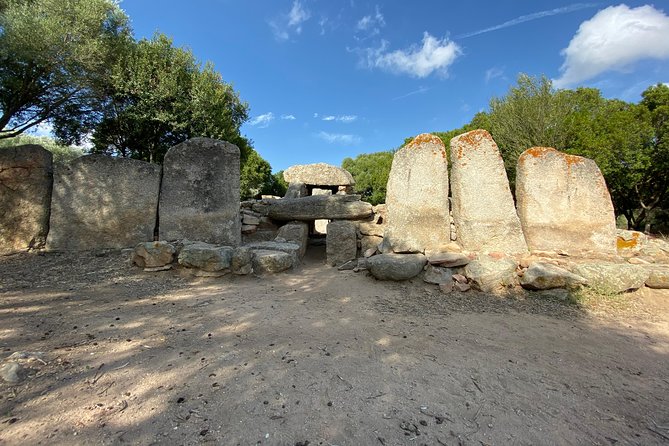
The next monument is Tomba dei Giganti Su Monte ’e S’Abe, a prehistoric site over 4,000 years old. It’s near Olbia and the northeastern coast of Sardinia, and it’s described as evoking the head of a bull tied to a Nuragic deity.
This stop runs about 10 minutes. That might sound brief, but with sites like “giants’ tombs,” the structure is the lesson. You’re meant to recognize the form, understand what it symbolizes, and connect it to a broader Nuragic belief system.
I like that the tour doesn’t treat this as a random ruin. It links the monument’s symbolism to the Nuragic world. And that helps you see the logic across the whole outing: you started with a Christian monument, moved into Nuragic ritual water, then Roman engineering, then Nuragic myth expressed in stone.
If you prefer big dramatic visuals, this is one of the most “wow” stops of the day. Even when you only have a short visit, the shape tends to stick in your memory.
Stop 5: Castello di Pedres and the Medieval Timeline
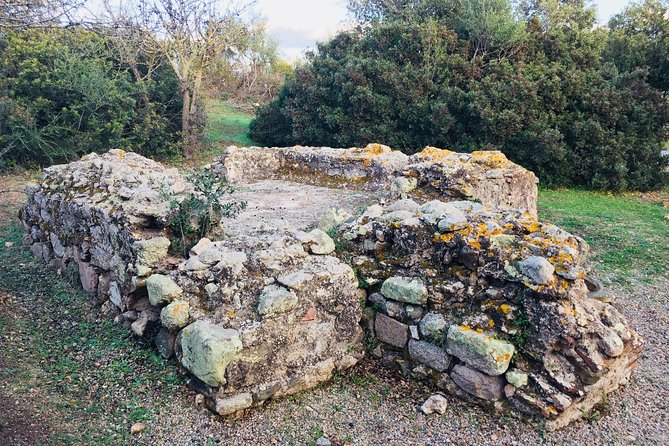
Castello di Pedres is your medieval stop. The castle sits on a fortress of 89 meters, and the tour description emphasizes it as a defining feature of the southern part of the Olbian basin.
Origin dates are given as 1296 and 1322, during Pisan-Aragonese domination and the rise of the Visconti family. That’s the kind of historical framing that makes a castle visit more satisfying than simply walking around walls.
Time at Castello di Pedres is about 25 minutes, which gives you more room to take in the view and understand why the location matters. Higher ground usually means control, visibility, and defense. In a short tour, this is exactly the type of stop where extra minutes help.
If you’re the kind of person who likes history that connects to politics and power, this stop will feel like it “lands” better than a pure archaeology stop. It’s the bridge between ancient Sardinia and the medieval world that reshaped the island’s towns.
The Final Stops That Round Out the Day
After the main monuments, you’ll also see additional elements of Olbia’s present-day character that connect to its past.
The tour includes a visit to the archaeological museum, plus the main street of the historic city center. It also includes Fausto Noce Park, described as the city’s green lung, with eighteen hectares of greenery and recognition as a top green project in Italy in 2005.
Then, you’ll return to the necropolis and museum components connected to the basilica complex. Even if you don’t get long stretches in each, these add texture. You’re not leaving feeling like you rode a vehicle from one distant ruin to another without learning what makes Olbia itself tick.
From a value standpoint, these extras matter. Ruins can be intense. A park stop and a historic street let you reset your eyes. That matters on a day that runs about 2 hours 30 minutes. It also helps you picture how the ancient world lives in the modern city layout.
Price and Value: What $180.21 Buys You in Real Life
At $180.21 per person for about 2 hours 30 minutes, this isn’t a bargain-basement option. But tuk-tuk transport plus admissions can change the math fast.
Here’s how the value works:
- You’re paying for private transport by tuk-tuk with a Pro Driver.
- You get a speaker-based audio system.
- Admission tickets are included for several key stops (Pozzo Sacro Sa Testa, Acquedotto Romano, and the giants’ tomb, plus Castello di Pedres).
- Bottled water isn’t included, but admissions largely are.
The first stop related to the Basilica of San Simplicio is marked as admission not included. So you may want to be ready for that one extra cost. Still, most of the big-ticket sites in the route have tickets covered. That reduces surprise charges and keeps your day focused.
I also think the biggest “value” you’re buying is convenience. If you don’t want to rent a car, or you want to avoid figuring out how to hop between sites on your own, this compact plan is exactly the kind of structure that makes a vacation run smoother.
What I’d Watch For Before You Book
A few practical considerations can help you match expectations to reality.
First: time at each stop is limited. Many are around 10–15 minutes. If your style is slow and detailed, you may want to treat this tour as an overview, then plan a return later for the one site you liked most.
Second: what you get in interpretation can depend on how the guide’s presentation is handled during the drive. The tour includes audio guidance, and you’ll be hearing context that way. But if you strongly prefer a live, conversational guide at every moment, you should be aware that this format can be more audio-driven than talk-heavy.
Third: it’s not a “water included” situation. The tour lists bottled water as not included. Bring a bottle or be ready to buy water near where you’re waiting.
Lastly: churches may require a cardigan for entry. Even if it’s hot out, bring something light so you’re not rushing at the last second.
Who This Tour Fits Best
This is a great fit if you:
- Want a private tuk-tuk ride with an easy route
- Like the idea of hitting several eras in one outing (Nuragic, Roman, early Christianity, medieval)
- Prefer audio guidance that keeps you moving and informed
- Don’t want to rent a car to reach scattered monuments
It can be less ideal if you:
- Want long museum-style visits at each site
- Hate audio-first explanations and want constant live narration
- Plan to rely on the tour to provide basic comforts like water (since it’s not included)
Should You Book This Tuk-Tuk Tour of Olbia?
If you want a smart, efficient way to understand Olbia’s ancient layers, I’d say this tour is a solid bet. You’re not just seeing stones; you’re getting context for why these places mattered, from a saint linked to Diocletian to Roman water engineering and Nuragic ritual life.
Book it if your goal is a focused highlight reel in a short window, especially if you’re relying on pickup and don’t want to manage logistics yourself. Don’t book it if you know you need hours at one site or you expect water and heavy hands-on guide attention to be built in.
If you do book, come prepared: light layer for church entry, and your own water. With that, the ride feels like a fun history course you can actually finish, and you’ll leave knowing which sites deserve deeper time on a future trip.
FAQ
How long is the Olbia tuk-tuk tour?
It runs about 2 hours 30 minutes (approx.).
Is the tour private?
Yes. It’s a private tour/activity, and only your group participates.
Do I need to buy tickets for every stop?
Admission tickets are included for several stops, while one basilica-related stop is marked as admission not included. Bottled water is not included.
Is pickup available from hotels or apartments?
Pickup from hotels or apartments is available as a surcharge option. City-center pickup is described as free.
What about cruise passengers—where do I meet the tour?
For cruise passengers, you’ll take the free shuttle bus to the Maritime Station, then meet at the station entrance where a Smeralda 360 representative is waiting with a sign.
Is the tour offered in English?
Yes, it’s offered in English.
Does the tour include an audio guide?
Yes. There’s a clear audio system with speakers for optimal audio guidance.
What should I bring for church visits?
A cardigan for entrance to churches is listed as not included, so you may want to bring a light layer. Water is also not included.
More Tours in Olbia



More Tour Reviews in Olbia
Around Olbia and Golfo Aranci
New in from around Olbia

Olbia & Golfo Aranci Tours, compared.
 ★ 5.0Dolphin Watching Tour – from Golfo AranciFrom $421,198 reviews
 ★ 4.9Olbia: Dolphin Watching & Snorkeling Boat Tour near FigaroloFrom $77670 reviews
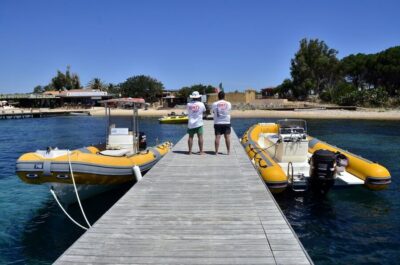 ★ 4.7Olbia: Tavolara and Molara Snorkeling Boat TourFrom $82667 reviews
 ★ 4.7Olbia: Gallura Winery Guided Tour with TastingFrom $61451 reviews
 ★ 4.9Olbia: Dolphin Watching and Snorkeling Boat TourFrom $77358 reviews
 ★ 5.0Tour to Figarolo Island with the possibility to observe dolphinsFrom $72302 reviews
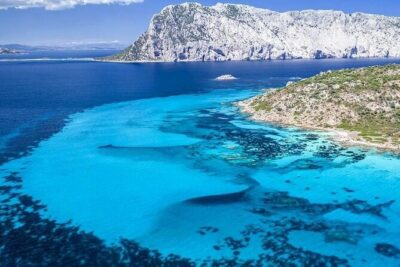 ★ 5.0Sailing ship from Porto San Paolo (S.Teodoro-Olbia) to Tavolara, MolaraFrom $119293 reviews
 ★ 5.0Dolphin Watching Tour with Snorkeling from OlbiaFrom $72275 reviews
Browse the lists this tour appears in